|
Last updated:
11/9/04 3:33 PM
REMINDERS ABOUT WSP REGISTRATION
All students who will be on campus during the
2004-2005 academic year must register for WSP. Registration will
take place in the early part of fall semester. If you are registered
for a senior thesis in the fall which must be continued through
Winter Study by departmental rules, you will be registered for your
Winter Study Project automatically. In every other case, you must
complete registration. First-year students are required to participate
in a Winter Study that will take place on campus; they are not allowed
to do 99's.
Even if you plan to take a 99, or the instructor
of your first choice accepts you during the registration period,
there are many things that can happen between registration and the
beginning of Winter Study to upset your first choice, so you must
list five choices. You should try to make one of your choices a
project with a larger enrollment, not that it will guarantee you
a project, but it will increase your chances.
If you think your time may be restricted in any
way (ski meets, interviews, etc.), clear these restrictions with
the instructor before signing up for his/her project.
Remember, for cross-listed projects, you should
sign up for the subject you want to appear on your record.
For many beginning language courses, you are required
to take the WSP Sustaining Program in addition to your regular project.
You will be automatically enrolled in this Sustaining Program, so
no one should list this as a choice.
The grade of honors is reserved for outstanding
or exceptional work. Individual instructors may specify minimum
standards for the grade, but normally, fewer than one out of ten
students will qualify. A grade of pass means the student has performed
satisfactorily. A grade of perfunctory pass signifies that a student's
work has been significantly lacking but is just adequate to deserve
a pass.
If you have any questions about a project, see
the instructor before you register.
Finally, all work for WSP must be completed and
submitted to the instructor no later than Thursday, January 27th.
Only the Dean can grant an extension beyond this date.
WINTER STUDY 99'S
Sophomores, juniors and seniors are eligible to
propose "99's," independent projects arranged with faculty
sponsors, conducted in lieu of regular Winter Study courses. Perhaps
you have encountered an interesting idea in one of your courses
which you would like to study in more depth, or you may have an
interest not covered in the regular curriculum. In recent years
students have undertaken in-depth studies of particular literary
works, interned in government offices, assisted in foreign and domestic
medical clinics, conducted field work in economics in developing
countries, and given performances illustrating the history of American
dance. Although some 99's involve travel away from campus, there
are many opportunities to pursue intellectual or artistic goals
here in Williamstown.
99 forms are available online:
http://www.williams.edu/Registrar/winterstudy/99direct
The deadline for submitting the proposals to faculty
sponsors is Thursday, 30 September.
Winter Study Course Offerings
The number in the far left-hand column is the PeopleSoft Class Number.
| AAS 30 Sen Project:Afr-Amer Studies
|
| AAS 99 Ind Study:Afr-American Studies
|
| AMST 10 In Search of Bob Dylan
|
| AMST 12 Willa Cather: Art & Ambition
|
| AMST 13 American Indians on Film
|
| AMST 17 Contesting the Frontier
|
| AMST 19 Comic Book Politics
|
| AMST 23 Representing Jazz
|
| AMST 30 Sen Honors: American Studies
|
| AMST 31 Sen Thesis: American Studies
|
| AMST 99 Indep Study:American Studies
|
| ANTH 14 Afghanistan on Film
|
| ANTH 31 Senior Thesis: Anthropology
|
| ANTH 99 Indep Study:Anthropology
|
| ANSO 11 Berkshire Farm Internship
|
| ANSO 12 Children and the Courts
|
| ANSO 99 Ind Study: Anth & Sociology
|
| CRAB 99 Independent Study: Arabic
|
| ARTH 11 The Development of Inuit Art
|
| ARTH 12 Topics in Video Art:The Museum
|
| ARTH 13 Contemp Documentary Photogrphy
|
| ARTH 14 Out of the Closet
|
| ARTH 15 The Films of John Waters
|
| ARTH 17 Uncovering Fakes & Forgeries
|
| ARTH 18 Images of Illness
|
| ARTH 25 Oriental Rugs
|
| ARTH 31 Senior Thesis: Art History
|
| ARTH 33 Honors Ind Study: Art History
|
| ARTH 99 Indep Study: Art History
|
| ARTS 10 "Journey in Culture,Myth&Mystry"
|
| ARTS 11 Monotype
|
| ARTS 13 Video Installation Art
|
| ARTS 14 Figure Drawing
|
| ARTS 15 Large-Format Photography
|
| ARTS 16 Systems and Chance
|
| ARTS 17 Uncovering Fakes & Forgeries
|
| ARTS 25 "Art,Culture,Spanish in Mexico"
|
| ARTS 33 Honors Ind Project: Studio Art
|
| ARTS 99 Independent Study: Studio Art
|
| ASST 10 Journey in Culture,Myth&Mystry
|
| ASST 12 The Art of War
|
| ASST 17 Taiwan, the U.S. and Int'l Law
|
| ASST 31 Senior Thesis: Asian Studies
|
| ASST 99 Indep Study: Asian Studies
|
| ASTR 12 NASA and the Space Program
|
| ASTR 13 Imagine Processing Sci & Med
|
| ASTR 31 Senior Research: Astronomy
|
| ASTR 99 Independent Study: Astronomy
|
| ASPH 31 Senior Research: Astrophysics
|
| ASPH 99 Independent Study:Astrophysics
|
| BIMO 99 Indep Study:Biochem&Molec Biol
|
| BIOL 10 Electron Microscopy
|
| BIOL 11 Identifying Wildlife Tracks
|
| BIOL 12 "Time, Tropism & Visual Image"
|
| BIOL 17 Images of Illness
|
| BIOL 18 Entrepreneurship of Shitake
|
| BIOL 22 Intro Biological Research
|
| BIOL 31 Senior Thesis: Biology
|
| BIOL 99 Independent Study: Biology
|
| CHEM 10 U.S Foreign Policy in Americas
|
| CHEM 11 Science for Kids
|
| CHEM 13 The Science of Chocolate
|
| CHEM 14 Emergency Med Technician-Basic
|
| CHEM 15 Uncovering Fakes & Forgeries
|
| CHEM 16 Glass and Glassblowing
|
| CHEM 18 Intro Research in Biochemistry
|
| CHEM 19 Intro Research Environ Science
|
| CHEM 20 Intro Research Inorganic Chem
|
| CHEM 23 Intro Research Organic Chem
|
| CHEM 24 Intro Research Physical Chem
|
| CHEM 25 Oriental Rugs
|
| CHEM 27 Zymurgy
|
| CHEM 31 Sen Research&Thesis: Chemistry
|
| CHEM 99 Independent Study: Chemistry
|
| CHIN 25 Study Tour Of Taiwan
|
| CHIN 31 Senior Thesis: Chinese
|
| CHIN 99 Independent Study: Chinese
|
| CLAS 10 Willa Cather: Art & Ambition
|
| CLAS 12 Murder in Mesopotamia
|
| CLAS 31 Senior Thesis: Classics
|
| CLAS 99 Independent Study: Classics
|
| COGS 31 Sr Thesis: Cognitive Sci
|
| COGS 99 Ind Study:Cognitive Sci
|
| COMP 10 Art and Sport of Rhetoric
|
| COMP 12 Paris-Dakar:Sports Cars & More
|
| COMP 13 Willa Cather: Art & Ambition
|
| COMP 31 Senior Thesis: Comparative Lit
|
| COMP 99 Indep Study: Comparative Lit
|
| CSCI 11 Prog. in Perl for Scientists
|
| CSCI 12 How to Build a Computer
|
| CSCI 13 Imagine Processing Sci & Med
|
| CSCI 14 LEGO Robot Engineering
|
| CSCI 31 Senior Thesis:Computer Science
|
| CSCI 99 Indep Study:Computer Science
|
| CMAJ 31 Senior Thesis: Contract Major
|
| CMAJ 99 Indep Study: Contract Major
|
| CRLA 99 Ind Study: Critical Languages
|
| ECON 10 Taxes and Business Stategy
|
| ECON 11 Economic Themes in Films
|
| ECON 12 Microfinance
|
| ECON 13 The Grameen Bank
|
| ECON 14 Accounting
|
| ECON 15 Stock Market
|
| ECON 16 Poli-Ec of Economic Strategy
|
| ECON 17 Business Economics
|
| ECON 18 Entrepreneurship of Shitake
|
| ECON 19 Volunteer Income Tax Assistant
|
| ECON 20 "H. George, Eliminating Poverty"
|
| ECON 23 Economics Where Least Expected
|
| ECON 25 Evaluating Economic Strategy
|
| ECON 30 Honors Project: Economics
|
| ECON 31 Honors Thesis: Economics
|
| ECON 99 Independent Study: Economics
|
| ENGL 10 Art and Sport of Rhetoric
|
| ENGL 11 Horror & Sci-Fi Films
|
| ENGL 12 Contemp Documentary Photogrphy
|
| ENGL 13 Writing Non-Fiction
|
| ENGL 14 Your Favorite Author
|
| ENGL 15 Victorian Monsters
|
| ENGL 16 The Black Auteur
|
| ENGL 17 Contesting the Frontier
|
| ENGL 18 Images of Illness
|
| ENGL 19 Structuring Your Novel
|
| ENGL 20 Feature Writing for Magazines
|
| ENGL 22 Willa Cather: Art & Ambition
|
| ENGL 23 Representing Jazz
|
| ENGL 25 Desert Places
|
| ENGL 27 My Favorite Director
|
| ENGL 28 Fantasy Novels:CSLewis&ChWllms
|
| ENGL 30 Honors Project: English
|
| ENGL 31 Senior Thesis: English
|
| ENGL 99 Independent Study: English
|
| ENVI 10 Winter Naturalist's Journal
|
| ENVI 11 Identifying Wildlife Tracks
|
| ENVI 12 Landscape Photography
|
| ENVI 13 Law & Lit of the Environment
|
| ENVI 14 We Are What We Eat? Field Stdy
|
| ENVI 15 Corp Leadrshp&Social Rspnsblty
|
| ENVI 18 Entrepreneurship of Shitake
|
| ENVI 19 Intro Research Environ Science
|
| ENVI 21 Public & Private Non-Profits
|
| ENVI 31 Sen Res&Thesis:Environ Study
|
| ENVI 99 Indep Study: Environ Studies
|
| EXPR 99 Indep Study:Cross-Disciplinary
|
| RLFR 12 Paris-Dakar:Sports Cars & More
|
| RLFR 30 Honors Essay: French
|
| RLFR 31 Senior Thesis: French
|
| RLFR 99 Independent Study: French
|
| GEOS 12 Landscape Photography
|
| GEOS 25 Baja California Field Geology
|
| GEOS 31 Senior Thesis: Geosciences
|
| GEOS 99 Independent Study: Geosciences
|
| GERM 25 German in Germany
|
| GERM 30 Honors Project: German
|
| GERM 31 Senior Thesis: German
|
| GERM 99 Independent Study: German
|
| CLGR 99 Independent Study: Greek
|
| CRHE 99 Independent Study: Hebrew
|
| CRHI 99 Indep Study: Hindi
|
| HIST 11 Japan in American Films
|
| HIST 12 Reading Childhood
|
| HIST 13 American Indians on Film
|
| HIST 14 Women&Politics in the Mid East
|
| HIST 25 Cool Iceland:Cultural Survival
|
| HIST 31 Senior Thesis: History
|
| HIST 99 Independent Study: History
|
| HSCI 12 NASA and the Space Program
|
| HSCI 99 Indep Study:Hist Science
|
| INTR 99 Indep Study: Interdisciplinary
|
| INST 12 Paris-Dakar:Sports Cars & More
|
| INST 14 Women&Politics in the Mid East
|
| INST 25 Morocco
|
| INST 26 Arabic in Cairo
|
| INST 30 Senior Honors Project
|
| RLIT 99 Independent Study: Italian
|
| JAPN 10 Japanese Animation
|
| JAPN 31 Senior Thesis: Japanese
|
| JAPN 99 Independent Study: Japanese
|
| JWST 12 Murder in Mesopotamia
|
| JWST 99 Indep Study: Jewish Studies
|
| CRKO 99 Independent Study: Korean
|
| CLLA 99 Independent Study: Latin
|
| LEAD 10 Corp Leadrshp&Social Rspnsblty
|
| LEAD 11 Managing Non-Profits
|
| LEAD 12 NASA and the Space Program
|
| LEAD 13 Art and Sport of Rhetoric
|
| LEAD 14 Leadership in Xenaphon&Tolkien
|
| LEAD 15 Interprsnl Conflict Resolution
|
| LEAD 18 Wilderness Leadership
|
| LEAD 99 Ind Stdy:Leadrshp Stdies
|
| LGST 10 Inside the Judicial System
|
| LGST 12 Murder in Mesopotamia
|
| LGST 99 Ind Study:Legal Studies
|
| LING 10 Phenomenon of Reality TV
|
| LING 12 Intro American Sign Language
|
| LING 99 Independent Study: Linguistics
|
| LIT 31 Senior Thesis:Literary Studies
|
| LIT 99 Indep Study: Literary Studies
|
| MAST 31 Senior Thesis:Maritime Studies
|
| MATH 10 Tournament Bridge
|
| MATH 11 Photography and Photoshop
|
| MATH 12 Interprsnl Conflict Resolution
|
| MATH 13 "Pilates:Fitness,Phil & Physiol"
|
| MATH 14 Fantasy Novels:CSLewis&ChWllms
|
| MATH 16 The Art & History of Knitting
|
| MATH 17 Onstage!
|
| MATH 18 Modern Dance-Muller Technique
|
| MATH 30 Senior Project: Mathematics
|
| MATH 31 Senior Thesis: Mathematics
|
| MATH 99 Independent Study: Mathematics
|
| MUS 10 The Many Faces of Carmen
|
| MUS 11 Music and Film
|
| MUS 12 Classic Amer Musical Theatre
|
| MUS 13 Tuning and Temperament
|
| MUS 14 The Music of Miles Davis
|
| MUS 15 Contemporary Singer/Songwriter
|
| MUS 16 Perc. for Non-Percussionists
|
| MUS 17 "Cuban "Classical" Composers"
|
| MUS 18 Staging Opera
|
| MUS 21 Individual Instruction
|
| MUS 31 Senior Thesis: Music
|
| MUS 99 Independent Study: Music
|
| NSCI 31 Senior Thesis: Neuroscience
|
| NSCI 99 Indep Study: Neuroscience
|
| PHIL 10 Philosophy of Chess
|
| PHIL 12 Erotic Love in Plato
|
| PHIL 13 "Sex,Marriage&Pursuit Happiness"
|
| PHIL 14 Writing & Thinking About Sport
|
| PHIL 18 Entrepreneurship of Shitake
|
| PHIL 25 Morocco
|
| PHIL 30 Senior Essay: Philosophy
|
| PHIL 31 Senior Thesis: Philosophy
|
| PHIL 99 Independent Study: Philosophy
|
| ZPED 99 Ind Study: Physical Educ
|
| PHYS 10 Light and Holography
|
| PHYS 12 Drawing as a Learnable Skill
|
| PHYS 13 Automotive Mechanics
|
| PHYS 22 Research Participation
|
| PHYS 31 Senior Research: Physics
|
| PHYS 99 Independent Study: Physics
|
| POEC 31 Honors Thesis:Political Econ
|
| POEC 99 Indep Study: Political Economy
|
| PSCI 10 Adventures in Disabilities
|
| PSCI 11 The Development of Inuit Art
|
| PSCI 12 The Art of War
|
| PSCI 13 Political Writing of G. Orwell
|
| PSCI 14 Citizen & State in Amer Cinema
|
| PSCI 15 Political Economy of Tourism
|
| PSCI 16 Civ Rights Movement's Jubilee
|
| PSCI 17 "Taiwan, the U.S. and Int'l Law"
|
| PSCI 18 Work of the Supreme Court
|
| PSCI 19 Comic Book Politics
|
| PSCI 21 Public & Private Non-Profits
|
| PSCI 23 Experiential Learning
|
| PSCI 30 Senior Essay:Political Science
|
| PSCI 31 Sen Thesis: Political Science
|
| PSCI 32 Indiv Proj: Political Science
|
| PSCI 33 Advanced Study Amer Politics
|
| PSCI 99 Indep Study: Political Science
|
| PSYC 10 Adventures in Disabilities
|
| PSYC 11 Children's Play
|
| PSYC 12 Dreams and Problem Solving
|
| PSYC 13 Concept of Mental Illness
|
| PSYC 14 Alcohol&Drug Abuse in College
|
| PSYC 16 The Examined Life
|
| PSYC 17 Teaching Practicum
|
| PSYC 18 Institutional Placement
|
| PSYC 31 Senior Thesis: Psychology
|
| PSYC 99 Independent Study: Psychology
|
| REL 10 Historic Christian Theology
|
| REL 12 The Spirit & Practice of Yoga
|
| REL 31 Senior Thesis: Religion
|
| REL 99 Independent Study: Religion
|
| RUSS 13 Puzzles and Puzzlers
|
| RUSS 25 Williams in Georgia
|
| RUSS 30 Honors Project: Russian
|
| RUSS 31 Senior Thesis: Russian
|
| RUSS 99 Independent Study: Russian
|
| SCST 99 Indep Study:Sci&Tech Studies
|
| SOC 13 Puzzles and Puzzlers
|
| SOC 31 Senior Thesis: Sociology
|
| SOC 99 Indep Study: Sociology
|
| RLSP 25 "Art,Culture,Spanish in Mexico"
|
| RLSP 30 Honors Essay: Spanish
|
| RLSP 31 Senior Thesis: Spanish
|
| RLSP 99 Independent Study: Spanish
|
| SPEC 10 Quest for College
|
| SPEC 11 Science for Kids
|
| SPEC 12 Intro American Sign Language
|
| SPEC 13 Art and Sport of Rhetoric
|
| SPEC 15 Contemporary Singer/Songwriter
|
| SPEC 17 Onstage!
|
| SPEC 18 Winter Emergency Care
|
| SPEC 19 Medical Apprenticeship
|
| SPEC 20 Modern Dance-Muller Technique
|
| SPEC 24 Eye Care&Culture in Nicaragua
|
| SPEC 25 Williams in Georgia
|
| SPEC 28 Teaching Pract:Bronx&Manhattan
|
| SPEC 35 Making Pottery Potter's Wheel
|
| SPEC 39 Composing Life after Williams
|
| SPEC 99 Independent Study
|
| STAT 99 Indep Study: Statistics
|
| CRSW 99 Independent Study: Swahili
|
| THEA 11 Classic Amer Musical Theatre
|
| THEA 12 Stage Management
|
| THEA 14 Out of the Closet
|
| THEA 18 Staging Opera
|
| THEA 25 Performance in New York City
|
| THEA 30 Senior Production: Theatre
|
| THEA 31 Senior Thesis: Theatre
|
| THEA 99 Independent Study: Theatre
|
| WGST 10 Willa Cather: Art & Ambition
|
| WGST 12 Intro American Sign Language
|
| WGST 14 Women&Politics in the Mid East
|
| WGST 19 Volunteer Income Tax Assistant
|
| WGST 30 Hon Proj: Women/Gender Studies
|
| WGST 31 Sr Thesis:Women/Gender Studies
|
| WGST 99 Ind Study:Women/Gender Studies
|
AFRICAN-AMERICAN STUDIES
AAS 30 Senior
Project
To be taken by students registered for Afro-American
Studies 491 who are candidates for honors.
AMERICAN STUDIES
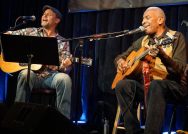
AMST 10 In Search of Bob
Dylan: The Man, the Music, the Myth
More than just a singer and songwriter, Bob Dylan
has become a cultural icon, albeit an elusive one. With reference
to recordings, films, biographies, and critical articles, we will
examine how Dylan made the leap from latter-day Woody Guthrie to
rock star to prophet to perennial Nobel Prize-nominee, and attempt
to define the nature of his unique contribution to American culture.
Method of evaluation: 10-page paper or an equivalent project.
No prerequisites. Enrollment limit:25. Priority given to seniors.
Meeting time: three hours twice a week (Monday/Wednesday mornings);
some mandatory film screenings may occur outside of regularly-scheduled
class time.
Cost to student: $100.
SETH ROGOVOY '82 (Instructor)
WONG (Sponsor)
Seth Rogovoy '82 is a widely-published music critic
who has written extensively about Bob Dylan. The author of The Essential
Klezmer, his cultural commentary is heard weekly on WAMC's Northeast
Public Radio Network.
AMST 11 Berkshire Stories
(Same as Comparative Literature 11 and Special 16)
CANCELLED!
AMST 12 Willa Cather: Art
and Ambition (Same as Classics 10, Comparative Literature 13,
English 22 and Women's and Gender Studies 10)
(See under English for full description.)
AMST 13 Dances With Stereotypes?:
American Indians on Film (Same as History 13)
(See under History for full description.)
AMST 17 Contesting the
Frontier (Same as English 17)
(See under English for full description.)
AMST 19 Comic Book Politics
(Same as Political Science 19)
(See under Political Science for full description.)
AMST 23 Representing Jazz
(Same as English 23)
(See under English for full description.)
AMST 30 Senior Honors Project
To be taken by students registered for American
Studies 491 or 492.
AMST 31 Senior Thesis
To be taken by students registered for American Studies 493 or 494.
ANTHROPOLOGY AND SOCIOLOGY
ANSO 11 Berkshire Farm
Internship
A field placement at Berkshire Farm Center and
Services for Youth in Canaan, New York. Berkshire Farm Center is
a residential treatment facility for troubled, at-risk adolescent
boys who have been remanded to the Farm by the Family Court. These
youths come primarily from lower socio-economic strata, are very
ethnically diverse, and hail from both urban and rural areas throughout
New York State. The problems that they bring to Berkshire Farm are
multiple. These include: the psychological scars of dysfunctional
families, including those of physical, emotional, and sexual abuse;
chemical dependency; juvenile delinquency; inability to function
in school settings; and various other issues. Residential treatment
is a multi-modal approach that includes anger-replacement training,
social skills training, and behavioral modification.
Williams students will commute to Berkshire Farm and work under
supervision in one of the following areas: school, cottage life,
chemical dependency unit, research, recreation, performing arts,
or in individual tutoring.
Requirements: students will keep a journal reflecting on their experiences,
and a weekly seminar with the instructor will draw on service learning
experience. Students will also be required to submit a final 10-page
paper at the end of the course.
Prerequisites: interview with instructor. Enrollment limit: 15-please
note: all queries about this course should be directed to the instructor,
who can be reached at 518-781-4567 ext. 322.
Cost to student: none.
LARI BRANDSTEIN (Instructor)
NOLAN (Sponsor)
Lari Brandstein is Director of Volunteer Services
at Berkshire Farm Center and Services for Youth.
ANSO 12 Children and the
Courts: Internship in the Crisis in Child Abuse
The incidence of reported child abuse and neglect
has reached epidemic proportions and shows no signs of decreasing.
Preventive and prophylactic social programs, court intervention,
and legislative mandates have not successfully addressed this crisis.
This course allows students to observe the Massachusetts Department
of Social Services attorney in courtroom proceedings related to
the care and protection of children. Students will have access to
Department records for purposes of analysis and will also work with
social workers who will provide a clinical perspective on the legal
cases under study. The class will meet regularly to discuss court
proceedings, assigned readings, and the students' interactions with
local human services agencies. Access to an automobile is desirable
but not required; some transportation will be provided as part of
the course.
Requirements: full participation, a journal, and a 10-page paper
to be submitted at the end of the course.
Enrollment limit: 15-please note: all queries about this course
must be directed to the instructor, Judge Locke (phone messages
may be left at 458-4833).
Meeting time: TBA.
Cost to student: $25 for books and photocopies.
JUDITH LOCKE (Instructor)
NOLAN (Sponsor)
Judith Locke is Associate Justice of the Juvenile
Court, Commonwealth of Massachusetts.
ANTHROPOLOGY
ANTH 14 Representing Afghanistan
on Film
This course looks at how Afghanistan has been
portrayed in feature films, documentaries, and television news,
before and after 9/11. Using these mainstream media representations
as a point of departure, the course will go on to consider the theory
and practice of media based on the instructor's own experiences
shooting, scripting, and editing a documentary film on Afghanistan.
The class will look at raw footage shot in Afghanistan, clips and
scripts from different stages of the editing process, as well as
the final film. Issues to be considered include the verite, of cinema
verite, the pros and cons of narration, and the relationship between
art and science in documentary production.
Class requirements include attendance at film screenings, readings,
and a final project.
Enrollment limit: 12.
D. EDWARDS
ANTH 31 Senior Thesis
To be taken by students registered for Anthropology
493-494.
SOCIOLOGY
SOC 13 Puzzles and Puzzlers
(Same as Russian 13)
Why do people spend their time doing puzzles?
Why did riddles exist throughout history and crosswords appeared
only in the twentieth century? In literature, how do games and puzzles
contribute to the construction or subversion of meaning? What is
the metaphorical significance of games and puzzles, in literature
and in real life? Is the game for the reader's benefit or is the
reader part of the game?
This course will approach puzzles from both sociological and literary
perspectives, thus providing students with the opportunity to analyze
games and puzzles in literary texts while also assessing their significance
in contemporary culture through collaborative ethnography, interviews
in and outside of class and analysis of documents. Primary texts
will include works by Nabokov, Borges, Calvino and Eco; we will
also consult theoretical writings by Caillois, Huizinga, Motte and
the OuLiPo group. Exercises will include constructing a taxonomy
of puzzles, interviewing puzzle-makers and puzzle-fans, exploring
trans-cultural and historical variations in crosswords and riddles,
and integrating cultural criticism with an appreciation of the puzzles'
role in contemporary culture.
Course requirements: thoughtful and active class participation,
several papers and take-home assignments, a group presentation and
a final paper.
No prerequisites. Enrollment limit:19.
Meeting time: mornings, three days a week.
Cost to student: $75.
SHEVCHENKO and SKOMP
SOC 31 Senior Thesis
To be taken by students registered for Sociology
493-494.
ART
ART HISTORY
ARTH 10 Introduction to
African Film (Same as International Studies 10)
CANCELLED!
ARTH 11 The Development
of Inuit Art (Same as Political Science 11)
(See under Political Science for full description.)
ARTH 12 Topics in Video
Art: The Museum
In recent years video art has become a mainstay
in many art museums worldwide, but this has not always been the
case. This course will investigate the introduction and proliferation
of video art into museums paying close attention to the ways in
which they have changed one another. The course will investigate
multiple approaches to video making including: performance documentation,
found footage, collage, narrative, abstraction, video diary, documentary,
and installation, and how each of these different types affects
the curatorial process. Through selected readings, screenings and
museum visits, the course will address issues of display, the role
of the audience, and approaches to collecting. WCMA's Media Field
gallery will serve as a test case and students will create proposals
for exhibitions in the space.
Evaluation will be based on participation in class discussions and
museum visits. Short response papers to readings and screenings
and one final
presentation/exhibition proposal. One to two visits to area museums
or NYC depending on the exhibitions on view at that time.
No prerequisites. Enrollment limit:12: Preference given to ArtH
101-102 and/or ArtS 288.
Meeting time: two afternoons per week except for field trip days
which may require a half to full day.
Cost to student: $60 for reading packets and costs associated with
field trips, transportation, museum entrance fees.
LISA DORIN (Instructor)
GLIER (Sponsor)
Lisa Dorin MA '00 is assistant curator at the
Williams College Museum of Art. She is in charge of the programming
for Media Field, the museum's gallery dedicated to video and new
media art.
ARTH 13 Looking at Contemporary
Documentary Photography (Same as English 12)
(See under English for full description.)
ARTH 14 Out of the Closet:
What Clothes, Costumes and Textiles Reveal in European and American
Art (Same as Theatre 14)
Why does the 16-year-old Hapsburg Queen of Poland
wear lace AND chain mail in a seventeenth century portrait by Joseph
Heintz? This course addresses this paradox and other enigmas of
costume in European and American art at the Clark Art Institute
in Williamstown. In paintings, as in life, certain clothes and fabrics
can be used as emblems of power and prestige, and they yield both
overt and subtle information about the one who wears them. Each
week this class will combine two two-hour sessions of slide lectures
and on site study of costumes and textiles in paintings and prints
at the Clark Art Institute with field trips to local New England
collections of historical fashion, such as Historic Deerfield's
costume collection. The last field trip of the session, scheduled
for January 27th, will be to New York City. For the final project
students will "curate" and write up a "virtual installation"
of paintings and prints at the Clark with specific emphasis on the
iconography of clothing in the artworks.
Requirements: regular attendance in class and field trips. 10 page
paper.
No prerequisites. Enrollment limit: 12.
Meeting times: Tuesday and Wednesday afternoons with field trips
on Thursdays. Please note that there will be no class on Wednesday
the 26th. That class's lecture will be combined with the New York
City field trip scheduled for the 27th.
Cost to students: meals on field trips; transportation to and from
New York City.
DEBORAH KRAAK (Instructor)
MCGOWAN (Sponsor)
Deborah Kraak is an independent curator specializing
in historical textiles and costumes. Her museum background includes
Winterthur: An American Country Estate, in Wilmington, Delaware,
the Museum of Fine Arts, Boston, and the Los Angeles County Museum
of Art. She has curated many exhibitions, including the Boston venue
of "Hollywood and History: Costume Design in Film.". At
present she is preparing "Purple Reign," an exhibition
in honor of the 150th anniversary of the discovery of mauve, the
first synthetic dye, scheduled for Spring 2006 at the American Textile
History Museum in Lowell, Massachusetts.
ARTH 15 The Films of John Waters
A major figure in independent filmmaking for over three decades, John Waters career traverses the no-budget underground and the mainstream, commercial Cineplex. This course will critically examine the history and influence of John Waters’ aesthetic as developed through filmmaking, photography, writing, and performance. Particular attention will be paid to the filmmaker’s fascinations with the mass media, celebrity, kitsch, camp, “bad taste,” and transgressive humor. Specific films we will study include: Pink Flamingos (1972), Female Trouble (1974), Desperate Living (1977), Hairspray (1988), Serial Mom (1994), Pecker (1998), and Cecil B. DeMented (2000). Required work will involve research projects on the critical reception of Waters’ films and a 10- to 12-page final paper. For the final paper, students will have the option of preparing a traditional research paper or a film précis accompanied by a one-scene screenplay. Enrollment limit: 20.
Meeting time: mornings.
CHAVOYA
ARTH 17 Materials of the
Artist: Uncovering Fakes and Forgeries (Same as Chemistry 15 and
ArtS 17)
(See under Chemistry for full description.)
ARTH 18 Images of Illness:
Photographic Representations in Medicine (Same as Biology 17 and
English 18)
(See under English for full description.)
ARTH 25 Oriental Rugs:
Art and Commerce (Same as Chemistry 25)
(See under Chemistry for full description.)
ARTH 31 Senior Thesis
To be taken by students registered for ArtH 493,
494.
ARTH 33 Honors Independent
Study
To be taken by candidates for honors by the independent
study route.
ART STUDIO
ARTS 10 Maskmaking: A Journey
into Culture, Myth, and Mystery (Same as Asian Studies 10)
ARTS 11 Monotype
Through this course students will explore the
expressive qualities of the monotype, which combines the fluidity
of painting with the process of printmaking. We will use a variety
of techniques including direct additive and subtractive methods,
use of non-traditional tools, direct-trace drawing, and collage.
Discussions of the relationship between process/technique and the
image's intent will be emphasized. This class will focus primarily
on hand printing though a printing press will be available during
class time. Students will be encouraged to use daily sketchbooks
and active observation to develop a personal visual voice.
Evaluations will be based on growth and development of work, effort,
maintaining a daily sketchbook, attendance, and class participation.
Assignments will be progressive leading to a final portfolio of
prints and critique.
Prerequisites: Drawing I is recommended but not required. Enrollment
limit:16.
Meeting time: afternoons, two three-hour classes per week and one
local museum trip.
Cost to student: $75-$100.
SARAH PIKE (Instructor)
GLIER (Sponsor)
Sarah Pike is painter who is working in Williamstown,
MA. She earned her M.F.A. from the Pennsylvania Academy of the Fine
Arts. She has taught in Philadelphia, Massachusetts, and Vermont.
ARTS 13 Video Installation
Art
This is a studio seminar exploring various approaches
to Video Installation Art. Students will investigate and interrogate
some of the theoretical, aesthetic, and practical issues of Video
Installation. This is primarily a studio workshop, with some screenings
and supplemental reading, but most of our effort will be put toward
each student making a final piece to install near the end of Winter
Study. Students can work individually or in collaborative groups.
Evaluation will be based on participation and assignments.
Prerequisites are either one art course, some experience with video
production, or excitement about working with video installation.
Enrollment limit:12.
We will meet three mornings a week for 2 hours with field trips
and extra lab time scheduled as necessary.
Cost will be minimal ($10-$50), but subject to variation depending
on material costs for projects.
DAVID LACHMAN, (Instructor)
CHAVOYA (Sponsor)
David Lachman is an artist who works primarily in installation,
but also in photography, video, painting, and drawing. He received
his MFA from Northwestern University in Painting in 2000 and also
studied Studio Art and Art History as an undergraduate at Oberlin
College. His work creates conditions for viewers to explore their
own relationship with the world and to see how their ideas and expectations
color experience. Often this is done using common objects, experiences,
and humor, which grounds the work in everyday life.
ARTS 14 Figure Drawing
Using the nude model as the primary source, students
will be introduced to time honored techniques and traditions of
western art to draw the human form. The technical aspects of capturing
gesture and form of the figure through careful observation will
be the departure point. Beyond an investigation of rendering through
direct observation students will be encouraged to pursue an individualistic
approach to drawing the figure. To foster this, slide lectures will
introduce students to a brief history of figure drawing with an
emphasis on twentieth century and contemporary masters. Students
will engage in drawing exercises meant to suggest the expressive
possibilities of the figure. The course is intended to expand students'
ideas about how to make a drawing, what a drawing is and what it
can be. Students will be evaluated on the portfolio of drawings
assembled during the course, attendance, participation and effort.
A minimum of three hours per week is expected of each student outside
of class to sketch and develop drawings as part of their class portfolios.
Prerequisites: ArtS 100. Enrollment limit:15.
Meeting time: Monday and Wednesday afternoons; two three hour sessions.
Cost to student: approximately $75 for materials and model fees.
PAUL CHOJNOWSKI (Instructor)
TAKENAGA (Sponsor)
Paul Chojnowski is an artist living in the Berkshires.
His work has been distinguished by his use of non traditional tools
and unusual media. Over the last twelve years solo exhibitions of
his pictures have been mounted in New York, Atlanta, Portland, Chicago
and Aspen.
ARTS 15 Large-Format Photography
The course is designed to introduce students to
studio/view cameras, to processing the sheet-film negatives made
in them, and to making contact and projection prints. Studio exercises
will include careful analysis of camera movements to teach their
use, and a consideration of lighting techniques; dark room exercises
will include the tray development of sheet film, determination of
effective film speed, and control of contrast through development
time. The subject matter of the photographs produced in the course
will not be prescribed; it is limited only by the participants'
imagination and the weather in January. Working with subjects of
their own choosing, students will be instructed in the principles
of traditional photographic image making by producing large-format
negatives and translating them into effective black-and-white prints
in 4x5 and 8x10 formats.
Each student will be expected to make exhibition-quality prints,
which may be enlargements or contact prints from 4x5 negatives,
or contract prints from 8x10 negatives. The prints will be exhibited
in a group show at the end of Winter Study.
Evaluation will be based on commitment to the course, participation
in discussion sessions, and the quality of the prints.
No prerequisites (although camera and darkroom experience a plus).
Enrollment limit:10.
Meeting time: mornings; there will be six hours weekly for lectures,
demonstrations and crits. At least 20 hours weekly in the darkroom
are expected, under the supervision of a photo technician.
Cost to student: $170 lab fee.
RALPH LIEBERMAN (Instructor)
GLIER (Sponsor)
Ralph Lieberman is an art historian and photographer
who lives in Williamstown. He has a Ph.D. from the Institute of
Fine Arts. His photographs have appeared in many publications and
are to be found in major American and European art historical study
collections.
ARTS 16 Systems and Chance
This course will be an introduction to making
art through systemic procedures that allow chance elements to surface
in the work. Combining specific rules with opportunities for accidents
and visual play, this approach has its roots in many fields, including
systems art of the 1970's, where following the procedure was often
more important than the finished product, and Surrealist parlor
games that incorporated nonsequiters, dreams, and random elements.
Slide presentations will include 70's work by Sol Lewitt, John Cage,
Roman Opalka, Jennifer Bartlett, as well as other artists currently
working in similar ways. Media will include drawing, simple printmaking
techniques (like rubber stamps), and some less traditional materials
(yarn, food, rope, etc.). While some of the projects will be individual
works, others will be collaborations. For example, the entire class
may work on a revised version of the Exquisite Corpse, where artists
construct figures without seeing each other's work. Or each student
may be asked to create compositions based upon random elements (coins
thrown onto canvas, names in the phone book, dictionary definitions),
enacting a kind of art game.
Evaluation will be based on the inventiveness and quality of the
work, effort, completion of all assignments, participation in critiques,
and attendance.
We will meet twice a week for three hours. Students are expected
to work outside of class to finish their assignments.
No prerequisites, although ArtS 100 is recommended. Enrollment limit:12.
Preference is given to juniors, seniors, and sophomores, in that
order.
Meeting times: Tuesday and Wednesday, 10:00 am-12:50 pm
Lab fee: $50 for basic materials. Depending upon the choice of assignments,
students may have to purchase individual supplies.
TAKENAGA
ARTS 17 Materials of the
Artist: Uncovering Fakes and Forgeries (Same as Chemistry 15 and
ArtH 17)
(See under Chemistry for full description.)
ARTS 25 Art, Culture, and
Spanish in Oaxaca, Mexico (Same as Spanish 25)
The city of Oaxaca is a unique place where age-old
dialects, traditional art practices and religious customs coexist
side by side with contemporary life. Living and studying in Oaxaca,
Mexico will provide students with the opportunity to experience
the richness of culture that Oaxaca has to offer. This course is
designed as an exploration of Mexican culture and is centered on
the teaching and enhancement of Spanish, as well as, daily practical
studio components in the making of art. Specifically, it will be
organized with morning Spanish classes, afternoon art studio classes,
(focusing on drawing, sculpture and collage), as well as frequent
excursions to view museums, artist's studios, archaeological sites,
galleries and cinema. The hope is, that immersion into a culture
so vastly different from our own can have a profound and lasting
effect on one's perspective with regards to life, culture and art.
Students will live with a Mexican family in Oaxaca, providing a
greater opportunity to practice Spanish and gain a deeper understanding
of Mexican life.
Prerequisites : at least one introductory course in Spanish and
ArtS 100 or permission of instructor. Enrollment limit : 12.
Cost to student -approximately $2, 200.
Itinerary:
Meet in Williamstown prior to Winter Study to provide information
and prepare students about what to expect and what to bring.
Spend Winter study period in Oaxaca, creating art, enhancing Spanish
abilities and exploring and discussing Mexican culture.
PODMORE and PAULINA SALAS-SCHOOFIELD
Paulina Salas-Schoofield is resident of Oaxaca,
Mexico. During the past 8 years she has taught courses on Mexican
Culture and Spanish Language at the Language Centre of the Benito
Juarez University and Instituto Cultural Oaxaca. Paulina Salas-Schoofield
studied art history in Mexico City and film studies at Edinburgh
University.
ARTS 33 Honors Independent
Project
Independent study to be taken by candidates for
honors in Art Studio.
ASIAN STUDIES
ASST 10 Maskmaking: A Journey
into Culture, Myth, and Mystery (Same as ArtS 10)
This is a course in creating professional-quality
performance masks. To identify characters for our masks, we shall
explore Chinese mythology, folktales, and songs, with particular
emphasis on material that contains the universal symbolism that
occurs worldwide in many different cultures and springs directly
from the relationship between human nature and Nature. Required
activities: three 2-hour afternoon class meetings per week, background
readings, and a final project consisting of the creation of one
or more masks and a performance on the final day of Winter Study
(e.g., a story-play, narrative, song with instrumental back-up,
dance, or a combination of these). Evaluation will be based on attendance,
class participation, and the final project.
No prerequisites. Enrollment limit:15.
Cost to student: approximately $50 for materials and a Xerox packet.
ELLEN GRAF (Instructor)
KUBLER (Sponsor)
Ellen Graf is a poet and artist who designs custom
masks for dance, theatre, and spiritual ceremonies. Her specialty
is the animal realm and masks honoring forces of nature as aspects
of the divine. She has served as a teacher trainer in poetry at
the Institute of the Arts in Education, SUNY Albany and has taught
maskmaking in the public schools in the Albany area. She resides
on a wilderness farm in Cropseyville, New York.
ASST 12 The Art of War
(Same as Political Science 12)
(See under Political Science for full description.)
ASST 17 Taiwan, the U.S.,
and International Law (Same as Political Science 17)
(See under Political Science for full description.)
ASST 31 Senior Thesis
To be taken by all students who are candidates
for honors in Asian Studies.
CHINESE
CHIN S.P. Sustaining Program
for Chinese 101-102
Students registered for Chinese 101-102 are required
to attend and pass the Chinese Sustaining Program.
Requirements: regular attendance and active class participation.
Prerequisites: Chinese 101.
Meeting time: mornings; Mondays, Tuesdays, Thursdays 9-9:50 a.m.
Cost to student: one Xerox packet.
LANGUAGE FELLOW
CHIN 25 Study Tour to Taiwan
Interested in learning first-hand about Chinese
and Taiwanese culture and becoming acquainted with the so-called
Taiwan (economic and political) "miracle"? Want to improve
your knowledge of Mandarin, the world's most widely spoken language?
Then join us on this 24-day study tour to Taiwan, Republic of China.
We'll spend the first two and a half weeks in Taipei, the capital
city, where three hours of Mandarin language classes will be scheduled
each morning. After class each day, we'll meet as a group for lunch
and discussion. Visits to cultural and economic sites of interest
will be scheduled for some afternoons and Saturdays, with other
afternoons, evenings, and Sundays free for self-study and individual
exploration of the city. During the last week, we'll conduct a seven-day
tour of central and southern Taiwan. Two orientation sessions will
be conducted on campus in the fall to help prepare participants
for their experience. Requirements: Satisfactory completion of the
language course and active participation in the other scheduled
activities.
Prerequisite: Chinese 101 or permission of the instructor. Enrollment
limit:15.
Cost to student: $2000. (Includes round-trip air fare from New York
City, tuition, textbooks, accommodations, weekday lunches, local
excursions, and tour of central and southern Taiwan; does not include
breakfasts, dinners, and weekend lunches while in Taipei, estimated
at $250, or incidental expenses. Participants should note that,
to enhance learning and to stay within budget, accommodations and
most meals will be local student-not foreign tourist-standard.)
KUBLER
CHIN 31 Senior Thesis
To be taken by all students who are candidates
for honors in Chinese.
JAPANESE
JAPN S.P. Sustaining Program
for Japanese 101-102
Students registered for Japanese 101-102 are required
to attend and pass the Japanese Sustaining Program.
Requirements: regular attendance and active class participation.
Prerequisites: Japanese 101.
Meeting time: mornings; Mondays, Tuesdays, Thursdays 9-9:50a.m.
Cost to student: one Xerox packet.
LANGUAGE FELLOW
JAPN 10 Japanese Animation
Read or Die is the title of a popular Japanese
animated series about secret agents in the employ of the world's
great libraries. But what does it mean to read in an age and culture
so dominated by visual media? This class is an introduction to the
serious study of Japanese animation, or anime, and the challenges
it poses to traditional ways of reading literature and film. We
will screen a number of animated Japanese feature films and television
series, and look at related media like printed comics (manga). We
will also read the work of literature and media scholars who have
tried to come to terms with manga and anime, but one of the questions
we will ask is whether written criticism can ever effectively grapple
with this material. To test this, one option for the final project
will be a visual presentation instead of a written paper: a storyboard,
comic, animation, film, etc. that comments on the course material
in a sophisticated and illuminating way. Required activities: three
2-hour morning class meetings per week and two 2.5-hour afternoon
screenings per week, plus self-scheduled viewings, readings, and
a 10-page paper or visual project. Evaluation will be based on attendance,
participation, and a final project.
No prerequisites. All material is translated or subtitled in English.
Enrollment limit:15. Preference given to students with a strong
interest in literature and film.
Cost to student: approximately $50 for books.
C. BOLTON
JAPN 31 Senior Thesis
To be taken by all students who are candidates
for honors in Japanese.
ASTRONOMY
ASTR 12 NASA and the Space
Program (Same as Leadership Studies 12 and History of Science 12)
NASA's space program has had many successes, but
the choice between human and robotic spaceflight is difficult and
significant. We shall study several of NASA's most interesting programs,
including both the beautiful images and the drama behind the scenes.
The robotic programs include the Hubble Space Telescope, the Galileo
spacecraft at Jupiter, the Cassini spacecraft at Saturn, and Mars
rovers. The human spaceflight programs include the Apollo missions
and their motivations, the Space Shuttle, and the International
Space Station. We will also consider future plans for robotic and
human exploration of the Moon and Mars. We will consider the impact
of leadership decisions of presidents, NASA Administrators, directors
of institutes for NASA's Great Observatories (Space Telescope Science
Institute, Chandra X-ray Center, Spitzer Science Institute) and
others. A field trip will include meetings with scientific leaders
and Washington-area astronomical sites.
Meets one to three mornings a week for lectures and discussions
plus the field trip. Grading will be on the basis of attendance,
participation, and a 10-page paper and presentation describing a
topic of choice.
No prerequisites. Enrollment limit: 12.This WSP is a cluster course
in the program of Leadership Studies and counts as one of the two
prerequisites to LEAD 402 Topics in Leadership.
Meetings: mornings.
Cost: $300 for the field trip.
PASACHOFF
ASTR 13 Image Processing
in Science and Medicine (Same as Computer Science 13)
Images have long been fundamental in the sciences.
With the discovery of x-rays this became true in medicine as well.
Digital imaging has become a staple throughout our society, but
the nature and processing of a scientific image differs from that
of an image obtained for artistic or commercial purposes. This course
will cover the principles and practice of image processing as applied
to the sciences and medicine, particularly astronomy and magnetic
resonance imaging (MRI). We will discuss how images are acquired,
including transformations from raw data to meaningful images. We
will cover the properties of images, their generalization to dimensions
other than two, and fundamental operations that may be applied to
enhance features or extract particular kinds of information. Students
will obtain their own images using one or more of the following:
an MRI scanner, an astronomical telescope, or an electron microscope.
We will meet three times a week for two-hour morning sessions, and
there will be weekly assignments. Other required activities include
a field trip (~9AM to 5PM) to a medical MRI facility, a night (7PM
to 10PM) of observing on the Hopkins Observatory .6-m telescope,
and a visit to the Williams electron microscope facility. Students
will learn to use one or more image processing software packages,
and will write their own software in Java.
Evaluation of student performance will be based on attendance, weekly
assignments, and a final project. The final project will be presented
both in written form and as an oral presentation at a simulated
scientific conference.
The prerequisites for this course are Mathematics 105 or 106 (or
equivalent taken elsewhere) and some experience in any programming
language. Enrollment limit: 10.
Cost to student: approximately $130 for the book.
STEVEN SOUZA (Instructor)
PASACHOFF (Sponsor)
Steven Souza is the Observatory Supervisor and
an instructor in the Astronomy Department.
ASTR 31 Senior Research
To be taken by students registered for Astronomy
493, 494.
ASTROPHYSICS
ASPH 31 Senior Research
To be taken by students registered for Astrophysics
493, 494.
BIOLOGY
BIOL 10 Electron Microscopy
Students will undertake an independent project
to investigate a topic of their choice using the transmission and
scanning electron microscopes. They will do their own sample preparation,
operate the two electron microscopes, and take micrographs of relevant
structures. Class time will give a brief overview of the theory
and operation of the microscopes and microtomes. In addition, students
will learn how to develop and print their film from the TEM, and
learn how to manipulate the digital images from the SEM in Adobe
Photoshop. (Do you want your erythrocytes red or blue?) There will
be brief reading assignments, a guest speaker and a 10-page paper
with 8 well focused micrographs required. The lab is scheduled to
receive a new SEM this summer that will allow observation of wet
samples as well as conventional dried samples , and will extend
the limits of research potential for the scope.
No prerequisites. Enrollment limit:8. No preference given.
Meeting time: afternoons. Class will meet for two hours, three times
week, plus scope time.
Cost to student: $40 for text and readings.
NANCY PIATCZYC (Instructor)
ALTSCHULER (Sponsor)
Nancy Piatcyc received her B.S. in Biology from
Tufts University. She attended the school of Electron Microscopy
in Albany, NY. She is a trained electron microscopist who operates
and maintains the electron microscope facility at Williams.
BIOL 11 Identifying Wildlife
Tracks and Sign (Same as Environmental Studies 11)
Learning to understand wildlife tracks and sign
will not only enable you to determine who your wild neighbors are,
it can open up a view of their lives and interactions that will
enrich your perception of the landscape and your place in it. This
course is an intensive introduction to tracking mammals in Massachusetts.
We will cover clear print characteristics, track patterns and the
gaits they represent. We will also examine a broad range of other
wildlife sign such as browse, scat, scent posts, etc. Meetings will
be held in the field (weather permitting) and will include extensive
off-trail hiking. One session will be spent indoors viewing a video
on quadruped locomotion, and looking at slides. Participants will
be expected to read Tracking and the Art of Seeing by Paul Rezendes.
Evaluation will be based on the student's field journal and a ten-page
paper.
No prerequisites. Enrollment limit: 15. Preference given to seniors,
Biology majors and Environmental Studies concentrators.
Meeting time: all day (6 hrs) M,T,W.
Cost to student: $20. Student will also need access to snowshoes,
in conditions require. Warm clothing and footwear is essential.
JOHN MCCARTER
John McCarter has been tracking wildlife for more
than twenty years and is among the region's leading authorities
on animal tracks and sign. He has taught tracking workshops for
many organizations, including the U.S. Fish and Wildlife Service,
National Audubon Society, Appalachian Mountain Club and Massachusetts
Audubon Society, as well as school groups from K through college.
BIOL 12 Time, Tropism,
and the Visual Image
This is a studio art class that will approach
rendering the image from a technical and philosophical orientation.
Using gesture drawing and watercolor, students will focus on the
concepts of motion and stimulus in the figure as well as in botanical
forms. Throughout the term students will be expected to keep a journal
(written, drawn and painted) that investigates motion, stimulus,
and the passage of time through daily observation. We will also
view and discuss artworks at Williams College Museum of Art that
respond to the human experience of motion and time. The final project
will be a synthesis of what has been observed and internalized.
Students will be expected to produce a series of works that reveal
their personal responses to the process of moving through life.
Some themes might be coming of age, aging, effects of stimuli, or
nostalgia. Students will be evaluated based on the final project,
depth and detail of journal, and verbal participation in group critiques
and discussions.
Prerequisite: Drawing 101 (or equivalent drawing experience. Enrollment
limit: 12.
Meeting time: Tuesdays and Thursdays, 10 a.m.-1 p.m.
Cost to student: $75.
JULIA MORGAN-LEAMON (Instructor)
ALTSCHULER (Sponsor)
Julia Morgan is a local artist who works in the
education department of the Williams College Museum of Art. She
received her B.A. in Studio Art from Mt Holyoke College and studied
at
the Leo Marchutz School of Painting and Drawing in Aix-en-Provence,
France.
BIOL 17 Images of Illness:
Photographic Representations in Medicine (Same as ArtH 18 and English 18)
(See under English for full description.)
BIOL 18 Williams in North
Adams: The Entrepreneurship of Shitake (Same as Economics 18, Environmental
Studies 18 and Philosophy 18)
(See under Philosophy for full description.)
BIOL 22 Introduction to
Biological Research
An experimental research project will be carried
out under the supervision of the Biology Department. It is expected
that the student will spend 20 hours per week in the lab at a minimum,
and a 10-page written report is required. This experience is intended
for, but not limited to, first-year students and sophomores, and
requires the permission of the instructor.
Prerequisites: Biology 101. Enrollment limit:15.
Meeting time: mornings.
Cost to student: none.
Staff
BIOL 31 Senior Thesis
To be taken by students registered for Biology
493, 494.
CHEMISTRY
CHEM 10 Declassified Digging
and US Foreign Policy in the Americas
In 1973 the democratically elected socialist Salvador
Allende's presidential tenure ended in a bloody coup and Allende's
death. Recently the release of 24,000 declassified documents allow
authors to retell the history of the US foreign policy in Chile
from the 1960s to early 1970s. In the first part of the course we
explore declassified documents on the CIA's covert operations in
Chile through The Pinochet File by P. Kornbluh. Next, groups of
students select a period of time between 1950 and 1974 and look
at newspapers, like the New York Times and the Washington Post,
to identify the main events occurring at that time. Finally, each
group considers a place in the American continent, a particular
year, and an event that could be linked to possible activity by
any US agency. What kind of information could be found in archives
of declassified documents in this place and time? For example, the
late sixties are associated with student activities around the world,
and given the extensive activity in Chile by the CIA, we would also
examine Mexico City, October 12 of 1968. The "Plaza de las
Tres Culturas" massacre in Mexico City may also be linked to
possible covert CIA operations.
Evaluation is based on three short presentations related to readings
and assignments, a paper on a topic of personal interest, and participation
in class discussions.
No prerequisites. Enrollment limit: 30.
Meeting time: afternoons; three times per week with occasional extra
meetings for special projects and workshops.
Cost to student: $75 for books.
PEACOCK-LÓPEZ
CHEM 11 Science for Kids
(Same as Special 11)
(See under Special for full description.)
CHEM 13 The Science of
Chocolate
This course focuses primarily on the chemical
nature of the constituents of chocolate and on the physical nature
of the process of making chocolate. In the first week we study the
structures, properties, and effects of the principal components.
In the second week each student presents a 30-40 minute overview
of one of the processes involved in converting cacao beans to finished
products. The third week involves discussions with guest speakers
on the history, ethnobotany, and gastronomy of chocolate. We also
visit a Berkshire County shop to see the production of candies.
There is a lecture demonstration by a master chocolatier, screening
of a feature film, Like Water for Chocolate (1992) or Chocolat (2000),
and laboratory experiments in which instrumental techniques are
applied to the analysis of chocolate (differential scanning calorimetry,
nuclear magnetic resonance). In the final week students give oral
reports on topics of their choice.
Evaluation is based upon class participation presentations, and
a final 10-page paper.
Prerequisites: Chemistry 251. Enrollment limit:12.
Meeting time: mornings; four two-hour sessions per week.
Cost to student: $10 for reading materials.
MARKGRAF (Instructor)
L. PARK (Sponsor)
J. Hodge Markgraf, Professor of Chemistry emeritus,
taught organic chemistry at Williams for four decades. He has previously
taught a WSP course on combinatorial chemistry. In 2003-2004 he
taught Chemistry 251 and 346.
CHEM 14 Emergency Medical
Technician-Basic
A course designed to prepare students for the
Massachusetts EMT exam and to provide training to become certified
as an Emergency Medical Technician. The course teaches the new national
standard curriculum which makes reciprocity with many other states
possible. This is a time-intensive course involving approximately
130 hours of class time plus optional emergency room observation
and ambulance work. Students learn, among other skills, basic life
support techniques, patient assessment techniques, defibrillation,
how to use an epi-pen, safe transportation and immobilization skills,
as well as the treatment of various medical emergencies including
shock, bleeding, soft-tissue injuries, and child birth. In order
to reduce the number of class meetings required during Winter Study
Period, the course holds a few meetings beginning in the fall semester.
These class meetings, which are mandatory, with the following schedule:
30 October (orientation), 31 October, 13 November, 14 November,
and 11 December. Any questions regarding this course should be directed
to the instructor, Kevin Garvey, via email: pece@the-spa.com.
Evaluation is based on class participation and performance on class
exams, quizzes and practical exercises.
Prerequisite: It is recommended that students have American Heart
Association Level C BLS Provider CPR Cards or American Red Cross
BLS provider CPR cards before entering the EMT Class. A CPR class
will be offered in October for those students wishing to take the
EMT class who don't already have CPR cards. Enrollment limit:24.
Meeting time: mornings and afternoons; schedule TBA in October.
Cost to student: $350/student plus approximately $75 for textbook.
KEVIN GARVEY (Instructor)
L. PARK (Sponsor)
Kevin Garvey is a Massachusetts state and nationally
approved EMT-I (Intermediate) and an EMT-IC (Instructor/Coordinator).
He had been involved with Emergency Medical Services for 15-20 years.
Mr. Garvey currently works for Baystate Health Systems as an RN
(registered nurse) and EMT-I and also works as an EMT-I for Village
Ambulance in Williamstown. Mr. Garvey is also an EMT training instructor
at Greenfield Community College.
CHEM 15 Materials of the
Artist: Uncovering Fakes and Forgeries (Same as ArtH 17 and ArtS 17)
Many artists' materials (in the form of support,
pigments, coatings, and binding media) existed in very specific
times throughout history. Knowing this, we can create a timeline
and begin to date art objects by examining their material and how
each object was manufactured. In this class, we choose an object
of questionable authenticity and immerse ourselves in it. For example,
a painting of questionable authenticity will have the pigments analyzed,
the media analyzed, an x-ray will be taken, showing the paint strokes
and method of application. In some cases, a technique called an
infrared reflectography will be utilized to view the underdrawing
-the artist (or forgers) original sketches. Visual examinations
combined with sophisticated analytical instrumentation will be used
to identify the materials of the object and its method of manufacture.
Instruments may include: x-ray fluorescence analysis, Fourier transform
infrared spectrometer, x-ray diffraction, gas chromatography, and
scanning electron microscope. All classes will be held at either
the Williamstown Conservation Center under the direction of the
analytical chemist and conservator, or in the Bronfman Science Center.
Evaluation is based upon class participation and a 10-page final
paper.
No prerequisites. Enrollment limit:15.
Meeting time: mornings; twice a week for three hours and two hours/person/week
beyond class time.
Cost to student: $20 for reading materials.
KATE DUFFY (Instructor)
LOVETT (Sponsor)
Kate Duffy is Department Head of Analytical Services
at the Williamstown Art Conservation Center.
CHEM 16 Glass and Glassblowing
This course provides an introduction to both a
theoretical consideration of the glassy state of matter and the
practical manipulation of glass. We do flameworking with hand torches
for at least 12 hours per week. While no previous experience is
required, students with patience, good hand-eye coordination, and
creative imagination will find the course most rewarding. The class
is open to both artistically and scientifically oriented students.
Evaluation is based on class participation, exhibition of glass
projects, a 10-page paper, and a presentation to the class.
No prerequisites. Enrollment limit:8. Preference is given to juniors,
sophomores, and those who express the most interest and enthusiasm
by early e-mail to Professor Thoman.
Meeting time: 9:00 a.m. to noon, five days per week.
Cost to student: $75 for supplies.
THOMAN
CHEM 17 Introduction to
Research in Archaeological Science
CANCELLED!
Anne Skinner is a Senior Lecturer in Chemistry
at Williams.
CHEM 18 Introduction to
Research in Biochemistry
An independent experimental project in biochemistry
is carried out in collaboration with a member of the Department
with expertise in biochemistry. Biochemistry is a branch of chemistry
that deals with the molecular details of living systems including
the interaction of biologically important molecules. In the Chemistry
Department, studies are underway to investigate the structure/function
relationship of proteins, the interaction between proteins and RNA
and DNA, DNA structure and repair, and the molecular basis of gene
regulation.
A 10-page written report is required.
Prerequisite: variable, depending on the project (at least CHEM
151) and permission of the Department. Since projects involve work
in faculty research labs, interested students must consult with
one or more of the faculty instructors listed below and with the
Department Chair before electing this course. Non-science majors
are invited to participate. Enrollment limited to space in faculty
research lab.
Meeting time: mornings.
Cost to student: none.
GEHRING, KAPLAN
CHEM 19 Introduction to
Research in Environmental Science (Same as Environmental Studies 19)
An independent experimental project in environmental
science is carried out in collaboration with a member of the Department
with expertise in environmental science. Current research projects
include studies of atmospheric chemistry related to global warming
and acid deposition, heavy metals in the local environment, and
further development of laboratory techniques for ENVI 102 (Introduction
to Environmental Science).
A 10-page written report is required.
Prerequisite: a one-semester science course and permission of the
Department. Since projects involve work in faculty research labs,
interested students must consult with one or more of the faculty
instructors listed below and with the Department Chair before electing
this course. Non-science majors are invited to participate. Enrollment
limited to space in faculty research lab.
Meeting time: mornings.
Cost to student: none.
THOMAN
CHEM 20 Introduction to
Research in Inorganic Chemistry
An independent experimental project in inorganic
chemistry is carried out in collaboration with a member of the Department
with expertise in inorganic chemistry. Opportunities for research
in inorganic chemistry at Williams include the study of transition
metals in biological systems (enzymes, proteins), and as building
blocks for new materials with interesting electronic (magnetic,
conducting) and optical properties. Students working in this area
will gain expertise in the synthesis of new compounds and their
characterization by modern spectroscopic techniques.
A 10-page written report is required.
Prerequisite: variable, depending on the project (at least CHEM
101) and permission of the Department. Since projects involve work
in faculty research labs, interested students must consult with
one or more of the faculty instructors listed below and with the
Department Chair before electing this course. Non-science majors
are invited to participate. Enrollment limited to space in faculty
research labs.
Meeting time: mornings.
Cost to student: none.
L. PARK, SCHOFIELD
CHEM 23 Introduction to
Research in Organic Chemistry
An independent experimental project in organic
chemistry is carried out in collaboration with a member of the Department
with expertise in organic chemistry. One representative project
involves isolation of the bioactive constituents of Southeast Asian
dart poisons from their natural sources and the elucidation of their
three-dimensional structures. Another line of investigation probes
new and efficient methods for the creation of molecules of medicinal
interest. Some targets include the kavalactones-the active principles
of the herbal extract KAVA KAVA which is promoted as an alternative
anti-anxiety remedy, and octalactin A-an interesting 8-membered
ring compound isolated from marine microorganisms that has shown
significant toxicity toward human cancer cells.
A 10-page written report is required.
Prerequisite: variable, depending on the project (at least CHEM
151) and permission of the Department. Since projects involve work
in faculty research labs, interested students must consult with
one or more of the faculty instructors listed below and with the
Department Chair before electing this course. Non-science majors
are invited to participate. Enrollment limited to space in faculty
research labs.
Meeting time: mornings.
Cost to student: none.
GOH, MARKGRAF, T. SMITH
J. Hodge Markgraf, Professor of Chemistry emeritus,
taught organic chemistry at Williams for four decades. He has previously
taught a WSP course on combinatorial chemistry. In 2003-2004 he
taught Chemistry 251 and 346.
CHEM 24 Introduction to
Research in Physical Chemistry
An independent experimental project in physical
chemistry is carried out in collaboration with a member of the Department
with expertise in physical chemistry. Current research projects
in the Department include computer modeling of non-linear, chaotic
chemical and biochemical systems, molecular modeling of hydrofluorocarbons,
laser spectroscopy of chlorofluorocarbon substitutes, and experimental
studies of the glass transition.
A 10-page written report is required.
Prerequisite: variable, depending on the project (at least CHEM
151) and permission of the Department. Since projects involve work
in faculty research labs, interested students must consult with
one or more of the faculty instructors listed below and with the
Department Chair before electing this course. Non-science majors
are invited to participate. Enrollment limited to space in faculty
research labs.
Meeting time: mornings.
Cost to student: none.
BINGEMANN, THOMAN
CHEM 25 Oriental Rugs:
"Rugs that fly, rugs that crash, rugs that never leave the
ground" (Same as ArtH 25)
People, primarily women, have been weaving rugs
for thousands of years, and rugs have played a central role in the
culture and commerce of many societies. This course explores the
world of oriental rugs, with an emphasis on the history, aesthetics,
and economics of these extraordinary weavings, and the dyestuffs
used in their production. The course is divided between classes
in Williamstown for the first part of Winter Study, and a trip to
Turkey, one of the great rug weaving centers of the world, for the
second part. We discuss the origins and ethnography of oriental
rug weaving and designs, the methods by which rugs are made, and
the tactile and visual characteristics that make a rug great-"one
that flies"-from merely good-"one that crashes or perhaps
never takes off"! We discuss as well the re-introduction of
natural dyes into rug weaving about 25 years ago, and the economics
of the rug trade, a world in which "caveat emptor" rules
with a vengeance. We examine what factors determine the cost of
making new rugs, what determines the values of "collectable
rugs", the role of bargaining in the market for rugs, and the
methods that some rug dealers use to divide the gains when they
collude at auctions.
After a series of classes here in Williamstown and the examination
of rugs and textiles from several Massachusetts collections, the
class proceeds to Turkey for about two weeks in Istanbul, Konya
(Central Anatolia), and the vicinity of Bergama (Western Anatolia).
In Istanbul, we visit the well-known cultural monuments of the Golden
Horn, and see classical rugs in two museums, accompanied by Turkish
academic experts. We also see the market up close in the Grand Bazaar,
and elsewhere in Sultanahmet. Traveling to Konya, we visit museums,
and see production of kilims (flatwoven rugs) and felt rugs. In
Bergama, we visit the original natural dye projects-which started
a revolution in new rug production. We then visit at least one repair
workshop in Istanbul, and possibly also Sultanhami (near Aksaray,
in Central Anatolia, east of Konya), and discuss conservation issues.
There may be an opportunity for dye analysis in the lab of Dr. Harald
Bohmer of Maramara University in Istanbul, known with others at
Marmara for helping to revive the art of weaving in Turkey with
natural dyes.
Evaluation will be based on classroom discussion, one 3 -5 page
paper discussing an individual rugs or group of rugs from an aesthetic
perspective (due at the end of the trip), and a practicum on rug
structure and provenance conducted in Turkey.
No prerequisites. Enrollment limit:10. Placement is through interview
prior to registration for the course.
Meeting time: several mornings and some afternoons for extensive
meetings during the first part of Winter Study before traveling
to Turkey for the second part of Winter Study.
Cost to student: approximately $150 per student for books and local
travel, and about $2,250 for travel to, and within, Turkey.
NICHOLAS H. WRIGHT '57 (Instructor)
L. PARK (Sponsor)
Nicholas H. Wright '57 has been a dealer and collector
of oriental rugs since 1968.
CHEM 27 Zymurgy
An introduction to the science, history, and practice
of brewing beer. This course aims to supply the general chemical
concepts and hands-on technical experience necessary to enable creative
brewing and an appreciation of diverse beer styles. Lecture topics
include the biochemistry of yeast, sanitary practices, analytical
methods, malt types and preparation, extract vs. full-grain brewing,
hops, water chemistry, the chemistry of off-flavors, and beer judging.
In the lab, students progress from brewing a commercially available
extract kit to producing a full-grain brew of their own original
recipe.
Evaluation is based on class/lab participation, a 10-page paper,
and a final presentation.
No prerequisites. Enrollment limited to 8 students who are at least
21 years in age.
Meeting time: mornings; three days a week (longer on lab days) and
an all-day field trip.
Cost to student: approximately $100 for supplies and equipment.
T. SMITH
CHEM 31 Senior Research
and Thesis
To be taken by students registered for Chemistry
493, 494.
CLASSICS
CLAS 10 Willa Cather: Art
and Ambition (Same as American Studies 12, Comparative Literature 13, English 22 and Women's and Gender Studies 10)
(See under English for full description.)
CLAS 12 Murder in Mesopotamia:
Legal Traditions of the Ancient Near East (Same as Jewish Studies 12 and Legal Studies 12)
Modern notions of law and justice have many of
their roots in the Bible, which in turn had its roots in the traditions
of the ancient Near East. The Babylonian Code of Hammurabi (written
c. 1800 BCE) includes both concepts (such as "an eye for an
eye") and specific laws (such as the law of the goring ox)
that were written into the Old Testament 1000 years later. In this
Winter Study session, we will use the Code of Hammurabi as a starting
point for considering such offenses as manslaughter, assault, rape,
adultery, fraud and medical malpractice. Through analysis of formal
law codes, contracts and case records, we will learn about principles
of personal responsibility and blood guilt, the status of women
and slaves in patriarchal societies, and royal and divine roles
in the pursuit of justice.
Requirements: three 3- to 4-page papers, two to be presented to
the class as well as turned in, and one final paper.
No prerequisites. Enrollment limit: 12.
Meeting time: mornings, Mon-Wed-Fri.
Cost to student: approximately $30.
SALLY FREEDMAN (Instructor)
CHRISTENSEN (Sponsor)
Sally Moren Freedman received her Ph.D. in Assyriology
in 1977 from the University of Pennsylvania and continued at the
university as a research associate in the Babylonian section of
the University Museum while lecturing in the Oriental Studies Department.
She went on to teach Old Testament Studies at Princeton Theological
Seminary.
CLAS 31 Senior Thesis
May be taken by students registered for Classics
493, 494.
COGNITIVE SCIENCE
COGS 31 Senior Thesis
May be taken by students registered for Cognitive Science 493, 494.
COMPARATIVE LITERATURE
COMP 10 Living by Words:
Surviving and Thriving in the Art and Sport of Rhetoric (Same as
English 10, Leadership Studies 13, and Special 13)
Whether dealing in the realms of public life,
commerce, or academe, the speaker who can clearly and cogently define
or defend a policy, product, or theoretical position is usually
the most successful. Depending on the venue and the aim of the speaker,
the words might be artful and poetic, cajoling and competitive,
formally read from the page or seemingly delivered impromptu. This
course will briefly examine some of the classic styles of oratory
from Ancient Greece to Madison Avenue. Students will make visits
to a variety of venues that employ a special style of professional
discourse (TV and radio stations, the Albany and Boston state houses)
and learn a range of methods and techniques for practicing the basics
of effective spoken communication. The practical intent of the course
is for participants to develop confident, cogent, and dynamic presentation
styles, to reinforce tight organizational focus and relaxed, natural
delivery, and to develop creative approaches to speaking in front
of a group. The course will guide participants through the presentation
process from conception, outlining, and devising the message, to
development of visual aids, message delivery, and handling question
and answer sessions. Methods employed will include vigorous pursuit
of improvisational theater techniques and vocal training. Participants
will deliver brief presentations at each session and receive intensive
personal coaching and a videotaped record of their personal progress.
The final project will be a presentation at a public forum.
Evaluation will be based on active participation in the class, a
written evaluation of a public presentation the student has attended,
and successful completion of mini-presentations during Winter Study
and the final presentation at the end of term.
No prerequisites. Enrollment limit:12.
Meeting time: mornings; 3 two-hour sessions per week and 2-3 field
trips outside of Williamstown.
Cost to student: $25-45 for course materials.
PETER BUBRISKI (Instructor)
CASSIDAY (Sponsor)
Peter Bubriski has been coaching leaders in communication
skills for twelve years. A founding partner of the Cambridge-based
communications consulting firm of B&B Associates, where he has
been designing and leading workshops in presentation skills since
1991, he also leads courses in Coaching, Mentoring, and Collaborative
Communication at Pfizer, Inc., Morgan Stanley, and MIT. He has taught
at The Boston Conservatory, Rensselaer Polytechnic Institute's Executive
MBA Program, and he lectures regularly at Boston University's School
of Management. He is also a professional actor with twenty years
of credits in theater, film, and television ranging from ABC's All
My Children and The King and I with Yul Brynner to independent films
with Katharine Ross and Tyne Daly and documentary narration with
PBS.
COMP 11 Berkshire Stories
(Same as American Studies 11 and Special 16)
CANCELLED!
COMP 12 Paris-Dakar: Stories of Sports Cars and
Much More... (Same as International Studies 12 and French 12)
(See under Romance Languages-RLFR for full description.)
COMP 13 Willa Cather: Art
and Ambition (Same as American Studies 12, Classics 10, English 22 and Women's and Gender Studies 10)
(See under English for full description.)
COMP 31 Senior Thesis
To be taken by students registered for Comparative
Literature 493, 494.
LIT 31 Senior Thesis
To be taken by students registered for Literary
Studies 493, 494.
COMPUTER SCIENCE
CSCI 11 Programming in
Perl for Scientists
This course serves as a guided tour of the Perl
programming language. The course is designed for individuals who
understand basic program development techniques as discussed in
an introductory programming course (Computer Science 134 or equivalent),
but who wish to become familiar with a language that may be particularly
useful for the manipulation of text and scientific data. By the
end of this course, students will have developed a basic proficiency
in the Perl programming language.
Evaluation will be based on several programming assignments due
throughout the term. While none of the projects in the course will
be particularly large, the successful student will develop a tool
chest, which will extend their computing "effectiveness"
in their particular field of science.
Prerequisites: Computer Science 134 or equivalent programming experience.
Enrollment limit:20.
Meeting time: three or four mornings per week with afternoon labs.
Cost to student: approximately $50 for texts.
WYMAN
CSCI 12 How to Build a
Computer
Introduction to computer hardware and the methods
used to construct a fully working system. Students will end up having
built a Windows or Mac compatible computer from the component parts.
There will be in-depth study of the purpose of each part and of
the different options available when purchasing. Research will include
finding good places to acquire the parts, most likely online, and
will require deciphering and explaining the jargon used. The students
will have the choice of purchasing their own parts and ending up
with their own computer which they can take home, or to use existing
spare parts from the OIT basement to end up with a computer suitable
for donation off campus or to use as a campus email station. The
class will be in a lab with the hardware, spare parts and tools
for assembly present. A final step will be the installation of an
operating system and finding or downloading appropriate drivers
for the hardware.
Evaluation will be based on completion of a working system, and
a paper on any of wide range of topics having to do with technologies
used in their computer's design.
No prerequisites. The class will be aimed at the hardware novice.
Enrollment limit:20.
Meeting time: three afternoons per week for two hours, with some
work expected outside of class.
Cost to students: approximately $30 for textbooks. No other costs
for students unless they choose to build their own system to take
home.
SETH ROGERS (Instructor)
D. BAILEY (Sponsor)
Seth Rogers is Associate Director of Desktop Systems
at the Office of Information Technology.
CSCI 13 Image Processing
in Science and Medicine (Same as Astronomy 13)
(See under Astronomy for full description.)
CSCI 14 LEGO Robot Engineering
In this course, students will explore the theory and practice behind the construction of autonomous mechanical robots. Working in small teams, students will construct and program robots constructed from LEGO construction kits, a battery powered microprocessor control board, assorted sensors and motors. Control programs will be written in a subset of the C programming language. The majority of class time will be spent in the laboratory. Students will be expected to complete appropriate structured exercises to develop basic skills in robot construction and programming. By the conclusion of the course, each team will be required to construct a robot designed to perform a pre-determined task such as obstacle avoidance, maze navigation, etc.
Each teams project goals will be selected with both the interests and prior backgrounds of the team members in mind. Each team will be required to give a brief presentation describing their final project (including a demonstration of their robot's performance) and to submit a written report summarizing the design process.
Previous experience with programming is helpful but not required. Enrollment limit 15. Preference will be based on class year (favoring upperclass students) and the desire to form working groups with similar levels of background knowledge.
Meeting time: three mornings per week for two hours, with some additional laboratory work expected outside of class hours.
Cost: textbook.
Instructor: Murtagh
CSCI 31 Senior Honor Thesis
To be taken by students registered for Computer
Science 493-494.
CONTRACT MAJOR
CMAJ 31 Senior Thesis
To be taken by students registered for Contract
Major 493, 494.
ECONOMICS
ECON 10 Taxes and Business
Strategy
Taxes affect many individual and business decisions,
especially decisions regarding saving and investment. This course
provides a comprehensive framework for exploring how taxes affect
such decisions. We will apply this framework to a series of problems:
1) household saving decisions; 2) financing decisions of firms;
3) financing and location decisions of multinational corporations
and 4) the role of tax considerations in financial innovation. In
addition to providing a framework for analyzing how taxes affect
business strategy, the course will also provide some basic information
on how the U.S. tax system works, especially with respect to business
decisions. Several class sessions will be devoted to discussions
of case studies of specific problems.
Evaluation will be based on several short case write-ups and assignments
, participation, especially in case discussions, and a final 10-page
paper.
No prior knowledge of the tax system is assumed in the course. Enrollment
limit: 15. Preference given to economics majors.
Meeting time: mornings, 10-noon.
Cost to student: approximately $50 for books and reading materials.
GENTRY
ECON 11 Economic Themes
in Films
This course uses popular films as an object of
analysis to study various economic themes. Topics include growth
of capitalism, consumerism, industrialization, corruption, unemployment,
underdevelopment and poverty. Students will be first introduced
to the economic problem, and then a relevant film will be used as
a descriptive as well as analytical tool to look at the problem.
Possible films that will be viewed include: Modern Times, Office
Space (industrial culture, mechanization); Man in the White Suit
(market powers, industry cartels); Dr. Strangelove (intolerable
cruelty, game theory); Mahanagar, Aagantuk, Pratifvandi (underdevelopment,
poverty); The Grapes of Wrath (the Depression, migration).
Requirements: weekly critical essays on the various films/themes
covered in the class.
No prerequisites. Enrollment limit: 30.
Meeting time: afternoon, twice a week for three hours each session.
Cost to student: approximately $20 for photocopied course materials.
OAK
ECON 12 Microfinance
This course examines why financial markets and
institutions fail in many developing countries. We study the information
asymmetries and enforcement problems that make banks reluctant to
finance the poor. We then analyze how microfinance institutions
have been able to overcome these difficulties using group lending.
Finally we ask if subsidizing small loans is an appropriate anti-poverty
intervention. In general, this class will emphasize to the economics
of incentives. This course is intended for CDE students only.
Evaluation will be based on class participation and a 10-page final
paper. There is the possibility of occasional visits by microfinance
policy-makers/practitioners.
Enrollment limit:15.
Meeting time: mornings, 3 days a week.
Cost to student: $40 for materials.
RAI
ECON 13 The Grameen Bank
"To argue that banking cannot be done with
the poor because they do not have collateral is the same as arguing
that people cannot fly because they do not have wings." (Quote
from Mohammad Yunus, Founder of Grameen Bank). The Grameen Bank
is arguably one of the most successful development organizations
in the world. Despite making small uncollateralized loans, it has
very high repayment rates. Grameen's borrowers are predominantly
landless women. Its lending methods have been replicated in many
countries including the US. This course will examine the facts and
the myths behind Grameen and the microcredit movement. We shall
also study village savings associations and the incentive problems
with poverty reduction. This course will feature several documentary
films and an occasional visiting speaker (microcredit practitioner).
Evaluations will be based on class participation and presentations.
No prerequisites: Enrollment limit:15. If overenrolled, there will
be a lottery to decide who gets in.
Meeting time: afternoons, two three-hour sessions per week.
Cost to student: $40 for materials.
RAI
ECON 14 Accounting
The project will examine the theoretical and practical
aspects of financial accounting. Although the beginning of the course
will explore the mechanics of the information gathering and dissemination
process, the course will be oriented mainly towards users, rather
than preparers, of accounting information. The project will include
discussion of the principles involved in accounting for current
assets, plant assets, leases, intangible assets, current and long-term
debt, stockholders' equity, the income statement and the statement
of cash flows. Students will be expected to interpret and analyze
actual financial statements. The nature of, and career opportunities
in, the field of accounting will also be discussed. The project
is a "mini course." It will present a substantial body
of material and will require a considerable commitment of time by
the student, including regular attendance and participation in discussion
and homework cases and problems.
The course grade will be determined on the basis of several quizzes
and a written group report presenting an analysis of a company's
annual report..
Enrollment limit:30.
Meeting time: mornings.
Cost to student: none.
LEO McMENIMEN (Instructor)
ZIMMERMAN (Sponsor)
Leo McMenimen has taught in the Winter Study Program
at Williams College since 1980. He recently retired as a professor
from the School of Business, Montclair State University.
ECON 15 Stock Market
Elementary description and analysis of the stock
market. Emphasis will be on the roles of the market in our economy,
including evaluation of business firms and the success of particular
capital investments, allocating savings to different types of investment,
and providing liquid and marketable financial investments for individual
savers.
The course will focus on the description of mechanics of trading
on various exchanges and other markets, stock market indexes of
"averages" (Dow-Jones, S&P, 500, etc.), how to read
the financial news, historical rates of return on stocks and portfolios,
role of mutual funds, beta coefficients, and "random walk"
theory. The course will also involve a brief introduction to financial
reports of firms and analysis of financial ratios.
Each student will participate in discussions, do some homework assignments
and, as part of a team, give two presentations and write a 10-page
report analyzing the wisdom or folly of having chosen a particular
investment portfolio. The project grade will be determined on the
basis of performance on several quizzes and the written investment
portfolio report.
Not intended for students who already know much about the stock
market; students who have had Economics 317 not admitted.
No prerequisites. Enrollment limit:30.
Meeting time: afternoons.
Cost to student: none.
LEO MCMENIMEN (Instructor)
ZIMMERMAN (Sponsor)
Leo McMenimen has taught in the Winter Study Program
at Williams College since 1980. He recently retired as a professor
from the School of Business, Montclair State University.
ECON 16 Political Economy
of Economic Strategy
Achieving economic growth and development requires
more than just good policies-success depends on a country's economic
strategy working effectively in an integrated manner. The demands
of competent policy-making require balancing the competing interests
of domestic and international investors, workers and the unemployed,
bureaucrats and politicians, as well as other groups. Policy frameworks
need to address difficult trade-offs, and key stakeholders must
lend their political support. In the face of changing global circumstances
and the dynamic pace of reform, policy-makers must evaluate and
adapt economic strategies in order to support progress in achieving
public objectives. This course provides skills for evaluating economic
frameworks, exploring the coherence and interdependence of the strategy
and its likelihood to achieve policy objectives. The material integrates
the lessons from the first semester, applying them to specific development
experiences in several countries.
Evaluation will be based on class participation, policy papers and
a final presentation.
SAMSON
ECON 17 Business Economics
In this course, the class will carry out a real-time
forecast of the U.S. economy and explore its implications for the
bond and stock markets. The course will build upon principles of
both macro and micro-economics. It will provide an introduction
to the work done by business economists and the techniques they
use. An economic database, chart-generating software and a statistical
analysis program will be available to each student on the Jessup
computers and, if necessary, on a disk for IBM-compatible computers.
The first week will focus on becoming familiar with the database,
looking for relationships between key economic variables, and studying
movements in interest rates over the period 1960-2002. Early in
the first week, the class will be divided into teams of 2 students
with each team choosing a particular aspect of the economy to forecast.
During the second and third weeks, the class will work with various
leading indicators of economic activity and will prepare forecasts
of the key components of gross domestic product and other key variables.
We will also have several invited guests from the Wall Street investment
world speaking on various aspects of the stock market at regular
and optional class sessions. The fourth week will feature a formal
presentation of the economic forecast with invited guests from the
Williams College faculty.
To put the forecasting exercise in context, there will be class
discussions of business cycles, credit cycles, long waves in inflation
and interest rates and the impact of the Internet on the economy
and the stock market.
Because essential concepts and tools are covered during the first
week, all students are expected to attend the first class.
Requirements: homework, participation in short presentations of
their analyses, a formal presentation during the last week, and
a 3-page paper summerizing the result of the forecast project.
No prerequisites, but Economics 110 or another semester course in
Economics is strongly recommended. Enrollment limit: 22.
Meeting time: mornings; 3-4 session per week. There will be two
afternoons of workshops lasting approximately 30 minutes with hands-on
instruction for each team.
Cost to student: approximately $25 for text and other materials.
THOMAS SYNNOTT `58 (Instructor)
ZIMMERMAN (Sponsor)
Thomas Synnott `58 is Chief Economist, Emeritus,
U.S. Trust Company of New York
ECON 18 Williams in North
Adams: The Entrepreneurship of Shitake (Same as Biology 18, Environmental
Studies 18 and Philosophy 18)
(See under Philosophy for full description.)
ECON 19 Volunteer Income
Tax Assistance (Same as Women's and Gender Studies 19)
This course examines tax policy towards low-income
families in the United States, and has the following three objectives:
1) For students to understand the shift of redistributive policy
in the United States from income support through the transfer system
(Aid to Families with Dependent Children/Temporary Assistance for
Needy Families) towards support of working individuals through the
tax system (primarily the Earned Income Tax Credit (EITC)); 2) For
students to understand the challenges that low income individuals
have "making ends meet" and to understand the role that
the EITC has played in increasing the standard of living of the
working poor; and 3) To enable students to understand the tax code
well enough to prepare simple income tax returns, including those
for filers claiming the EITC. Students will be trained by the IRS
to prepare income tax returns for low-income individuals and families.
At the end of the term, students will use their newly acquired expertise
to help individuals and families in Berkshire County prepare and
file their returns.
Evaluation: Students must complete IRS VITA training; staff one
session of tax preparation assistance during the final week of winter
term; and write a ten-page analytical and reflective essay.
No prerequisites. Enrollment limit: 14.
Meeting time: mornings. Students are also required to participate
in sessions with IRS trainers, with time to be announced.
Cost to student: $100 for texts and coursepack.
SCHMIDT
ECON 20 Henry George, Eliminating
Poverty
Henry George, an American economist (1839-1897)
published "Progress and Poverty" in 1879. In this he observes
that with increasing wealth there is increasing poverty and he offers
a solution to this problem. We will study "Progress and Poverty"
to understand his theory and his remedy and to understand the possibility
of its application today.
George's remedy is to tax land to the exclusion of all other taxes.
Today the Georgist movement uses this idea to encourage cities to
modify the property tax, which, in most places, taxes land and buildings
at the same rate, to reduce the tax on buildings and to increase
the tax on land to produce the same yield. We will study the effect
of shifting the property tax from buildings to land in the twenty
Pennsylvania cities that have adopted this idea.
One of the great problems of the world today is that in many countries,
a small minority of the people, own most of the land. We will study
the possible use of George's ideas to ameliorate this problem.
Evaluation will be based on attendance and the completion of a 10-page
paper.
No prerequisites. Enrollment limit: 20.
The course will meet mornings for two hours on three days each week.
There will be no cost to students.
ALBERT HARTHEIMER
Albert Hartheimer has been an advocate for the
philosophy of Henry George since 1967. He has worked to convince
cities to adopt the two-rate tax by making studies of the effect
of shifting taxes from buildings to land with constant yield. He
served on the board of the Schalkenbach Foundation of America and
The Center for the Study of Economics. He is an architect.
ECON 23 Economics Where
You Least Expect It
What do penalty kicks, the Tour de France, honeybees,
Sumo wrestling, sailboat racing, drug dealers, hot dog eating competitions,
and emotions have in common? All can be studied using standard (and
nonstandard) economic analysis. Students will examine topics that
are off the beaten path of traditional economics. Blending theory
and creativity, students will work together to develop economic
models of sports, drugs, crime, and nature. Questions we will consider
include the following: What is the optimal strategy in an eating
contest? What do hockey referees tell us about crime and punishment?
Is love a romantic metaphor or simply a game-theoretic strategy?
And, yes, why should you take Economics Where You Least Expect It?
Requirements: regular attendance and a 10 page paper.
Prerequisites: Economics 251. Enrollment limit: 16.
Meeting time: mornings 3 times a week.
Cost to students: $30 for books.
KOTCHEN and LOVE
ECON 25 Evaluating Economic
Strategy: A Case Study of South Africa's First Ten Years of Democracy
South Africa's first democratic elections in 1994
ushered in a government committed to a social and economic development
program aimed at transforming the country. Ten years later, it is
clear that the government's economic policies have turned around
an economy that was in crisis. Economic growth has created jobs,
but not enough to keep up with the increased number of people looking
for employment. Development strategy has reduced poverty, but slowly,
and enormous backlogs in social delivery of housing, health care
and education still exist. South Africa remains one of the most
unequal countries in the world, grappling with the costs and benefits
of globalization as the government embraces free trade and financial
liberalization, yet attempts to implement policies aimed at reducing
poverty and improving social equity. What has worked, and what has
failed? This course will provide students with an overview of South
Africa's social and economic strategy over the past ten years, and
an opportunity to explore first hand the dilemmas policy-makers
face. Through meetings with Parliamentarians and bureaucrats, businesspeople
and social activists, teachers and students, labor leaders and health
care workers, the participants in this course will learn about the
challenges, successes and failures of South Africa's socio-economic
strategy.
South Africa is a country of contrasts: international polls rank
Cape Town as one of the world's three most pleasant cities, yet
minutes from the central business district smolder huge pockets
of abject urban poverty. This course will investigate how such a
skewed distribution of resources has evolved, and what progress
a democratic government has made in redressing the problem. A major
part of the course will focus on understanding the problem-visiting
poor townships created as economically nonviable entities, investigating
inequities in the provision of education and health care, and comprehending
the predicament of the rural poor.
Since 1999, poverty reduction has replaced macro stabilization as
the central goal of South Africa's policy framework. The market-oriented
approach adopted by government, however, has left policy-makers
with few effective tools for achieving their objectives. The unifying
theme of this course explores how public policy can further social
development as a means of achieving economic growth and reducing
poverty. The course will examine the constraints imposed by the
apartheid legacy, and the distinct stages of the democratic government's
approach to social and economic transformation. Using economic data,
first-hand observation and meetings with key stakeholders, students
will acquire skills in evaluating the effectiveness of the government's
socio-economic strategy.
SAMSON and KENNETH MAC QUE
Kenneth Mac Quene is Executive Director of the
Economic Policy Research Institute.
ECON 30 Honors Project
The "Specialization Route" to the degree
with Honors in Economics requires that each candidate take an Honors
Winter Study Project in January of their senior year. Students who
wish to begin their honors work in January should submit a detailed
proposal. Decisions on admission to the Honors WSP will be made
in the fall. Information on the procedures will be mailed to senior
majors in economics early in the fall semester.
Seniors who wish to apply for admission to the Honors WSP and thereby
to the Honors Program should register for this WSP as their first
choice.
Some seniors will have begun honors work in the fall and wish to
complete it in the WSP. They will be admitted to the WSP if they
have made satisfactory progress. They should register for this WSP
as their first choice.
ECON 31 Honors Thesis
To be taken by students participating in year-long
thesis research (ECON 493-W031-494).
ENGLISH
ENGL 10 Living by Words:
Surviving and Thriving in the Art and Sport of Rhetoric (Same as
Comparative Literature 10, Leadership Studies 13, and Special 13)
(See under Comparative Literature for full description.)
ENGL 11 Anxious Allegories:
Horror and Sci-Fi Films
This film course will also be a casual tutorial
on popular American moods, both cultural and political, and it will
seek to place the films we study in the context of such trends as
Fifties conformism and dread of Communism or the post-Watergate
mistrust of government. The class will examine the possibility that
what unites these loose allegories is not only their expression
of once-popular fears, but also their campiness - their impulse
to subvert our solemnities, whether intentionally or inadvertently.
The films will include Halloween, Village of the Damned, Invasion
of the Body Snatchers, Dawn of the Dead, Eyes Without a Face, Forbidden
Planet, The Exorcist, Them, Starship Trooper, The Shining, Rosemary's
Baby, and The Ring.
Requirements: short oral presentations and one ten page paper.
No prerequisites. Enrollment limit:15.
Meeting time: mornings, three times a week.
Cost to student: none.
DEAN CRAWFORD (Instructor)
SWANN (Sponsor)
Dean Crawford has written The Lay of the Land,
a novel, as well as articles and stories. He teaches writing and
literature at Vassar College but harbors an affection for ingenious
science fiction and horror movies.
ENGL 12 Looking at Contemporary
Documentary Photography (Same as ArtH 13)
This course explores the evolution of modern documentary
photography. We will start with Robert Frank's The Americans, and
how Frank's singular vision deeply shaped the next generation of
photographers working the American streets and landscape. Diane
Arbus, Bruce Davidson, Lee Freidlander, William Klein, Danny Lyon,
Gary Winogrand are some of the photographers whose work we will
get to know well . Discussions will include the new wave of independent
and Magnum photojournalists (Phillip Jones Griffiths, Josef Koudleka,
Susan Meiselas, Gilles Peress, James Nachtwey, Alex Webb, Ron Haviv
and Tyler Hicks) and the wars from Vietnam to Bosnia to Iraq they
cover as well as the personal visions they explore. Insight into
the diverse currents of documentary photography will be explored
through the work of Robert Adams, Bill Burke, Larry Clark, Lois
Conner, Linda Connor, Larry Fink, Nan Goldin, Emmet Gowin, Sally
Mann, Mary Ellen Mark, Nicholas Nixon, and Abelardo Morell. The
class will meet three mornings a week for two hours. Slide presentations
will occupy half of the first meetings and give way to discussion
of issues in documentary photography. Students will be encouraged
to work on individual projects of their own choice. Each student
will be required to make a brief presentation to the class on a
documentary topic of their choice. A final paper expanding on this
documentary topic will be due at the end of the course. Students
will be evaluated on their classroom presentation, general participation
and their written work. A field trip to New York will let us see
first hand works from the collections at the Museum of Modern Art,
Whitney Museum of American Art and the International Center of Photography
and meet with curators of photography at these institutions.
No prerequisites. Enrollment: 12. Preference to upper class students.
Cost to student: $50 ( for NYC and other fieldtrip personal expenses).
KEVIN BUBRISKI (Instructor)
PYE (Sponsor)
Kevin Bubriski has received photography fellowships
from the John Simon Guggenheim Foundation, the Fulbright Foundation,
the Asian Cultural Council, and the National Endowment for the Arts.
His photographic prints are in the permanent collections of the
Metropolitan Museum of Art, the Museum of Modern Art, and the International
Center of Photography in New York, and the Bibliotheque Nationale
in Paris.
ENGL 13 Writing Non-Fiction
This is a course for students interested in writing
a long, non-fiction essay. We shall begin by reading together the
work of some contemporary practitioners such as David Foster Wallace,
Adam Gopnik and Janet Malcolm and by considering the distinctive
styles of several general-interest magazines including Harper's,
Rolling Stone and The New Yorker. Throughout the course, students
will work independently on their essays, which should run between
2,500 and 3,000 words and reflect extensive research or reporting.
Students will be expected to have selected a topic before the first
class meeting.
Requirements: completion of a long, researched, non-fiction essay.
No prerequisites. Enrollment limit:14. Priority to English Majors.
Meeting time: afternoons, three times a week for two hours.
Cost to student: $25-$50.
KLEINER
ENGL 14 Your Favorite Author
Winter Study is a perfect time to read, and this
a class for people who would like to deepen their relationship with
an author they would like to know better. It will be run as a colloquium.
In the first week you will choose the author you want to explore,
compile a list of the author's complete works, and in consultation
with the instructor, decide how much of it you want to read, and
assign two or three items (poems, stories, chapters from novels,
acts of plays, essays) to the rest of the class for reading and
discussion. In the second week you will compile a list of biographies
and autobiography, and do some selective reading to discover how
many "lives" your author had, what kinds of things the
biographers agree and disagree about, whether and how your author's
life illuminates or complicates an understanding of the works. In
the third week you will find out what's hot and controversial in
critical and scholarly discussions of your author. In the fourth
week, you will draw on your reading to write an imitation or parody
of your author, complete with introductory commentary.
Evaluation will be based on annotated bibliographies and oral presentations
in the first three weeks (60%), and a written 10-page imitation
or parody-plus-commentary in the final week (40%).
Prerequisite: any 100-level English class except 150, or any literature
class in Comparative Literature or the language departments. The
class will meet three times a week for two hours in the mornings.
Regular attendance is mandatory.
Enrollment limit:12. Preference to upper class literature majors.
Cost to student: under $25, for xeroxing.
KNOPP
ENGL 15 Victorian Monsters
Victorian fiction conjured many of the monsters
that still haunt our cultural imagination: Frankenstein, Dracula,
Jekyll and Hyde, and miraculously resurrected (or surviving) dinosaurs.
This course will focus on the original novels and stories from which
these mythic figures emerged: Mary Shelley's Frankenstein, Robert
Louis Stevenson's "The Strange Case of Dr. Jekyll and Mr. Hyde"
Bram Stoker's Dracula, and Arthur Conan Doyle's The Lost World,
considering their engagement with the dominant cultural anxieties
of their day and the grounds of their enduring appeal. We will also
discuss a few of the myriad film permutations of these stories,
and students will do independent projects on the evolution of one
of these figures in popular culture.
Requirements: one 4-to 5-page paper and one presentation that will
focus on the student's independent project.
No prerequisites. Enrollment limit:15.
Meeting time: mornings.
Cost to student: none.
CASE
ENGL 16 The Black Auteur:
Spike Lee, Charles Burnett and Isaac Julien
An investigation of black films through a focus
on three divergent contemporary directors. The primary emphasis
will be on recurring methods and techniques in these films that
help us to understand the limits and possibilities of the conventions.
We will also look at theoretical accounts of the nature of the films
by the directors themselves and by their critics. Students will
view films by these directors as well as those by John Singleton,
Kassi Lemmons and Julie Dash. Theoretical essays will be assigned
in conjunction with film-viewings.
Requirements: three critical film reviews that will be no more than
2 pages each and a final 6- to 8-page paper.
No prerequisites. Enrollment limit:15.
Meeting time: afternoons, three times a week.
Cost to student: approximately $30 for course packet.
CHAKKALAKAL
ENGL 17 Contesting the
Frontier (Same as American Studies 17)
In 1893, the historian Frederick Jackson Turner
claimed that the existence of the frontier had been the source of
the American character, which he defined as a mixture of practical
wit, ceaseless energy, and individual freedom. In his view, the
frontier was a "free land" of "opportunity,"
an unmarked expanse beckoning and demanding that Americans annex
it. Yet the frontier was also a war zone, marked by relentless and
chaotic violence, and the frontiersman's freedom could be the occasion
for an unravelling of the self. The frontier was the site not only
of the advance of one civilization, but the destruction of a host
of preexisting civilizations. And nature on the frontier was seen
in any number of lights: a willing partner in economic endeavor,
a spectacle for aesthetic contemplation, or a wild and hostile front
posing only danger. This course will examine the problems of selfhood,
national identity, and the relationship of nature to culture which
lent the myth of the frontier its ideological force. Readings include:
Francis Parkman, The Oregon Trail; Charles Brockden Brown, Edgar
Huntly; James Fenimore Cooper, The Pioneers; A Son of the Forest,
the autobiography of the Pequot William Apess; Thomas Bangs Thorpe,
"The Big Bear of Arkansas"; Zitkala-Sä, Native American
Stories; Willa Cather, O Pioneers.
Requirements: one 10-page paper and one in-class presentation.
Prerequisite: 100-level English course other than English 150. Enrollment
limit:15.
Meeting time: afternoons, two times a week for three hours.
Cost to student: approximately $70 for books.
T. DAVIS
ENGL 18 Images of Illness:
Photographic Representations in Medicine (Same as ArtH 18 and Biology 17)
The course will examine the esthetic, documentary
and therapeutic uses of photography in medicine via three resources:
the literature, guest speakers, and practice. We will examine how
patients and health care workers have been represented in the photographic
medium, and how these representations have evolved with political
and social changes. The goal is to sensitize us to the role of image-based
methods in representing various aspects of medicine. We'll look
at some of the very first documentation of illness using photography
in the nineteenth century, as well as the use of photography in
dealing with AIDS, breast cancer and other illnesses in the works
of Hugh Diamond, Jo Spence, Nicholas Nixon and others. Contemporary
documentary and fine art photographers dealing with these themes
will present their work in class. Lastly, class participants will
be asked to photograph, and critique in writing, simple documentary
assignments.
Requirements: consistent attendance and active participation in
class and assignments.
Prior photographic experience is not required for this class. Enrollment
limit: 10.
Meeting time: afternoons, three two-hour classes per week.
Cost to student: approximately $50 for books and materials.
BARRY GOLDSTEIN (Instructor)
SWANN (Sponsor)
Barry Goldstein is a portrait and documentary
photographer with an interest in medically related themes. Originally
trained as a physician and biophysicist, he teaches on photographic
subjects at NYU, the University of Rochester and numerous workshops.
His work can be viewed at bgoldstein.net
ENGL 19 Structuring Your
Novel
This course is particularly designed for students
who are currently wallowing in the morass of their own novels, or
who imagine themselves diving in and want to test the mud. Class
time will be divided between lecture/discussions and workshops;
for the first half of the course, we'll talk about different kinds
of novels and different strategies for building them. I'll ask you
to complete a number of short sketches or plot summaries, which
we will workshop in class. But you will also be working on a longer,
more detailed summary, a scene-by-scene breakdown of an extended
piece of prose fiction, which can either be some pre-existing project
that you bring in from outside the class, or else something generated
out of the first two weeks. During the second half of the course,
we will workshop those. The goal is to finish with one functioning,
detailed outline, and several small workable sketches.
No prerequisites. Enrollment limit:12.
Meeting time: afternoons, three 2-hour sessions each week.
Cost to student: none.
PAUL PARK (Instructor)
SWANN (Sponsor)
Paul Park is the author of seven novels and a
collection of short stories.
ENGL 20 Feature Writing
for Magazines
Writing nonfiction feature articles for mainstream
magazines is a uniquely viable way both to practice the craft of
writing and to make a living - with more creativity than traditional
journalism and far more reliability than screenwriting. This workshop
will immerse students in the genre, providing tools for understanding
and navigating the realm while guiding students through every step
of writing nonfiction for magazines. In short, students will learn
how magazines work and how to write articles that work for magazines.
Nonfiction magazine writing is also known as literary journalism
or creative nonfiction. The best of this type of nonfiction shares
many qualities with good fiction: It is artful yet unaffected in
its prose, strategic and structured in its narrative and vivid in
its characterizations. But it is also targeted very specifically
to each magazine's distinctive audience and grounded firmly in facts
and ethics. This workshop will explore these issues as well as voice,
tone, idea development, research, the query process and, most vital
of all, the writing of finished pieces. Students will write several
short and one long work of nonfiction, suitable for submission to
magazines, and will refine these writings through a round-table
workshop process. Course readings will introduce students to top-quality
literary journalism from the magazine world, including selections
from authors such as Susan Orlean and David Quammen. Students will
be evaluated on workshop participation and on the writing of workshop
assignments, including several short and one long work of magazine-style
nonfiction, totaling approximately twenty pages.
Prerequisites: any English Department creative writing or writing
intensive course, or by permission of the instructor.Enrollment
limit:15.Selection criteria: In the event of over-enrollment, selection
will be made on the basis of writing samples.
Meeting times: afternoons, three times per week.
Cost to student: nominal (several texts).
SUSAN REIFER '85 (Instructor)
J. SHEPARD (Sponsor)
Susan Reifer is a widely-published magazine writer,
specializing in adventure, travel and sports. Her work, which includes
more than 150 published articles to date, has appeared primarily
in large-circulation publications such as Outside Magazine, SKI
Magazine and Sports Illustrated Women. She graduated from Williams
College in 1985.
ENGL 22 Willa Cather: Art
and Ambition (Same as American Studies 12, Classics 10, Comparative
Literature 13 and Women's and Gender Studies 10)
Though in the past often described as a "Nebraska
novelist" or "a leading woman writer," Willa Cather
today is increasingly recognized simply as one of America's greatest
authors. The first goal of this course is to give students a chance
to read and discuss a substantial selection of Cather's fiction
dating from the start of her career through 1926.
As we read these works, we shall pay particular attention to themes
of art and ambition, especially as they relate to the heroines of
Cather's novels. This topic also has very personal relevance to
Cather herself, who strove relentlessly to become an ever more skillful
artist-and who was also driven by ambition to win public recognition,
and to garner its rewards. Finally, I hope that reading Cather's
works with these themes in mind will stimulate students to think
about questions they face as did Cather-as they try to balance personal
interests and values with the pressures of shaping one's career.
Schedule: three 2 1/2 hour meetings per week, probably 1-3:30 p.m,
TWTh.
Evaluation will be based on participation and attendance, preparation
of several short response papers and a longer oral report, and a
final term paper of at least 10 pages.
Cost to student: approximately $100 (for books and course packet).
The course will be open to students from all classes, without prerequisite.
Enrollment limit: 12.
PORTER
ENGL 23 Representing Jazz
(Same as American Studies 23)
The music called "Jazz" has been, in
substance and in its associations, a rich cultural signifier. This
course will examine various attempts in written and visual media,
in commentary and in style, to define "jazz" and its cultural
significance. Texts will include essays, fiction, poetry, autobiographical
works, interviews, journalism, film clips, photographs, and paintings.
We will give particular attention to musicians such as Louis Armstrong,
Duke Ellington, Billie Holiday, and Charles Mingus. We will read
texts by LeRoi Jones (Amiri Baraka), Ralph Ellison, Albert Murray,
Bob Kaufman, Ntozake Shange, Whitney Balliett, and others.
Requirements: Students will be expected to contribute actively to
the in-class analysis of texts and images. A class presentation
and a final 10-page paper will also be required.
No prerequisites. Enrollment limit:15. Preference given to students
with prior course work in African-American Studies, jazz, or photography.
Meeting time: mornings, three times a week.
D. L. SMITH
ENGL 25 Desert Places
Desert Places explores the American tradition
of seeing Sonoran deserts as dangerous, waste, or empty places available
for development by Euroamerican settlers without regard for natural
or cultural history. Among the "utopian" sites studied
will be Tucson (both the downtown and its sprawling surround of
resort and retirement communities); the University of Arizona Desert
Laboratory; Indian gaming resorts; Biosphere 2 and Arcosanti. We'll
frame our approach to these sites by looking at ways some earlier
cultures (Tohono O'oodham, Hopi, Mexican) accommodated and responded
to the area's stringent ecology. We'll spend one or two nights camping
in the desert if it can be arranged.
The course will begin with ten days of classes at Williams, followed
by a sixteen-day trip to Arizona. In addition to site visits and
talks with local ecologists and historians, we'll read works of
literary and cultural history (Alvar Nunez Cabeza de Vaca, William
Finnegan, ) deep ecology, urban development, and systems theory.
Evaluation will be based on class attendance, participation, two
to three short site-specific papers that they'll present during
class meeting in Arizona, and a final 8-page interpretive paper.
In the event of overenrollment, selection for the course will be
based on a short statement of interest.
Prerequisites: a one-page statement of interest, due by December
1st. Enrollment limit:10.
Meeting time: In Williamstown, three mornings a week; in Arizona,
four days a week, flexibly arranged according to the logistics of
travel and site availability.
This course is not defined as a "trip" for financial aid
purposes. The maximum reimbursement to financial aid students is
$500.
Cost: approximately $950.
ROSENHEIM
ENGL 27 My Favorite Director
This course gives students an opportunity to do
research on their favorite film directors and in an oral presentation
share what they have learned. The first half of the course will
be devoted to developing a filmography and an annotated bibliography
of 10 items (e.g., reviews, articles, books or chapters) on the
director each student chooses. We will be working with a librarian
to facilitate this part of the course. One reading about each director
or one of his/her films will be recommended for reading by the whole
class (this should be approximately 10-15 pages long). During this
time, we will also screen one film by each director for the whole
class to view. There will be oral presentations during the second
half of the course, and students should also turn in their filmographies,
bibliographies, and an outline of their oral presentation at the
end of Winter Study. Students may choose to augment their oral presentations
with video clips from the directors' films.
Requirements: annotated bibliography, filmography, oral presentation.
No prerequisites. Enrollment limit: 8.
Meeting time: afternoons; 3 times a week.
Cost to student: none.
BUNDTZEN
ENGL 28 Fantasy Novels
of C.S. Lewis and Charles Williams (Same as Mathematics 14)
(See under Mathematics for full description.)
ENGL 30 Honors Project: Specialization Route
Required during Winter Study of all seniors admitted
to candidacy for honors via the specialization route.
ENGL 31 Honors Project:
Thesis
Required during Winter Study of all seniors admitted
to candidacy for honors via the thesis route.
ENVIRONMENTAL STUDIES
ENVI 10 The Winter Naturalist's
Journal
This course will explore the tools for studying
the natural world through various uses of writing, literature, and
drawing. Students will spend time outdoors learning the ecosystem
of the Williamstown area and time indoors doing observational drawing,
reflective writing, and reading and discussions of nature literature.
The writing component of the journal will be the equivalent of a
10-page paper. The month's work will be contained in a nature journal,
to be displayed and discussed as part of a final project. Designed
for students with interests in environmental studies, natural history
writing, and drawing.
No prerequisites. Enrollment limit:12.
Cost to student: $50 for books and art supplies.
Meeting time: mornings.
CLARE WALKER LESLIE and CHRISTIAN MCEWEN (Instructors)
ART (Sponsor)
Clare Walker Leslie has written eight books, six
on drawing nature including, Keeping a Nature Journal. Christian
McEwen is the editor of Jo's Girls: Tomboy Tales of High Adventure,
True Grit & Real Life, and co-editor of The Alphabet of the
Trees: A Guide to Nature Writing. She divides her time between teaching
in the USA and Scotland.
ENVI 11 Identifying Wildlife
Tracks and Sign (Same as Biology 11)
(See under Biology for full description.)
ENVI 12 Landscape Photography
(Same as Geosciences 12)
(See under Biology for full description.)
ENVI 13 The Law and the
Literature of the Environment: The Environment on Trial
This course will trace the development of an American
consciousness towards the environment through an examination of
the historical and political roots of our law and literature. "Law"
includes state and federal judicial decisions and legislation. "Literature"
includes not just the written word but also painting, sculpture,
and music. An important question to be addressed in this course
is why so many Americans can be so passionate on environmental issues,
for instance, barring the Arctic National Wildlife Refuge to oil
and gas exploration, when almost none of us will ever set foot on
the Refuge itself. Our journey to understand this quintessentially
American phenomenon begins with the Puritans of New England, the
planters of Virginia and their predecessors. Among the other subjects
to be considered are the influence of the frontier and the important
role played by the ready availability of seemingly endless land,
Thomas Jefferson and the Lewis and Clark Expedition, Emerson and
Thoreau, Manifest Destiny, the paintings of Thomas Cole, Albert
Bierstadt, Frederick Remington and others, the beginning of the
environmental protection movement, Frederick Jackson Turner and
the end of the frontier in 1890, the establishment of the forest
service and the national park systems, Teddy Roosevelt and the debate
between conservation v. preservation, the music of Aaron Copeland,
Woody Guthrie and others, Rachel Carson and Silent Spring, environmental
"trigger" disasters, the crucial year, 1960, and the decade
that followed, NEPA, EPA and the role of the courts, Mr. Justice
Douglas' dissent in Sierra Club v. Morton, and the approach of the
current national administration.
Evaluation will be based on attendance and classroom participation.
Students will prepare a 10-page analytical paper or, alternatively,
four 3-page short papers which will present one or more sides of
an issue and form the basis for classroom discussion. They will
be asked to defend or reject the conclusions reached or approaches
taken by our courts and legislatures and by our literature, as broadly
defined, on environmental issues.
No prerequisites. Enrollment limit: 20.
Meeting time: mornings, three 2-hour sessions a week.
Cost to students: approximately $60 for books and materials.
PHILIP R. MCKNIGHT '65 (Instructor)
ART (Sponsor)
Philip R. McKnight '65 is a trial and appellate
attorney, who continues to pursue a life-long interest in history
and the environment. At Williams he completed the honors program
for both American History and Literature and European History. He
earned his law degree from The University of Chicago Law School
and then practiced in the state and federal courts of New York and
Connecticut, as well as in Europe.
ENVI 14 We are What We
Eat?-A Field Study
Where does our food come from? Is there enough
on hand in the region for a secure supply for all of us? Can or
should more food be produced locally? Is farmland still being lost
here? Who is hungry in our community, and why? Are diet-related
diseases a local problem? These are all questions that are answered
by undertaking a Community Food Assessment (CFA), which is the focus
of this course. A CFA examines a broad range of food related issues
and resources in order to inform actions to improve community food
security. Community food security is achieved when all citizens
obtain "a culturally acceptable, nutritionally adequate diet
through local, non-emergency sources." In an unstable world,
with many unsustainable practices, knowledge of the local food system
can be a valuable asset. Students in this course will collect data
on our food system by interviewing, surveying, direct observation,
and conducting focus groups in the community. We will also take
advantage of the Internet, GIS, and groundwork laid by local organizations
such as Berkshire Grown. Students' interests will determine our
goals, possibly including underutilized farmland, barriers to healthful
eating, community gardens, sources of food eaten locally, quantification
of foods grown locally, etc.
We will meet twice a week for 3-hour sessions of plotting strategies,
sharing data, and working on computers individually. It is expected
that students will spend at least 20 hours per week on aspects of
data collection, including time spent traveling in the community.
The outcome of the course will be a group report on the regional
food system, with individual students writing chapters of at least
10 pages in length.
Students will be evaluated on their written contribution and participation.
Enrollment limit: 20.
Meeting time: afternoons.
Cost to students $40.
LEE VENOLIA (Instructor)
ART (Sponsor)
Lee Venolia is a Research Associate at the Center
for Environmental Studies. She has a Ph.D. in genetics, and a long-term
interest in food issues. She received training in CFA's at the annual
meeting of the Community Food Security Association, November 2003.
ENVI 15 Corporate Leadership
and Social Responsibility (Same as Leadership Studies 10)
(See under Leadership Studies for full description.)
ENVI 18 Williams in North
Adams: The Entrepreneurship of Shitake (Same as Biology 18, Economics 18 and Philosophy 18)
(See under Philosophy for full description.)
ENVI 19 Introduction to
Research in Environmental Science (Same as Chemistry 19)
(See under Chemistry for full description.)
ENVI 21 Fieldwork in Public
and Private Non-Profits (Same as Political Science 21)
(See under Political Science for full description.)
ENVI 31 Senior Research
and Thesis
To be taken by students registered for Environmental
Studies 493-494.
GEOSCIENCES
GEOS 12 Landscape Photography
(Same as Environmental Studies 12)
This class will broaden students' appreciation
for the appearance and history of the landscape and teach the skills
of making a successful photograph. Williamstown, situated in a valley
between the Green and Taconic Mountains and bisected by the Green
and Hoosic Rivers, is a place of great natural beauty. The local
landscape is a subject that inspires both professional and amateur
photographers alike. While Williamstown will be the subject of most
of our work, we will use it to learn principles of universal application.
Students will discover the importance of light in making a photograph.
They will also learn camera skills and the mechanics of photography
to make slides, which will be reviewed at biweekly class meetings.
In addition to photographing and critiquing slides, the class will
visit collections at the Clark Art Institute and WCMA to see original
work and examine and discuss books on reserve at Sawyer Library.
An overview of the history of landscape photography will be provided
with an emphasis on American workers such as Carlton Watkins, William
Henry Jackson, Edward Weston, Ansel Adams, and Alvin Langdon Cobern.
We will also demonstrate examples of different cameras such as medium
format, view cameras, and panorama cameras. Students will produce
a body of successful photographs/slides that will be projected at
the Winter Study presentation day. Students will submit short written
explanations with each of their photographic assignments.
Evaluation will be based on attendance, the student's photography,
and their presentation.
Prerequisites: students will need a 35mm camera. Enrollment limit:15.
Preference given to first-year students and sophomores.
Meeting time: mornings; 3 days a week for the first two weeks and
2 days a week after that; short field trips will supplement the
morning meetings.
Cost to student: approximately $50 for film and materials.
NICHOLAS WHITMAN (Instructor)
DETHIER (Sponsor)
Nicholas Whitman is a professional photographer
and the former Curator of Photography at the New Bedford Whaling
Museum. A 1977 graduate of the Rochester Institute of Technology,
he has honed his craft to make landscape photographs of power and
depth. See more at www.nwphoto.com.
GEOS 25 Baja California
Field Geology
Participants on this trip will spend two-and-a-half
weeks on the Baja Peninsula and islands in the Gulf of California.
After assembling in San Diego, CA, the group will drive south along
the trans-peninsular highway (MEX 1) to the city of Loreto, visiting
geologic outcrops and eco-regions that illustrate the unusual tectonic
and biological history of the Baja Peninsula and adjacent Gulf of
California. Once at Loreto, the group will travel by boat to Carmen
and Coronado Islands. Participants should expect primitive conditions
and should be willing to contribute to the duties of communal camp
life.
Extended stops will be made at two unstudied Gulf of California
coastal basins. The basin at San Franciscito is Pliocene in age
and formed in granites of (Cretaceous?) age. The basin at Coronado
Island abuts the south side of a Pleistocene age volcano. During
the trip students will learn to measure stratigraphic sections,
map geologic units, collect and identify fossils, and synthesize
geologic and biologic data. Course evaluation will be based on completion
of a daily journal and a geologic map with explanatory text for
the San Franciscito project (10-page equivalent).
Prerequisite: Geoscience 253T. Enrollment limit: 10.
Cost to student: $1200.
BACKUS
GEOS 31 Senior Thesis
To be taken by students registered for Geology
493-494.
GERMAN
GERM S.P. Sustaining Program
for German 101-102
Something new and different for students enrolled
in German 101-102. Practice in the use of German for everyday purposes;
creation and performance of short dramatic sketches through group
collaboration; games; songs; storytelling; reading. No homework.
Requirements: active participation and regular attendance earn a
"Pass" grade.
Prerequisites: German 101 or equivalent. Limited to German 101-102
students.
Meeting time: mornings, 3 times a week 9-9:50 a.m.
Cost to student: approximately $5 for photocopied materials.
CZECH and DEGEN
GERM 25 German in Germany
Begin or continue study of German at the Goethe
Institute in Germany. The Goethe Institute program attracts students
from all over the world. A typical course meets for four weeks,
18 hours/week, generally providing the equivalent of one semester
course at Williams. To earn a pass, the student must receive the
Goethe Institute's Teilnahme-Bestätigung which denotes regular attendance
at classes, completion of homework, and successful completion of
a final test. Students wishing to apply must fill out an application,
obtainable in the office of the Center for Foreign Languages, Literatures,
and Cultures in Weston,or online at www.goethe.de, and return it
to the Goethe Institute as soon as possible (admission is on a first-come,
first-served basis).
No prerequisites, but any student interested in beginning German
with this course and then entering German 102 at Williams should
contact Professor Kieffer by December 1, at the latest. Enrollment
limit: 15. Not open to first-year students.
Cost to student: $1600 to $2100 for tuition and room and board,
plus round trip travel costs. The Goethe Institute arranges for
room and board at various levels upon students' request, but students
must make their own travel arrangements. This course is not defined
as a "trip" for financial aid purposes. The maximum reimbursement
to financial aid students is $500.
B. KIEFFER
GERM 30 Honors Project
To be taken by honors candidates following other
than the normal thesis route.
GERM 31 Senior Thesis
To be taken by students registered for German
493-494.
HISTORY
HIST 11 Lost in Translation?
Portrayals of Japan in American Films
Hollywood seems to have an enduring fascination
with imaginatively recreating certain Japanese cultural icons: the
noble samurai, violent yakuza, demure Japanese woman, and stoic
businessman. This course will examine the history of how American
films have portrayed Japan, from the late 1950s to the present.
We will consider questions of how and why images of Japan have changed
over this period, whether or not films can and should endeavor to
capture "the real", and how we should understand these
film portrayals. Our discussions will be grounded in some theoretical
reading, including works on Orientalism, and the history of U.S.-Japan
relations in the post-World War II period. Films to be shown will
include "Sayonara" (1957), "The Barbarian and the
Geisha" (1958), "Tora! Tora! Tora!" (1970), "Gung
Ho" (1986), "Black Rain" (1989), "Rising Sun"
(1993), "The Last Samurai" (2003), and "Lost in Translation"
(2003).
Evaluation will be based on class participation and one 10-page
paper.
No prerequisites. Enrollment limit:20.
Meeting time: mornings; 2-3 sessions per week.
Cost to student: $30 for books and photocopies.
MARUKO
HIST 12 Reading Childhood
What books did you love when you were a kid? What
books did and over? Were there book characters you knew as well
as real people? As adults, how does the literature we read as kids
continue to influence us emotionally and intellectually? How significant
a part of childhood is reading? How do book illustrations and reading
aloud influence our relationships with books? In this class, we
will re-visit the books we loved as children with children. Each
college student will work with an elementary school student. Together
you will both read each other's favorite books and talk and write
about them. Depending on the age of your partner and their inclination
s/he and you may want to do some illustrations as well. We will
read discuss a few readings on memory and the history of childhood
as a class, but your primary work will be the literature you read
with your school age reading partner.
Requirements will include a book list drawn up by you and the child,
additional works of children's literature, and brief readings we
will do as a class. Students will also turn in a record of correspondence
between you and the child, and two 5-page papers on children's literature-one
autobiographical and one analytical.
No prerequisites. Enrollment limit:12.
Meeting time: mornings, 2-3 sessions per week.
LONG
HIST 13 Dances With Stereotypes?:
American Indians on Film (Same as American Studies 13)
Cinematic representations of American Indians
have seemingly abandoned the negative stereotypes of early Westerns.
In the last thirty years, film makers have increasingly professed
their concern for historical accuracy and cultural sensibility in
representing Indian subjects. In this course, we will test these
claims by examining old and new representations of Indians in mainstream
American films and by comparing these representations with those
found in foreign films and films directed and produced by American
Indians. How and why have images of Indians in mainstream American
films changed? To what extent have they remained the same? To what
extent are foreign and American Indian films proposing alternative
ways of representing Indian history and culture? To answer these
questions, we will not only watch a number of movies but also read
short essays on American Indian history, film history, and movie
reviews. Evaluation will be based on class participation and a 10-page
paper comparing two or more movies. Films we will see include: Broken
Arrow; Little Big Man; How Tasty Was My Little Frenchman; The Mission;
Powwow Highways; Dances With Wolves; Black Robe; Smoke Signals.
No prerequisites. Enrollment limit:25.
Meeting time: mornings; 2-3 sessions per week.
Cost to student: $40 for books and photocopies.
AUBERT
HIST 14 Women and Politics
in the Middle East: The Long Twentieth Century (Same as International
Studies 14 and Women's and Gender Studies 14)
If women hold up half the sky, why have they not
played a larger role in Middle Eastern politics during the twentieth
century? Has the role of women been insignificant, or merely unrecognized?
What issues regarding women's participation in the political arena
are specific to the Middle East, and what have global relevance?
Starting with the late Ottoman Empire (1870s), this course examines
the various roles women have played in the political life of the
modern Middle East, from the colonial/mandate era, through the struggles
for independence, to the current day. We will consider participation
through both formal (voting rights, candidacy for electoral office)
and informal (influence within the family, popular protest) channels.
Throughout this period, the precise nature and extent of women's
participation has been a matter of public debate. Using primary
and secondary sources, we will examine the political, economic,
social, and religious arguments that have been advanced throughout
the twentieth century to both promote and limit women's participation
in the political realm.
For the final paper, students will have the option of working either
chronologically or thematically: analyzing the historical experiences
of a particular nation-state, or analyzing the regional significance
of a particular issue and/or set of arguments regarding women's
participation in political life.
Meeting time: mornings, 2-3 sessions per week.
Evaluation will be based upon regular attendance, response papers
and a 10 page final paper.
No prerequisites. Enrollment limit:20.
Fees include $25 reading packet and two books.
ANDREA STANTON '98 (Instructor)
KUNZEL (Sponsor)
Andrea Stanton '98 is a doctoral student in Middle
Eastern history at Columbia University and a teaching fellow at
Columbia College.
HIST 25 Cool Iceland: The
Art of Cultural Survival
Iceland is cool, both literally and figuratively.
For centuries, people barely managed to survive in this remote and
cold place at the edge of the world. Recently, however, Icelanders
have come to enjoy one of the highest standards of living in the
world with an incredible diversity in artistic production. So how
do a people and a culture manage to stay alive in an unforgiving
climate? Why is this cultural production so lively and thriving?
And how does Iceland's unique nature and history influence its contemporary
artists? In this travel course, Williams students will be exposed
to how Icelanders bring light to their long and dark days of winter.
The vibrant Icelandic art scene will be explored by visiting Icelandic
artists, galleries, and art schools; we will listen to Icelandic
musicians, rappers, rockers and classical musicians, to assess how
nature and light may or may not spark artistic flares. We will consider
whether Icelanders view themselves as Icelandic or part of a universal
cultural movement. We will also explore the art of making money
in Iceland, especially how entrepreneurs have utilized Iceland's
nature, such as a cutting-edge genetics company, geo-thermal plant,
and adventure tourism. Requirements: an introductory session will
be held in Williamstown prior to the trip, approximately 300 pages
of reading on Icelandic culture, and a final project/paper.
No prerequisites. Enrollment limit:12.
Cost to student: approximately $1750, which includes airfare, lodging,
domestic transportation, and some meals.
BERNHARDSSON
HIST 31 Senior Thesis
To be taken by students registered for History
493-494.
KITTLESON
HISTORY OF SCIENCE
HSCI 12 NASA and the Space
Program (Same as Astronomy 12 and Leadership Studies 12)
(See under Astronomy for full description.)
INTERDEPARTMENTAL PROGRAM FOR EXPERIMENTAL AND
CROSS-DISCIPLINARY STUDIES
INTERNATIONAL STUDIES
INST 10 Introduction to
African Film (Same as Art History 10)
CANCELLED!
INST 12 Paris-Dakar: Stories
of Sports Cars and Much More... (Same as Comparative Literature 12 and French 12)
(See under Romance Languages-RLFR for full description.)
INST 14 Women and Politics
in the Middle East: The Long Twentieth Century (Same as History 14 and Women's and Gender Studies 14)
(See under History for full description.)
INST 25 Morocco (Same as
Philosophy 25)
(See under Philosophy for full description.)
INST 26 Arabic in Cairo
Students will travel to Cairo and enroll in a
January term intensive Arabic course at the American University
of Cairo. The course meets four hours a day with additional practice
sessions. Students will live in the dormitories of the university
and make occasional day trips around Cairo to practice Arabic and
see the Pharonic and Islamic sights.
Successful completion of the WSP course will depend on successful
completion of the course. Students enrolled in the course will also
need to attend three preparatory meeting during the fall.
Enrollment limit: 8.
This course is not defined as a "trip" for financial aid
purposes. The maximum reimbursement to financial aid students is
$500.
Cost to student: approximately $3600.
DARROW
INST 30 Senior Honors Project
To be taken by candidates for honors in International
Studies.
JEWISH STUDIES
JWST 12 Murder in Mesopotamia:
Legal Traditions of the Ancient Near East (Same as Classics 12
and Legal Studies 12)
(See under Classics for full description.)
LEADERSHIP STUDIES
LEAD 10 Corporate Leadership
and Social Responsibility (Same as Environmental Studies 15)
This course considers the responsibilities of
leadership in corporate life through the perspectives of visiting
alumni who hold leadership positions in American corporations. It
examines the social obligations created by success in business,
with special emphasis on the social and environmental duties of
contemporary business. We will also explore the organizational,
professional, social, and personal dilemmas faced by leading figures
in modern corporations and institutions. Readings will include material
from organizational sociology and economics, as well as relevant
biography and autobiography. Evaluation will be based on attendance
and participation in class discussions, and a final 10-page paper.
No prerequisites. Enrollment limit:22.
Meeting time: mornings.
Cost to student: approximately $30 for reading materials.
K. LEE and JOHN CHANDLER, President emeritus
LEAD 11 Managing Non-Profits:
An Insider's Look
This course will focus on the study of the particular
skills needed to run a successful non-profit organization, which
include administration, creative vision, financial management, fund
raising, and public accountability. It will also consider, absent
the profit motive, what spurs a non-profit's pursuit of excellence.
The syllabus is based on a series of case studies, involving presentations
by administrators and directors from arts, social service, educational,
and environmental organizations. Notable institutions, such as the
New York City Ballet and MASS MoCA, will be represented. Class discussion
will be informed by assigned readings and organizational materials.
Student evaluation will be based on class attendance (which is required)
and acceptable preparation as evidenced by class participation and
familiarity with the assigned readings and other materials. One
or two students will be assigned to each class to act as leaders
of the class discussion. They will be responsible for: (1) familiarizing
themselves with the organization and the guest speaker; (2) undertaking
additional reading and research on the subject of the organization's
mission; and (3) preparing questions and discussion points. Each
student will prepare an evaluation on each non-profit after its
case study. Finally, a 10-page paper will be due by the last day
of class in which the student: (1) evaluates the organizations and
executives s/he has studied in terms of integrity of mission and
effectiveness in forwarding its cause; and (2) identifies the common
characteristics or traits shared by the non-profit executives who
s/he considers most successful.
No prerequisites. Enrollment limit: 15. Preference given to juniors.
Class will meet three times each week, for three hours in the afternoon.
A three-day trip to New York City to visit non-profits is also planned.
Cost to students: approximately $150 (for books, readings, and trip
to NYC).
ROBERT LIPP and MARY ELLEN CZERNIAK (Instructors)
MCALLISTER (Sponsor)
LEAD 12 NASA and the Space
Program (Same as Astronomy 12 and History of Science 12)
(See under Astronomy for full description.)
LEAD 13 Living by Words:
Surviving and Thriving in the Art and Sport of Rhetoric (Same as
Comparative Literature 10, English 10, and Special 13)
(See under Comparative Literature for full description.)
LEAD 14 The Essentials
of Leadership in Xenophon and Tolkien
Peter Drucker claims, " The earliest writers
on the subject...know all that has ever been known about leadership.
The scores of books, papers and speeches on leadership...that come
out every year have little to say on the subject that was not already
old when the Prophets spoke and Aeschylus wrote. The first systematic
book on leadership: the Kyropaidaia [The Education of Cyrus] of
Xenophon-himself no mean leader of men-is still the best book on
the subject." In this course we will explore this claim by
taking a "liberal arts" approach to the study of Leadership.
We will study Xenophon's Education of Cyrus and Tolkien's Lord of
the Rings to learn how to be better leaders.
Students will be evaluated through their individual classroom participation,
team presentations and the writing of a 10-page analytic paper.
Prerequisites: familiarity with Tolkien's Lord of the Rings will
be assumed. Enrollment limit: 16.
Meeting time: Wednesday in the afternoon and Thursday in the morning.
JAMES MAROOSIS (Instructor)
MCALLISTER (Sponsor)
Dr. James Maroosis is a Recipient of The Innovations
Award in American Government co-sponsored by The Ford Foundation
and The JFK School of Government at Harvard University. He has a
Ph.D. in Philosophy from the University of Toronto and currently
teaches a seminar on Leadership for the 21st Century: Innovation,
Creativity and Responsibility and a seminar on The Giants in the
History of Management: Peter Drucker, Mary Parker Follett and Marshall
McLuhan at Fordham's Graduate School of Business Administration
and a course on Management as Humanism and Liberal Art for The Deming
Scholars MBA Program at Fordham. He has had recent articles on Innovation
and Creativity published in The Harvard Management Update and Leader
to Leader the quarterly journal of The Peter F. Drucker Foundation
for Nonprofit Management.
LEAD 15 Interpersonal Conflict
Resolution (Same as Mathematics 12 and Psychology 15)
(See under Mathematics for full description.)
LEAD 18 Wilderness Leadership
This Winter Study project is for students who
would like to participate in an off-campus experiential education
opportunity. Students will be required to research an appropriate
accredited program i.e. National Outdoor Leadership School, Outward
Bound etc., that will provide a suitable learning environment and
be at least 22 days in length. The Director of the Williams Outing
Club will assist students in their search if necessary. Upon choosing
a program and being accepted, students will meet with the Director
in a pre-program meeting in December to create a framework for observing
group dynamics and studying a variety of leadership styles. A required
ten-page paper based on their journals will be required immediately
after their return to campus for the start of third quarter. There
will also be a follow up class to debrief the experience in the
first week of February. All programs must meet with the approval
of the Outing Club Director.
Requirements: course approval by WOC Director, daily journal writing
with focus on leadership and group dynamics, ten page paper and
2 class meetings pre and post trip.
Student assessment will be based on ten page paper and class discussions.
No prerequisites. Not open to first-year students. Interested sophomores,
juniors and seniors must consult with WOC Director before registration.
Enrollment limit:20.
Cost to student will vary depending on the program selected-range
is generally from $1,500-3,000.
SCOTT LEWIS, Director of the Outing Club
LEGAL STUDIES
LGST 10 Inside the Judicial
System
Students in this course will learn how the Massachusetts Trial Court works through discussion with faculty, reading and site visits to local courts. In addition to observing court proceedings, students will have ample opportunity to meet with court personnel in order to gain insight into how personnel view their role and function. The main focus of this course will be on local or community courts. In Massachusetts, the District Courts have jurisdiction over a wide variety of matters and can have a significant impact on the quality of life of a community. Students may be surprised to learn that judges have a finely honed appreciation of the court's aspirations and mission. Nevertheless it is worthwhile to question whether these aspirations are apparent to the public and if they meet the public's expectation of what courts should be.
Requirements: Students are expected to read materials, participate in weekly seminars, spend no fewer than 30 hours at an assigned court site, maintain a journal, and write a 10-page final paper.
Students taking this course are also expected to meet with faculty before the end of the Fall term on the campus at a time to be arranged. The purpose of this meeting includes an overview of the syllabus and discussion and selection of court sites.
Meeting time: M 7-9:30 p.m.
ELLIOT ZIDE (Instructor)
KAPLAN (Sponsor)
Elliot Zide has been a trial court judge for more
than 18 years and has served in a variety of administrative roles
in the courts. He has been the chair of the District Court's Education
Committee and chaired the District Court's annual conference at
Williams College for fourteen years.
LGST 12 Murder in Mesopotamia:
Legal Traditions of the Ancient Near East (Same as Classics 12
and Jewish Studies 12)
(See under Classics for full description.)
LINGUISTICS
LING 10 Surviving Your
Fifteen Minutes: An Intensive Look at the Phenomenon of Reality
Television
What is reality television? When did it start?
Where is it headed? Why do so many people love it? And just how
real is it, really? To help answer these questions, we will read
and discuss various scholarly works on the topic of reality television.
In addition, during the middle two-thirds of the course, selected
students will be immersed in a highly competitive simulation of
the reality television show Survivor, voting each other out of the
simulation in order to be the last one standing and the winner of
the ultimate prize! Because of the nature of the simulation, attendance
is absolutely mandatory for students in the simulation. There is
also room in the course for students interested in the topic and
in helping to observe and to run the simulation but who cannot or
do not wish to compete in the actual simulation itself. The course
concludes with a hands-on analysis of the editing process, as we
find out how malleable reality can be, how lies can be spun out
of truth, and how heroes and villains can be edited from the same
source. Students will work together to write up the story of their
collective experiences in the simulation, to be published in weekly
installments (in the spring in the Record and/or on the web), giving
everyone in the course a chance at their own 15 minutes.
Evaluation will be based upon attendance, participation in the simulation,
a final 10-page paper on some scholarly aspect of reality television,
and documentary-style summaries of the events of the simulation.
The number of required summaries depends on performance in the simulation.
No prerequisites. Enrollment limit:20. Selection based on lottery.
Meeting time: mornings, 4 three-hour meetings per week (M, T, W,
and R)
Cost to student: about $50 for readings and other materials.
SANDERS
LING 12 Preliminary Introduction
to American Sign Language (Same as Women's and Gender 12 and Special 12)
This course introduces students to basic knowledge
about American Sign Language and deaf people. Emphasis in this preliminary
introduction to ASL is on developing rudimentary receptive, expressive
and interactive skills through an intensive immersion in ASL. Students
will also be introduced to deaf history, culture and politics. This
course is designed to help nonsigners develop rudimentary skills,
to introduce them to the complexity of ASL, and to cultivate interest
in further study of the language.
Evaluation will be based on attendance, participation, quizzes,
and a final project. Students will be expected to spend an hour
outside of class each week viewing native ASL signers as part of
their homework assignments.
No prerequisites. Enrollment limit:15 (expected: 10).
Meeting time: afternoons; 3 two-hour meetings per week.
Cost to student: $70-$90.
LAURIE BENJAMIN (Instructor)
SANDERS (Sponsor)
Laurie Benjamin is a graduate of the University
of Massachusetts in multicultural and international education. Ms.
Benjamin has taught deaf students at the secondary level. She is
a nationally certified ASL interpreter with extensive experience
in a wide range of interpreter settings including mental health,
legal, and performance interpreting. In addition to working as a
free-lance interpreter for the deaf, she is currently teaching ASL
to students at Williamstown Elementary School.
MARITIME STUDIES
MAST 31 Senior Thesis: Maritime Studies
May be taken by students registered for Maritime Studies 493, 494.
MATHEMATICS and STATISTICS
MATH 10 Tournament Bridge
Bridge is much more than a "game;" it
is an intense intellectual and academic activity. We'll study, prepare,
and play in as many bridge tournaments in the area as possible.
Play will be followed by analysis, reading and writing up of lessons
learned, which is an essential part of the study of bridge.
Evaluation will be based on participation in all activities and
the writing.
Prerequisites: You have to know how to play bridge. Enrollment limit:15.
Cost to student: $100 for entry fees and one or two overnights.
(And you provide your own food on the road.)
Meetings time: 6 hours of class time and 10 hours of tournament
time each week (TBA days and evenings).
MORGAN
MATH 11 Photography and
Photoshop
This course introduces the technical and creative
aspects of photography and Photoshop for beginners. Topics include
exposure, spot metering, depth of field, the rule of thirds, portraiture,
and multiple exposures. Creative aspects of lighting and composition
will be explored though slide lectures and critique of each others
work. Students will master essential Photoshop techniques including
blended exposures and layer masks. We will meet three times per
week for two hours sessions. We will schedule one mandatory nature
shoot in Greylock forest and one optional sunrise shoot. Most shooting
will be done outside of class.
Evaluation will be based on class participation, completion of personal
photo projects, and submission of an annotated portfolio containing
an analysis of the technical and artistic strengths of selected
photos. No experience with photography or Photoshop will be assumed.
No prerequisites. Enrollment limit:10.
Meetings time: afternoons.
Cost to student: students must supply their own SLR camera (digital
or film) with automatic and manual settings. Anticipate spending
$30 for textbook plus $150 with a film camera or $10 with a digital
camera on film/processing.
TAPP
MATH 12 Interpersonal Conflict
Resolution (Same as Leadership Studies 15 and Psychology 15)
Think back to the most recent disagreement you
had with a member of your family, a teacher, or a friend. What conflict
style did you employ? Were you assertive or did you give in easily?
Did you get angry and upset or were you calm and rational? Were
you satisfied with the outcome or could you have done something
to handle the situation better? What about the other person involved
in the disagreement? Every day we observe and engage in these types
of interpersonal conflicts. Rarely, though, do we take the time
to analyze these conflicts and consider techniques for productive
resolution. In this class, we will discuss the history and theory
of interpersonal conflict, conflict resolution, and mediation. The
class format will be a mixture of lecture, discussion and activities
in which students will practice conflict resolution and mediation
techniques.
Evaluation will be based on homework exercises, participation in
class discussions and activities and a final 10-15 page paper.
No prerequisites. Enrollment limit:12.
Cost to student: approximately $90 for books
Meeting times: mornings, six hours per week.
LOEPP
MATH 13 Pilates: Fitness,
Philosophy, and Physiology
This course is an introduction to Pilates mat
work. Often referred to as the first physical therapist, Joseph
Pilates was dissatisfied with existing approaches to exercise at
the turn of the last century. He studied both Eastern methods of
exercise such as yoga which focused on relaxation and breathing
and Western methods which concentrated on building strength and
endurance. He combined different qualities of both methods in an
attempt to create an ideal form of physical training. Pilates focuses
on the core muscles: the abdominals and back. We will study the
Pilates mat exercises in detail, including performance, physiology,
breathing, muscular emphasis, and modifications. We will also discuss
the philosophy behind the exercises. This course is intended for
those students with little to no previous experience with Pilates,
but with some dance or fitness background/experience.
Evaluation will be based primarily on class participation, weekly
quizzes, and a final 10-page paper.
No prerequisites. Enrollment limit:10.
Meetings time: 10:00 a.m.-12:00 p.m., Monday-Thursday each week.
(One hour Pilates class, one hour lecture.)
Cost to student: approximately $100 for equipment (including fitness
ball, dynaband, and Pilates magic circle) and books.
PACELLI
MATH 14 Fantasy Novels
of C.S. Lewis and Charles Williams (Same as English 28)
Both Lewis and Williams were members of The Inklings,
the remarkable group of British authors and thinkers who met regularly
at "The Eagle and Child" Pub in Oxford, where writers
(including Tolkien) read their works in progress to one another.
Lewis is well-known; the works of Williams have received less recognition,
but were admired by W. H. Auden, Dorothy L. Sayers, and T. S. Eliot.
Both Lewis and Williams approached their work as staunch Anglican
Christians, and their point of view will be respected in this course;
however, their novels can speak to the lives of all readers who
are sensitive to their own world and to human relationships.
Readings will include the Ransom Trilogy of Lewis: Out of the Silent
Planet, Perelandra, and That Hideous Strength (often called "the
Charles Williams novel written by C.S. Lewis), and Williams's War
in Heaven and Descent into Hell (which Lewis listed as one of the
ten books which most influenced his own thinking). The month will
conclude with Lewis's final novel Till We Have Faces.
Evaluation will be based on attendance and participation in all
discussions. The final project will be a 10-to-20-page short story
in the style of, incorporating some ideas of, or using literary
techniques of the novels read. Alternatively, students may choose
to write an expository or critical paper of about 15 pages relating
some or all of the novels read to other fiction by these two authors
or to works of comparable writers such as George MacDonald, Madeleine
l'Engle, or J.K. Rowling.
No prerequisites. Enrollment limit:14.
Cost to student: $40-$70 for books.
Meetings time: mornings.
V. HILL
MATH 16 Knitting: The Social
History and Craft Form
Creating fabric out of interlocking loops can
be traced back to the Neolithic period, and knitted like artifacts
1600 to over 2000 years old have been found in Egypt, Peru, and
Sweden. Knitting requires little machinery and can be done almost
anywhere yet requires a significant amount of learned skill. Knitting
techniques have been handed down through generations, shared in
small groups, and transferred between cultures as trade routes emerged.
The social history of knitting is a rich reflection of the history
of culture.
This course examines the social history and technique of this important
craft. We will examine the social history of knitting through a
sequence of readings, lectures, and discussions. Reading list includes:
No Idle Hands: The History of American Knitting, by Anne L. MacDonald,
related articles provided by the instructor, and Reader's Digest
Knitter's Handbook, by Montse Stanley.
We will engage a series of project samples designed to introduce
and improve skills of beginning knitters, starting with simple blanket
squares, a knitted cap, and culminating in a final project of a
basic sweater. Students will also be required to select and research
some aspect of knitting and write a 10-page research paper. Topics
will need pre-approval of the instructor.
Evaluation will be based on participation, projects and final a10-page
research paper.
No prerequisites. Preference given to beginning knitters. Enrollment
limit:15.
Meeting time: three 2-hour evening periods every week.
Cost to student: approximately $70 for materials kit and $45 for
textbooks.
MARY JOHNSON (Instructor)
BURGER (Sponsor)
Mary Johnson, M. Ed., an experienced knitter who
has worked professionally for the NYC designers KnitWits, Lane Borgesia,
and is currently a project knitter for Storey Publishing. Mrs. Johnson
is a third grade teacher at Williamstown Elementary School.
MATH 17 Onstage! (Same
as Special 17)
If you like to perform on the stage or if you
have always wanted to find out what it would be like-this is your
opportunity! In this course we will explore basic acting techniques
and methods. Improvisation and theater games will be used as a foundation
to create characters in scenes and monologues. Participants will
also investigate the basics of script analysis. The final will include
a public presentation of the works in progress.
Requirements: class attendance is mandatory; contact hours will
increase as rehearsals progress towards final performance. Evaluation
will be based on participation and assignments.
No prerequisites. Enrollment limit:14. The selection process will
include a brief essay.
Meeting time: mornings; 10 a.m.-12 p.m., five times per week.
Cost to student: $20 for text and $20 for possible theater tickets.
AMELIA. ADAMS (Instructor)
BURGER (Sponsor)
Amelia Adams is a regional actor who has performed
in a variety of theatrical and commercial venues over the last fifteen
years. She is a member of the Screen Actors Guild, Actor's Equity
Association and the American Federation of Radio and Television
actors.
MATH 18 Modern Dance-Muller
Technique (Same as Special 20)
This dance class will be based on the modern dance
technique developed by Jennifer Muller, with whom I danced professionally
for 5 years in New York City and in Europe. Jennifer Muller was
a soloist in the dance company of José Limón before she started
her own company in 1974. She has added her own style of movement
to the Limón technique, creating an expansive, free-flowing dance
that is wonderful to do and to watch.
The class will be multi-leveled and open to both men and women alike.
Previous dance experience preferred.
Students will have the opportunity to choreograph a short piece
either as a soloist or in small groups.
We will finish the course with a short lecture-demonstration illustrating
what we have learned.
No prerequisites. Enrollment limit:24.
Meeting time: 10 a.m. -12 p.m., Monday, Tuesday, Thursday and Friday.
Cost to student: under $20.
SYLVIA LOGAN (Instructor)
BURGER (Sponsor)
Sylvia Logan received her B.A. in Slavic Literature
from Stanford University. She danced professionally with the Jennifer
Muller Dance Company, a modern company based in New York City for
five years.
MATH 30 Senior Project
To be taken by candidates for honors in Mathematics
other than by thesis route.
MATH 31 Senior Thesis
To be taken by students registered for Mathematics
493-494.
MUSIC
MUS 10 The Many Faces of
Carmen
The story of the gypsy femme fatale Carmen still
fascinates; in Western culture she exemplifies the seductive, exotic,
independent and forbidden female who drives a fine upstanding man
to a life of crime and finally murder. This course explores a broad
array of tellings of this archetypal narrative, focusing on their
multifaceted textual and musical constructions of individual and
group identities, encompassing gender and sexuality, "Otherness",
nationality and ethnicity, and socio-economic identification. We
begin with Prosper Merimee's 1845 novella on which Bizet based his
1875 opera Carmen, and conclude with the MTV production Hip Hopera:
Carmen starring Beyonce Knowles in the title role. In between these
poles we will consider Bizet's opera as a stage work and then in
various film transformations, including DeMille's silent film of
1915; the 1948 Hollywood version called The Loves of Carmen with
Rita Hayworth; Preminger's 1954 film of Hammerstein's all-black
musical Carmen Jones; Carlos Saura's flamenco version from 1983;
and the contemporary Russian composer Shchedrin's 1991 modern dance
version.
Evaluation will be based on class attendance and participation;
and a 10 page paper.
No prerequisites. Enrollment limit 30; preference to first-years
and sophomores.
Meeting time: three two-hour morning meetings per week.
Cost to student: $20 for reading packet.
BLOXAM
MUS 11 Music and Film
This course will involve an intensive study of
the history, theory, and interpretation of film music. We will begin
by creatively considering how film and music might be united in
the cinema and with introductory readings in film music theory and
history. We will then focus our interpretive and analytical work
and class discussions on selected films. While most of our attention
will be devoted to the work of major composers and directors of
American and European film (with possible examples from Japanese
and Indian cinema), we will also consider more specialized subjects
related to the instructor's research. Sample topics to be explored
include: music and the silent film; Hollywood musicals; opera and
film; Herrmann and Hitchcock; Rota and Fellini; music's role in
cinematic propaganda; rock music video; Kubrick's musical decisions;
psychoanalytic interpretations of film sound.
This course will meet for two hours three times a week in the morning.
Students are also required to attend three 90-120 minute film screenings
each week either in the late afternoon or early evening in addition
to completing the assigned reading before each class meeting.
Evaluation will be based on active participation in class discussions
and one 12- to 14-page paper or a creative film music project approved
by the instructor.
No prerequisites, although prior experience in film studies or some
musical background will enable students to engage more fully in
the course's interpretive and analytical work.| Enrollment limit:15.
Preference will be given to those applicants with demonstrated successful
experience in music, film, or theater courses or with documented
experience in film or multimedia creative work.
Meeting time: TWR, 10 a.m.-noon. Film screenings, MTW either in
the late afternoon or early evening.
Cost to student: $60 for two paperback books and photocopies.
A. SHEPPARD
MUS 12 Ensembles in Classic
American Musical Theatre (Same as Theatre 11)
This Winter Study will give participants an opportunity
to study and perform numbers for more than one singer in great American
musicals. You have sung a solo, you have sung in chorus-now practice
the exacting art of singing an ensemble on stage. Music from the
recently revived Mitch Leigh/Joe Darion show Man of La Mancha will
be the central focus. The course will culminate with a public performance
of ensembles from the show including the finale. Other ensembles
from Bernstein's West Side Story, or from European light opera models
such as Franz Lehar's The Merry Widow may also be included. Singers,
actors, and pianists are all welcome to participate.
Requirements: performing, writing a 10-page discursive paper, or
some combination of the two approved by the teacher.
Enrollment limit:15.
Meeting time: afternoons; Mondays and Wednesdays.
Cost to student: none.
KEITH KIBLER (Instructor)
KECHLEY (Sponsor)
Keith Kibler has performed under some of the finest
directors currently working including David Alden, Peter Sellars,
Galina Vishnevskaya. He sang a major role in Kurt Weill's "Die
Kleine Mahagonny" under Alvin Epstein with the American Repertory
Theatre. He has been a featured soloist with the Boston Pops in
American theater music. Keith Kibler is an adjunct teacher of singing
at Williams College. He can be reached at kibler@sover.net
MUS 13 Tuning and Temperament
This course explores practical, theoretical and
historical aspects of tuning and temperament. The need for temperaments-corrections
and compromises to tuning systems with pure intervals-became urgent
in the sixteenth and seventeenth centuries, as changes in musical
style (the rise of fixed-intonation keyboard instruments, the advent
of major/minor keys and concomitant increase in modulatory range)
made more apparent the incommensurability of pure-intoned intervals
within a 12-note chromatic pitch space. Although the course will
examine issues and practices from antiquity to the twentieth century,
we will focus primarily on the many temperaments that arose in the
seventeenth century, the practical musical issues that necessitated
them, and the religious, philosophical, and scientific justifications
for those corrections. Students will have the opportunity to construct
and realize a variety of temperaments on a harpsichord and/or using
CSound software.
Evaluation will be based on participation, small weekly assignments,
and a final 10-page paper examining the effects and consequences
of a historical tuning on the realization of a pertinent musical
work.
Prerequisites: Music 103. Enrollment limit:12. Preference given
to students with an interest in early music performance.
Meeting time: Tuesdays and Thursdays, 10 a.m.-1 p.m.
Cost to student: approximately $20 for photocopies/coursepack.
GOLLIN
MUS 14 The Music of Miles
Davis
This course will explore the music of trumpeter/composer
Miles Davis, a musician who changed the face of jazz as an instrumentalist
as well as a unique composer and bandleader. The course will also
look at the collaboration between pianist/composer/arranger Gil
Evans and Miles Davis. Some of the compositions studied and played
will be selections from the following recordings: Sketches Of Spain,
Birth Of The Cool and Kind Of Blue. All instruments are welcome
to participate in this ensemble.
The Miles Davis Story, a film by Mike Dibb, will be shown and discussed.
Students will be required to read: Miles Davis, The Definitive Biography
by Ian Carr, published by Harper Collins Publishers in 1998.
Students should have the ability to competently play the music,
plus permission of the instructor. Students may contact the instructor
by email (ologon@aol.com) or phone (845-331-9385).
Participation in a concluding concert during the last week of Winter
Study is required. Students will be evaluated on their performance
at this concert.
Enrollment limit: 15.
Meeting time: 2-4 pm Monday, Tuesday, Wednesday. The course will
meet three times a week for 2-hour sessions. Outside listening assignments
and preparation of individual parts will also be required.
ill be expected to practice the material outside of class, and will
also be evaluated on mastery of the material, class participation
and attendance.
Cost to student: $50.
JOHN MENEGON (Instructor)
KECHLEY (Sponsor)
John Menegon is an Adjunct Teacher of Jazz Bass
at Williams College, and a professional bassist, composer, arranger
and recording artist.
MUS 15 The Contemporary
Singer/Songwriter (Same as Special 15)
This course will focus on learning how to write
and perform songs in a contemporary style. Topics addressed will
include song structure, how to create a lyric that communicates,
vocal and instrument presentation, performing techniques, publicity
for events, and today's music industry. This class will culminate
in a public performance of material written during the course.
Each student will be expected to complete a minimum of two songs,
both music and lyrics. One of these songs will be presented during
the final performance, preferably by the student. If not, the student
must arrange for someone else in the class to assist him or her.
Requirements: attendance at classes, feedback sessions and scheduled
evening events is mandatory. Students will also be required to write
a final 6- to 10-page paper on songwriting.
No prerequisites, although students with musical backgrounds and
the ability to play an instrument may be given preference and should
email the instructor (Bernice.Lewis@williams.edu). Enrollment limit:15.
Meeting time: mornings,Tuesday, Wednesday and Thursdays for two-hour
sessions.
Cost to student: $75 for books and xeroxing costs.
BERNICE LEWIS (Instructor)
KECHLEY (Sponsor)
Bernice Lewis is an accomplished singer and songwriter
who has performed her work throughout the country. She lives in
Williamstown and has released five recordings of original material.
MUS 16 Percussion for Non-Percussionists
This study will introduce participants to the
basic techniques of playing percussion instruments. Students with
experience on other instruments, or who have played drums, will
learn to play a variety of percussion instruments including drums,
keyboard percussion such as marimba, vibraphone, and xylophone,
orchestral percussion. experimental and homemade percussion, and
some instruments from other musical cultures. Classes will involve
group instruction, study of important works for percussion through
scores and listening, the theory and history of the instruments,
group improvisation, and regular rehearsal of a work for percussion
ensemble. The project will culminate with a performance of a percussion
ensemble work in collaboration with the percussion trio TimeTable.
Students will be expected to practice individually in preparation
for classes and the concert. Evaluation will focus on participation
in class and preparation for the final concert.
Prerequisites: Students should already be proficient on an instrument
(percussion or other) and read music. Enrollment limit:10.
Cost to student: $30 (for course pack materials). Meeting times
to be determined.
MATTHEW GOLD (Instructor)
KECHLEY (Sponsor)
Matthew Gold is based in New York City and is
a member of the TimeTable percussion trio and Sequitur. He performs
with the Ahn Trio, Speculum Musicae, Counter)Induction, the S.E.M.
Ensemble, the Glass Farm Ensemble, and has been a member of the
Aspen Contemporary Ensemble. He also performs regularly with the
American Symphony Orchestra, the Westchester Philharmonic, and on
Broadway. He has recorded for, among others, EMI Classics, Koch
International, Albany Records, and CRI.
MUS 17 Cuban "Classical"
Composers and Their Music
This course covers some of the most relevant "classical"
composers of Cuban Music history. We will study the composers' life
and work through the analysis of some of their relevant compositions.
Class discussions will include the relationship of these works with
elements borrowed from Cuban popular music and how the composer
incorporates these elements into his/her own artistic expression.
We will also discuss the influence of the European and Afro-Cuban
traditions on this repertoire.
Evaluation will be based on class attendance and participation;
and a 10 page paper and presentation of this paper during the final
week of Winter Study. The performance of one of the works studied
in class is not required but it is encouraged and can be taken into
consideration as part of the final presentation. Possibilities for
performance include short piano pieces by Manuel Saumel, Ignacio
Cervantes, or Lecuona, guitar pieces by Leo Brouwer, and a percussion
ensemble piece by Amadeo Roldan.
Prerequisites: The ability to read music and to follow music scores.
Enrollment limit: 15 students.
Meeting times: T-W-H (6 hours per week), afternoons. Students are
also required to listen to additional pieces not discussed in class
during the mornings and to watch a film focused on Cuban culture.
Cost to student: $30 Reading Packet.
PEREZ VELAZQUEZ
MUS 18 Staging Opera (Same
as Theatre 18)
The growing popular interest in opera over the
last several decades has accompanied an often radical shift in how
these artworks are brought to the stage. In Europe, and increasingly
in the US, directors and dramaturges have moved away from traditional
"robes and spears" stagings of canonical works and embraced
a more interpretative approach influenced by Marxism, deconstruction,
and other critical schools of thought. This course will examine
the practical, aesthetic, and ideological issues involved in bringing
this complicated art form to life on the stage. We will begin with
a practical consideration of the economic and demographic pressures
influencing modern opera houses in their approach towards operatic
production. We will then turn to recorded live performances of operas
by Mozart and Wagner, as it is these canonical works which have
received the most sustained and varied engagement by modern directors.
Discussion will center around multiple stagings of these operas,
as well as readings which address the cultural or ideological elements
of the works which stagings may attempt to highlight or repress.
The class will close with a brief consideration of opera films.
Requirements: active participation in class; short oral presentations;
10-page essay.
No prerequisites. Enrollment limit: 15.
Meeting time: 2 days per week, but independent or group screenings
outside of class are required.
Cost to student: $25 course packet; purchase of opera productions
on video or DVD is optional.
RYAN MINOR (Instructor)
KECHLEY (Sponsor)
Ryan Minor is a Visiting Professor from the University
of Chicago.
MUS 21 Individual Vocal
and Instrumental Instruction
Can only be taken IN ADDITION to a regular WSP
course. CONTACT THE MUSIC DEPARTMENT ABOUT SIGNING UP FOR THIS COURSE!!!
Intended for students who are continuing Music 251-258 lessons taken
during fall semester. Must be taken in addition to a regular WSP
course. Individual lessons in voice, keyboard, and most orchestral
and jazz instruments, offered during Winter Study. Four lessons,
given at approximately one week intervals (TBA). Student is expected
to practice at least two hours per day. All individual instruction
involves an extra fee which is partially subsidized by the department.
Contact the Music Office for contract/permission forms which must
be submitted in order to take this course.
Prerequisites: permission of Department Chair and Instructor, completion
of Music 251 or higher during the previous semester.
STAFF
MUS 31 Senior Thesis
To be taken by students registered for Music 493,
494.
NEUROSCIENCE
NSCI 31 Senior Thesis
To be taken by students registered for Neuroscience
493-494.
PHILOSOPHY
PHIL 10 Philosophy of Chess
Chess is one of the noblest and most fascinating
of human endeavors. We will examine chess in many of its facets:
its history, philosophy and literature. We will look at the art
of chess and the art that chess has inspired. Above all, we will
work together on improving our playing skills: we will study chess
openings, middle games and endgames, and engage in continual tournament
play. One of our tournaments will be an official United States Chess
Federation [USCF] tournament; thus each student will acquire a USCF
rating. Students who are not already members of the USCF will be
required to join. Evaluation will be based on class participation
and problem assignments.
Prerequisites: All students should know the rules of chess and be
able to read chess notation. Enrollment limit:20. If the class is
overenrolled, students will be selected according to playing strength,
as indicated by USCF ratings, results in the College chess club,
or other measures.
Meeting time: afternoons.
Cost to student: $100 ($50 for USCF membership, $50 for books).
GERRARD
PHIL 12 Erotic Love in
Plato
"Not one single poet has ever sung a song
in praise of so ancient and so powerful a god as Love (Erôs)."
So laments the character Pheadrus in Plato's Symposium. What follows
are a series of speeches in celebration of this god, which together
comprise one of Plato's most beautiful (and humorous) dialogues.
And yet this same Plato seems to have a completely different attitude
toward Erôs in the Republic. In the few passages where it surfaces
at all, the tone is strikingly negative. It is the tyrant-who represents
the completely unjust man-who is afflicted with Erôs. In this seminar
we are get to the bottom of these apparently schizophrenic accounts
through careful reading and thorough discussion of the relevant
material, namely the Symposium and parts of the Phaedrus as well
a collection of shorter passages from other dialogues. What exactly
does it mean to be a Platonic lover? How is love to be explained
in terms of (other) desire? What is the connection (if any) between
love and morality? These will be among the central questions guiding
us in our investigation.
Requirements: Active participation in discussion and four 3-page
response papers .
There are no prerequisites, but students are encouraged to read
the Symposium and the Phaedrus once prior to the start of the winter
study period.
Meeting time: afternoons, twice per week.
WILBERDING
PHIL 13 Sex, Marriage,
and the Pursuit of Happiness: Legal Regulation of Sex and Marriage
in the Contemporary U.S.
Most Americans would agree with J.S. Mill that,
all things being equal, individuals should be free to pursue their
own individual good in their own way. This conviction is at the
heart of political liberalism, and, one might argue, of America's
conception of itself. Yet state and federal government in the U.S.
has always imposed considerable legal restrictions on its citizens'
sex and love lives, regulating their choice of marriage and sexual
partners as well as the sexual practices they engage in with those
partners. (Only in 1965 did the Supreme Court rule it unconstitutional
for states to proscribe the use of contraceptives; many states have
held (or hold) laws against sodomy, variously defined as anal or
oral sex.)
The proper scope and purpose of these regulations has come under
intense scrutiny in the last two years thanks to the 2003 Supreme
Court decision to overturn state laws banning sodomy (Lawrence v.
Texas) and the 2004 decision of the Massachusetts Supreme Court
to permit same-sex marriage (Goodridge v. Massachusetts Dept. of
Public Health). People from every part of the political spectrum
are considering anew the government's role in regulating sexual
and marital practices.
In this course, we will deepen and refine our own conception of
this role by studying highlights from the federal case-law leading
up to the Lawrence and Goodridge decisions (such as Griswold v.
Connecticut, Bowers v. Hardwick, and Loving v. Virginia) together
with selections from the impressive body of critical commentary
that has appeared in the popular press. At the end of the term students
will compose an editorial piece of their own suitable for publication
in a newspaper or journal.
Prerequisites: Interest in sex, marriage, or laws regulating them.
Evaluation will be based on class participation and presentations
as well as editorial writing. Enrollment limit:15. Preference to
students with some background in philosophy or political theory.
Meeting time: afternoons, twice/week.
Cost to student: none.
CLARKE and SAWICKI
PHIL 14 Who's on First:
Writing and Thinking About Sport
What drives athletes to excel? What is the psychological,
physical, economic and emotional price the individual athlete and
the culture pays for such excellence? How does a country put its
own unique mark on a sport? Does the Greek ideal of sport infuse
todays athletes and teams? What current values threaten the existence
of many of our professional sports teams in our major cities?
This course will explore these questions and ask others as we read
variously from books like; You Gotta Have Wa, Friday Night Lights,
Take Time For Paradise, Money Ball, Golf In The Kingdom and Best
Sports Writing o f 2004, and watch movies such as; When They Were
Kings, Hoop Dreams, Hoosiers, Remember The Titans, Chariots Of Fire,
A League of Their Own, Breaking Away, Wings, and A River Runs Through
It.
Requirements: one 10-page paper, class participation and regular
attendance.
No prerequisites. Enrollment limit: ?
Meeting time: ?
Cost to student: $60-$75 for books.
DAVID RAFFELD (Instructor)
SAWICKI (Sponsor)
Writer and former Williamstown resident, David
Raffeld has taught Winter Term classes in the departments of Religion,
Philosophy and English, and has been a Writer-In-Residence in The
Department of Theatre.
PHIL 18 Williams in North
Adams: The Entrepreneurship of Shitake (Same as Biology 18, Economics 18 and Environmental Studies 18)
Think you could turn an abandoned textile mill
into a successful mushroom business? You would have to understand
the biology of fungi, the science of indoor climate control, and
industrial engineering. You would have to raise large amounts of
capital, and be willing to risk it on the proposition that you could
grow large quantities of high-quality product at a profitable margin.
You would have to minimize the costs of your raw materials and other
inputs, and optimize your marketing and sales. And you would have
to be willing to do a lot of hard, dirty work.
In this course students will learn about, and actively participate
in, all aspects of the Delftree Corporation, which for the past
20 years has grown approximately 5% of the nation's shitake mushrooms
inside a 100 year-old factory building in North Adams, Massachusetts.
Students will pick and package mushrooms, assist with the operation
of proprietary technology (which may require a willingness to experience
the night shift), and study the complex issues involved in developing,
sustaining, and expanding a commodity-based agricultural business.
Evaluation will be based on attendance, enthusiasm, and a substantial
oral presentation made on the final day of Winter Study to Bill
Greenwald, owner and CEO of the Delftree Corporation.
Student selection criteria: Preference to those demonstrably committed
to the project.
We will meet each morning in Williamstown and drive to North Adams,
where we will spend the day (returning to campus in time for dinner).
Enrollment limit: 8.
Cost to student: reading packet, daily lunch money (or bring your
own lunch).
DUDLEY
PHIL 25 Morocco (Same as
International Studies 25)
Students in this course will spend winter study
in Morocco. Morocco presents a compelling blend of historical influences
and modern world currents. Threads of Islam, Arab traditions, and
the heritage of the native Berber people are woven into a distinctive
cultural tapestry, while traces of French colonialism can still
be seen in the political and social structure. Morocco is at the
intersection of the West, the Middle East, and Africa. Travel there
is therefore a powerful way to introduce intellectual themes that
require and reward a subtle blending of insight from history, political
science, religion, and philosophy.
We will take the first steps in engaging some of these challenging
topics in order to enable independent study facilitated by serious
and multifaceted exposure to the country. For the first two weeks,
students will live with Moroccan families in two quite different
cities, the cosmopolitan capital of Rabat and the traditional center
of Islamic learning, Fez. We will gather several times each week
for lectures and presentations. In the third week of the course
we will take a group trek through Berber villages and the Atlas
Mountains on our way to legendary Marrakech.
Students will be expected to attend all seminars, lead a group presentation,
and complete a substantial research paper (10-15 pages). The presentation
and research paper will be occasions to explore a special topic
in depth including, for instance, justice and gender, art, literature,
colonial studies, or Islam.
No prerequisites. Arabic is the official spoken language of Morocco,
and French is spoken widely. While desirable, neither is required.
Enrollment limit:15. Preference will be given to majors and prospective
majors in Religion, Philosophy, Political Science, and Women's and
Gender Studies, and to concentrators in International Studies.
Cost to student: approximately $2900.
BARRY and CRUZ
PHIL 30 Senior Essay
To be taken by students registered for Philosophy 491.
PHIL 31 Senior Thesis
To be taken by students registered for Philosophy
493-494.
PHYSICS
PHYS 10 Light and Holography
This course will examine the art and science of
holography. It will introduce modern optics at a level appropriate
for a non-science major, giving the necessary theoretical background
in lectures and discussion. Demonstrations will be presented and
students will make several kinds of holograms in the lab. Thanks
to a grant from the National Science Foundation, we have 7 well-equipped
holography darkrooms available for student use. At the beginning
of WSP, the class will meet for lecture and discussion three mornings
a week and for lab 2 afternoons a week. Later classes will be mainly
laboratory.
Students will be evaluated on the basis of regular attendance, completion
of 4 laboratory exercises, and a holography laboratory project or
a 10-page paper. Attendance at all classes and labs is required
for a passing grade.
No prerequisites. Enrollment limit:30. Preference will be given
to students with no previous college course in physics more advanced
than Physics 100.
Cost to student: about $50 for holographic film, chemicals, and
photocopies.
MAJUMDER and FORKEY
PHYS 12 Meet the Right
Side of Your Brain: Drawing as a Learnable Skill
Representational drawing is not merely a gift
of birth or a magical ability granted by angels, but a learnable
skill. If you ever wanted to draw, but doubted you had the ability
or believed you could not learn, then this course is for you. This
intensive course utilizes discoveries in brain research to teach
representational drawing. By using simple techniques and extensive
exercises you will discover and develop the perceptual shift from
your symbol based left hemisphere to your visually based right hemisphere.
This cognitive shift enables you to accurately see and realistically
represent the physical world. You will learn to draw a convincing
portrait, self-portrait, and still life. This course is designed
to develop your powers of observation and enhance your innate creative
problem solving abilities, which are applicable in any field. Students
need no previous artistic experience, just the willingness and desire
to learn a new skill. Students will be expected to attend and participate
in all sessions. They will also be required to keep a sketchbook
recording their progress and complete a final project.
Evaluations will be based on participation, effort, and development.
Students will be required to produce explanatory/analytical text
to accompany their drawing assignments.
No prerequisites. Enrollment limit:30, with preference given to
juniors and seniors.
Meeting time: The course will meet three times per week in two sections
of 15, one in the morning and one in the afternoon. There will be
about 10 hours lecture and group exercises with substantial additional
independent student work. There also will be an exhibition of coursework
on the final day of Winter Study.
Cost to student: cost of text and (approximately) $15 for drawing
materials.
STELLA EHRICH (Instructor)
MAJUMDER (Sponsor)
Stella Ehrich holds an MFA in painting from Bennington
College. She teaches drawing at Bennington and other local colleges.
She has had solo exhibits from Rutland, VT to Dallas, Texas to Mobile,
Alabama.
PHYS 13 Automotive Mechanics
The purpose of this course will be to provide
an understanding of the basic function of the major components of
the modern automobile. Through lectures, demonstrations, and hands-on
experience, individuals will learn basic maintenance of an automobile.
In addition, students will be expected to study in depth one of
the major automotive systems which include carburetor or fuel-injection
systems, the lubrication and cooling system, the electrical system,
the steering, brake and suspension system, and the power train for
both manual and automatic transmissions.
The course will meet two hours a day, three times a week in the
morning for classroom instruction. In addition, students will meet
at the Flamingo Motors in Williamstown one evening each week for
practical demonstrations and hands-on activity. Students will be
required to attend class regularly, read assigned material from
the text, actively participate in work at the garage, and pass written
midterm and final examinations.
No prerequisites. Enrollment limit:30. The class will be broken
into three sections for lab work. Preference given to seniors.
Cost to student: approximately $45 for text.
MICHAEL FRANCO (instructor)
MAJUMDER (Sponsor)
PHYS 22 Research Participation
Several members of the department will have student
projects available dealing with their own research or that of current
senior thesis students. Approximately 35 hours per week of study
and actual research participation will be expected from each student.
Students will be required to keep a notebook and write a five-page
paper summarizing their work. Those interested should consult with
members of the department as early as possible in the registration
period or before to determine details of projects then expected
to be available.
Prerequisites: permission of instructor. Enrollment limit: 1 or
2 per project.
Meeting time: to be arranged with instructor.
Cost to student: none.
T. MAJUMDER and members of the department
PHYS 31 Senior Thesis
To be taken by students registered for Physics
493, 494.
POLITICAL ECONOMY
POEC 31 Honors Thesis
To be taken by students registered for Political
Economy 493.
POLITICAL SCIENCE
PSCI 10 Adventures in Disabilities
(Same as Psychology 10)
(See under Psychology for full description.)
PSCI 11 The Development
of Inuit Art (Same as ArtH 11)
In the late 1940's a new source of modern art
sprang into existence. Inuit art (which includes the following genre
of art: sculpture, graphic arts, as well as jewelry, wall hangings,
pottery and other modes) is a very modern development. Since its
beginning it has gained world-wide attention. There are galleries
of Inuit art not only through out Canada and the United States but
also Europe and Asia. Inuit art is included in the collections of
major museums throughout the world. The production of Inuit art
developed in response to the sudden change in Inuit life from nomadic
subsistence in the northern arctic regions of Canada to fixed settlements
on Baffin Island and regions around Hudson Bay and the consequent
need to create a cash-based economy. The course will cover the development
of Inuit art focusing on the two major forms, graphic and sculpture
from the major artists (among them Kenojuak, Oonark, George Arlook,
Pudlo Pudlat, Peter Sevoga, Latcholassie, Parr, and Pauta). The
course will explore the changing character of Inuit life and governance
(the Canadian government recently completed a major reconstitution
granting much of the people of the arctic north autonomy as a self-governing
region called Nunavut). In addition to the technical development
of the art, its history and the biography of the major artists,
we will be exploring the cultural context of Inuit art to the Inuit
as well as to the international art market. The course will have
available major examples of Inuit art, movies, documentaries and
visits by Inuit art dealers. There will be assigned readings and
a paper assignment with students choosing from the following topics:
1) a study of a particular work of art; 2) a study of a particular
theme in Inuit art; 3) the work of a particular artist; 4) some
aspect of Inuit life or politics; 5) or economic analyses (for example,
using Inuit art auction results over the years).
Evaluation will be based on a 10-page paper, class attendance and
participation. No prerequisites. Enrollment limit:25. Preference
to upper class students.
Meeting time: afternoons, three classes per week.
Cost to student: $50 for readings.
MARCUS
PSCI 12 The Art of War
(Same as Asian Studies 12)
This course will examine the meaning and uses
of the classical Chinese text, The Art of War, by Sun Tzu. Students
will consider Sun Tzu's insights both in the context of ancient
Chinese philosophy and in terms of their contemporary relevance.
The first half of the course will concentrate on placing Sun Tzu
in historical and philosophical context; the second half will examine
how The Art of War has been used in a variety of modern fields.
Evaluation will include mandatory class attendance and participation,
and a 10-page paper.
No prerequisites. Enrollment limit: 15. Seniors and juniors will
have priority.
Meeting time: mornings.
Cost to student: price of books.
CRANE
PSCI 13 The Political Writings
of George Orwell
George Orwell was a noted critic, political commentator,
activist, and satirist in the middle of the twentieth century. He
wrote about political language, trade unions, the Spanish civil
war, totalitarianism and deceit, and political ideals gone bad,
among other things. This course will read several of his books and
a number of his essays, partly to look for relevance to our age,
mostly to learn why his manner of thought is enduring.
Requirements: a 10-page paper and active participation.
No prerequisites. Enrollment limit:15.
Meeting time: mornings.
Cost to student: books.
MACDONALD
PSCI 14 Acting Free: The
Citizen and the State in Popular American Cinema
Democracy requires citizen participation. Because
of this, scholars and pundits have expressed alarm about the American
public's apparent mistrust of, and apathy toward, politics and the
political process. An engaged citizenry does not appear deux ex
machina however. Citizens learn their roles from a variety of formal
and informal institutions. This class uses the medium of film to
explore the messages conveyed by popular culture about citizens'
interactions with the state. In addition to some background reading,
we will analyze such films as Mr. Smith Goes to Washington, To Kill
a Mockingbird, Close Encounters of the Third Kind, Norma Rae, Born
on the Fourth of July, Citizen Ruth, The Siege, The Insider, The
People vs. Larry Flynt, Erin Brockovitch, and The Matrix.
No prerequisites. Enrollment limit:15 students. Meeting time: Mornings.
Evaluation based on participation and a 10-page paper. Cost: approximately
$50 for books and packet.
MELLOW
PSCI 15 Political Economy
of Tourism
In 1996, tourism finally surpassed oil as the
world's most valuable export. It accounts for the bulk of foreign
revenue received by most countries: the two dozen small island countries
list their exports as "tourism, fish," and presidents
and prime ministers from the world's wealthiest and most powerful
countries-men and women with the ability to launch nuclear war-worry
that travel restrictions arising from the war on terror will cost
over a billion dollars in lost duck boat revenue and such. Tourism
has been lauded as the perfect form of environmentally sustainable
development, derided as a degrading enterprise that sells happy
tropical primitives to jaded white-collar workers, advocated as
a popular avenue to global understanding, and condemned as the ultimate
commodification-of experience. This class examines international
tourism through theory and case studies. We will read Dean MacCannell,
The Tourist: A New Theory of the Leisure Class, Jamaica Kincaid,
A Small Place, and Jon Krakauer, Into Thin Air, and go down to the
city to tour and try to understand the tourists.
Requirements: two 6-page papers, mandatory class attendance, field
trip to NYC.
No prerequisites.
Enrollment limit 15; preference to juniors.
Cost to student: approximately $50 for books.
SHANKS
PSCI 16 The Civil Rights
Movement's Jubilee: Whither Memoralization?
Fifty years ago in January, Martin Luther King
Jr. and the SCLC started the movement that typifies the struggle
for racial justice and the high point of the protest movement associated
with King. This class will use that campaign as a starting point
to reexamine the movement's characteristics and compare that to
the way memories of that movement are shaped and are likely to be
shaped at this Jubilee anniversary. The class will review efforts
to memorialize the movement and the variety of media used (print,
music, film, internet, museum and statutes). The class will focus
on two other cases - W. E. B. Du Bois and Bayard Rustin-where communities
have been especially ambivalent due to an admixture of concerns
involving radicalism, sexuality, and patriotism.
Enrollment limit 15. Preference to juniors and seniors.
Requirements: 10-page paper.
No prerequisites.
Meeting time: Mornings.
Cost to student: $50.00 for books.
WILLINGHAM
PSCI 17 Taiwan, the U.S.,
and International Law (Same as Asian Studies 17)
From Afghanistan to Zimbabwe, the U.S. Department
of State's list of "Independent States in the World" designates
191 countries as "States." It also lists exactly one entity-Taiwan-
as "Other." What exactly is Taiwan, in both the international
realm and in various domestic political realms, and what makes it
unique? Can Taiwan and the People's Republic of China (PRC) unite
peacefully? If Taiwan declares itself to be an independent state,
will the PRC make good on its oft-repeated threat to go to war with
Taiwan? And how, either now or in the event of a military crisis,
can the United States best balance its own interests with its promises
to both the PRC and Taiwan?
Requirements: attendance, one 10-page paper.
No prerequisites. Course involves international and domestic politics,
international law, and military
affairs, but no previous knowledge of any of these areas will be
assumed. Enrollment limit:14. Preference: random lottery.
Meeting time: afternoons.
Cost to student: approximately $25 for readings.
JOHN SETEAR '81 (Instructor)
SHANKS (Sponsor)
John Setear is Professor of Law at the University
of Virginia Law School.
PSCI 18 The Work of the
Supreme Court: A Simulation
The aim of this course is to provide a sense of
the personal, theoretical, and institutional characteristics of
judicial decision making at the highest level. At the beginning
of the course, all students will be furnished with a set of the
briefs for an actual pending Supreme Court case. Four students (two
per side) will be assigned to make oral arguments to the "Court,"
which will be composed of eight students, each playing the role
of a sitting justice, and the instructor, who will act as chief
justice for purposes of coordination. After hearing arguments, the
"Court" will confer and prepare majority and other opinions
and announce them in "open court" at the conclusion of
the term.
Evaluation will be based on the overall credibility in assigned
role; effective argument, questions, performance in conference,
drafting, etc. and a 3-to 5-page "reflective" essay in
which students will be expected to identify and comment on some
aspect of the work of the Court.
Prerequisites: permission of instructor. Enrollment limit:12. Preference
to students who have completed one or more courses in related areas
or have background in speech, debate or drama.
Meeting time: afternoons.
Cost to student: materials fee, approximately $33.
TOM SWEENEY '70/JAY NELSON '70 (Instructors)
SHANKS (Sponsor)
Jay Nelson '70 is a member of the Texas and District
of Columbia bars and has taught at the University of Texas School
of Law.
Tom Sweeney '70 is a partner in a New York City law firm and practices
in both state and federal court.
PSCI 19 Comic Book Politics
(Same as American Studies 19)
Over the last twenty years, graphic novels and
comic books have emerged within popular culture as an important
site of political critique and commentary. Pushing the limits of
what comic books could or should be, these works directly and indirectly
explored a wide range of questions about power, responsibility,
accountability, violence, fear, freedom, and toleration. Some directly
address real world political situations, but many raise these themes
indirectly. The works that will be read represent outstanding artistic
and literary examples of the genre which directly raise such political
issues. This course uses these graphic novels as the basis for discussing
the political issues. The works to be read might (depending on availability
other titles may be substituted or added) include Dave Sim's Cerebus,
Alan Moore's Watchmen and V for Vendetta, Steve Darnall and Alex
Ross's Uncle Sam, Warren Ellis's Transmetropolitan, Frank Miller's
Dark Knight Returns and 300, Mark Waid and Alex Ross's Kingdom Come,
Grant Morrison's The Invisibles, Art Spiegelman's Maus, Marjan Satrapi's
Persepolis, and Joe Sacco's Palestine. The reading load will not
be light-don't be fooled by the fact that you are reading comic
books!
Evaluation will be based on a 10-page paper on a topic to be determined
in consultation with the professor OR four 2-3 page papers; regular
and constructive class participation is also required.
The course will meet 4 days a week for a total of 6 hours.
No prerequisites. Enrollment limit:15.
Meeting time: mornings, 4 days a week for a total of 6 hours.
Cost to student: approximately $150.
M. LYNCH
PSCI 21 Fieldwork in Public
and Private Non-Profits (Same as Environmental Studies 21)
This course is an internship experience in which
students work full-time in a governmental or nongovernmental (including
voluntary, activist, and grassroots) organization. Students may
find internships in government and nonprofit organizations in which
their work involves significant involvement with public issues.
Examples include: town government offices; state or federal administrative
offices such as environmental agencies or housing authorities; interest
groups that lobby government such as the ACLU or Natural Resources
Defense Council; nonprofit organizations such as think tanks or
service providers such as Habitat for Humanity; and grassroots,
activist or community development organizations such as Greenpeace
or neighborhood associations. The instructor will work with each
student to arrange an internship; such arrangements must be made
in advance of the Winter Term. Students should first make their
own contacts with an institution or agency and the instructor and
other members of the Environmental Studies and Political Science
Departments are available to help students find placements, if necessary.
Each student's internship mentor shall send a confirmation letter
to the instructor verifying the internship and describing the nature
of the work to be performed by the intern. Students will read a
few short articles distributed at the beginning of Winter Term and
must agree to keep a journal, maintain weekly contact with the instructor,
and write a final paper summarizing and reflecting upon the experience.
A group meeting of all students will occur after winter study to
discuss the experiences.
Requirements: internship work; satisfactory evaluation from the
institutional sponsor; 10 page final paper; participation in final
meeting.
At the time of registration, interested students should send a resume
and letter of interest to Professor Gardner.
No prerequisites. Enrollment limit:15
Cost to student: approximately $15 for readings, student covers
transportation costs to and from internship site.
S. GARDNER
PSCI 23 Experiential Learning
The Gaudino Fund offers four students the opportunity
to carry out projects that involve critical, reflective, experiential
learning. Each student selected for this course will register for
Political Science 23, but will work independently of other students
in the course. Each student will have his or her own faculty sponsor
who will help shape and monitor the project. Professor McAllister
and the Gaudino Board of Trustees will select the four students.
The Board places a premium on proposals that foster the development
of habits of mind that illuminate direct experience, undertaken
preferably in social milieux previously unfamiliar to applicants.
Students' projects must be academically rigorous and focused on
intellectual problems worked out carefully with faculty sponsors.
Projects must also entail systematic self-reflective examinations
of how students' experiences affected them personally. Preference
will be given to projects unconnected with regular course work.
Professor McAllister will meet with the students as a group before
and after January. The Gaudino Fund will defray expenses for all
students in the course up to $1000 per student.
MCALLISTER
PSCI 30 Senior Essay
To be taken by students registered for Political
Science 491 or 492.
PSCI 31 Senior Thesis
To be taken by students registered for Political
Science 493-494.
PSCI 32 Individual Project
To be taken by students registered for Political
Science 495 or 496.
PSCI 33 Individual Project
To be taken by students registered for Political Science 481 or 482.
PSYCHOLOGY
PSYC 10 Adventures in Disabilities
(Same as Political Science 10)
A dramatic shift in the laws and values shaping
the participation of persons with disabilities in American society
has led to motorized carts in Professional Golf Association tournaments
and modified exam procedures for some college students. With the
help of guest speakers who themselves have disabilities as well
as through readings and films, we will explore past and present
understandings of disabilities (physical, sensory, cognitive, mental
health) and the changing responses to those who have them. Each
student will conduct an investigation, using interviews and site
visits, to learn how current understandings of disabilities have
impacted a field in which they are interested. Alternatively, a
student may focus an inquiry on his or her own disability or that
of a family member. The underlying premise of this course is that
we no longer expect the individual with a disability to "overcome
her/his handicap." Rather, it is the role of citizens and leaders
to figure out creative ways to remove barriers to participation
and creatively accommodate those who have different ways of learning,
communicating, or getting around. This is not a burden but an adventure.
Among the readings will be the book, No Pity: People with Disabilities
Forging a New Civil Rights Movement (Shapiro, 1993) and personal
narratives written by persons with disabilities or their families.
The cost to students of books and article reprints will be approximately
$60.00.
Evaluation will be based on class participation, a final 10-page
paper, and an oral presentation about your investigation.
No prerequisites. Enrollment limit:15.
Meeting time: afternoon.
DALE BORMAN FINK (Instructor)
HEATHERINGTON (Sponsor)
Dale Borman Fink earned his B.A. from Harvard
and his Ph.D. in special education from the University of Illinois
at Urbana-Champaign. He is the author of Making a Place for Kids
with Disabilities (2000, Westport, CT: Praeger Publishers) and the
creator of a popular workshop for teachers called "Environmental
Deficit Disorder: Are You Creating the Behavior Problems You Want
to Avoid?"
PSYC 11 Children's Play
The meaning of play in the young child's life
will be considered both through readings and practical experience.
The group will discuss several theoretical approaches to play, and
each student will work mornings or afternoons with children in natural
play settings, e.g. nursery school or day-care center. A journal
relating reading and experience will be kept, and a final 10-page
paper, relating theories of play to the student's observations of
children at play will be written.
No prerequisites, but interested students must consult with the
instructor prior to registration. Enrollment limited to number of
available placements in children's programs.
Cost to student: none
Meeting time: mornings
CRAMER
PSYC 12 Dreams, Problem-Solving
& Self-Understanding
In this course, students will learn how paying
attention to nighttime dreams can help solve daytime problems and
lead to increased self-understanding, in support of living a more
conscious and creative life. Many practical and effective techniques
for understanding dreams have been developed since Freud published
his groundbreaking book, The Interpretation of Dreams, in 1900.
This course will give students the opportunity to learn and practice
these techniques, using class members' dreams as well as published
dream accounts. Class time will focus on working with dreams; assigned
readings will cover the major schools of thought in the history
of dream interpretation, as well as provide illustrations of various
dreamwork techniques. We will also consider the growing body of
research in psychology and neurophysiology and what this data contributes
to the understanding of dream formation, function and interpretation.
Evaluation will be based on weekly assignments, participation in
class, and a final 10-page analytical paper.
We will meet three times a week for 2 1/2 hour classes. Requirements
include assigned readings, keeping a dream journal, and practicing
dreamwork techniques learned in class.
No prerequisites. Enrollment limit:10.
Meeting time: afternoons (M-W-Th 1:00-3:30)
Cost to student: approximately $50 for reading materials.
NANCY GRACE (Instructor)
HEATHERINGTON (Sponsor)
Nancy Grace, M.A. has been teaching about dreams
for 15 years. She has done research and published articles with
sleep and dream researcher Ernest Hartmann, M.D., and has trained
extensively in the group dreamwork process with Jeremy Taylor, D.Min.,
and also with Montague Ullman, M.D. She is on the board of directors
of the International Association for the Study of Dreams, and on
the faculty of the New England Dreamwork Institute.
PSYC 13 The Difficult Concept
of Mental Illness
The concept of mental illness (or "mental
disorder") pervades clinical psychology and psychiatry. Clinicians
even borrow a vocabulary of illness from medicine: We use words
like treatment, recovery, and relapse; we make diagnoses; we write
case reports. But is there any objective standard by which certain
psychological patterns can be called abnormality, disorder, or illness?
For example, is there a single scientific standard by which we can
reject egregious diagnoses like drapetomania - defined in 1854 as
an abnormal compulsion of some slaves to try to escape - while retaining
seemingly important diagnoses like schizophrenia? As Kendell notes,
a long and vital debate persists over "whether [mental] disease
and illness are based on value judgments, or whether they are value-free
scientific terms". We, too, will wrestle with whether mental
illness is more of a scientific or sociopolitical concept. We will
consider how the idea of mental illness has been framed cross-culturally
and historically; examine the strengths and weaknesses of diverse
contemporary definitions; and try to define it to our personal satisfaction.
Students may select any appropriate topic for their final written
report. Prerequisite: Psychology 252.
Requirements/evaluation: four 1-page reaction papers, a 10-page
final report, and active participation in class, including a panel-style
debate.
Meeting time: 1-3 PM Tues, Wed, Thurs. Wednesdays we meet for films
and guest speakers only. Enrollment: Limited to 15.
Cost to student: approximately $20 for reading packet.
A. SOLOMON
PSYC 14 Alcohol and Other
Drug Abuse in the College Context
This course will review substance abuse in the
college context, reviewing surveys of substance use patterns among
college students and examining college responses to the "problem."
Students will read articles, write journal entries, give short presentations,
hear guest speakers, participate in an off-campus field trip or
two, and submit a final paper. Topics to be covered include stages
of change, addiction and recovery, basic alcohol and other drug
information, substance abuse and the legal system and leisure counseling,
all with the focus on college-age students. This course is a lecture/discussion
course.
Evaluation: Students will be graded on the content and quality of
their work submitted in a final 10- to 15-page paper. Final papers
can include thoughts and responses to classes, readings, guest speakers,
course activities, field trips, and outside events attended as substance
free leisure activities; insights from journal entries; and/or responses
from completed reading/viewing of suggested books or movies.
No prerequisites. Enrollment limit : 24.
Meeting time: Monday, Wednesday and Friday from 10am to noon, plus
some evening activities and possibly one weekend event.
Cost to student: $40 for course material.
LAINI SPORBERT (Instructor)
HEATHERINGTON (Sponsor)
Laini Sporbert has an M.Ed. in Counseling Psychology,
with a specialty in Addictions Counseling, and has been the Substance
Abuse Educator/Counselor at Williams College since 1997. She previously
worked at other colleges doing substance abuse education, prevention
and counseling, and also has experience in coalition and community
building, and promoting health and wellness in college and community
populations.
PSYC 15 Interpersonal Conflict
Resolution (Same as Leadership Studies 15 and Mathematics 12)
(See under Mathematics for full description.)
PSYC 16 The Examined Life-Using
Mindfulness and Creative Expression to Increase Self-knowledge
This course offers students an opportunity to
explore their own thoughts, feelings, attitudes and motivations
with the goal of increasing self-awareness and self-knowledge. The
central concepts of mindfulness and meditation will be introduced,
as they relate to mental and physical health and well-being, including
the management of stress. A field trip to the Kripalu Center will
be included in the class. Students will be required to keep a creative
journal for the duration of the course, and will be asked to choose
entries to share with fellow participants. In addition, a variety
of experiential exercises will be offered, including art expression,
creative writing exercises and discussion of dreams and dream analysis.
Students will also be given the opportunity to increase self-awareness
through completion of the Myers-Briggs Type Indicator, the Strong
Interest Inventory, the Attributional Style Questionnaire, and the
COPE. The influence of dispositional outlook and coping style will
also be discussed.
At the end of this course, students will know more about their own
thoughts, feelings, interests and motivations. They will have learned
basic meditation techniques and some additional skills for stress
management. They will see the value in examined, mindful living
and have some skills to continue the process of self-discovery.
Evaluation will be based on 1) class attendance and participation,
2) keeping a creative journal and 3) completion of a final paper
(10 pages) or project.
Prerequisites: students considering this WSP should note that the
nature of some of the experiential exercises and group processing
calls for modest levels of self-disclosure. Enrollment limit:15.
Meeting time: MWF 10 am to 12:30 pm.
Cost to student: approximately $60 for books and materials.
LUCILLE LARNEY (Instructor)
HEATHERINGTON (Sponsor)
Lucille Larney, Ph.D., is a consulting psychologist
in the Psychological Counseling Services at Williams College. A
Registered Art Therapist, she has a Masters in Art Therapy and Creativity
Development from Pratt Institute. She received her Ph.D. in Counseling
Psychology from SUNY-Albany. Her research interests include career
development, wellness, and creativity.
PSYC 17 Teaching Practicum
Students interested in teaching may submit applications
for a Winter Study assignment as a teacher's aide at Mt. Greylock
Regional High School or at the Williamstown Elementary School. Those
accepted will work under the supervision of a regular member of
the teaching staff and submit a report on their work at the end
of the Winter Study Period. This project involves a four-week commitment
to full-time affiliation with the school. Interested students should
consult before winter study registration with Professor Sandstrom,
Bronfman 315. She will assist in arranging placements and monitor
students' progress during the four-week period. Criteria for pass
include full time affiliation with the school and a final 10-page
report. The final report should summarize the student's experiences
and reflections as drawn from a daily journal.
Prerequisite: approval of Professor Sandstrom is required. Enrollment
limited to number of places available at the two participating schools.
Cost to student: none.
M. SANDSTROM
PSYC 18 Institutional Placement
Students interested in a full-time January placement
in a mental health, social service or applied psychology (e.g.,
advertising, law) setting should first make their own contacts with
an institution or agency to work full time during Winter Study.
They should also check with the course instructor about the suitability
of the proposed placement, and should arrange to obtain a letter
from a sponsor at the institution who will outline and supervise
the student's duties during January. The student must agree to keep
a journal and to submit a final paper summarizing and reflecting
upon the experiences outlined in the journal.
Requirements: satisfactory evaluation from the institutional sponsor
and a 10-page final paper.
No prerequisites. Enrollment limit: 20.
Cost to student: none.
M. SANDSTROM
PSYC 31 Senior Thesis
To be taken by students registered for Psychology
493-494.
RELIGION
REL 10 An Historical Introduction
to Christian Theology
This course exposes students to the themes of
traditional Christian theology (i.e., to the doctrine of God, Christology,
and theological anthropology) by means of historical survey. It
emphasizes the interplay between the philosophical-intellectual
context of an era and the formulation of belief. Figures studied
include Origen, Athanasius, the Cappadocians, Augustine, Thomas
Aquinas, Luther, and Calvin.
This course should appeal especially to Religion majors and Philosophy
majors. But, it may have appeal to History majors (especially those
concerned with intellectual history). Finally, because of Western
and Eastern reliance upon Christian beliefs and imagery, the course
may appeal to Literature and Art History majors.
This is an introductory level course. While some background in the
Christian scriptures would be helpful, it will not be presumed.
Also helpful-but not presumed-is acquaintance with ancient philosophy,
especially Aristotle and/or neo-Platonism.
The course would meet at least ten times for 1 1/2 hours. (preferably
mornings; three times/week; due to other commitments, it cannot
begin before 9:30 a.m.)
The method will be primarily lecture, with discussion as time and
interest allow. Obviously many topics will be left out; therefore,
students are encouraged to explore some issue or topic generally
related to the interface of Christianity with their own major. Alternatively,
they may investigate a figure or topic not directly addressed in
the course.
Evaluation will be based upon a 10-page research paper.
No prerequisites. Enrollment limit: 25. Preference to Religion and
Philosophy majors.
Meeting time: ?.
Cost to student: approximately $90 for reading materials.
MARK J. BURKE, S.J. (Instructor)
OAKLEY, DREYFUS, RICK SPALDING (Sponsors)
The instructor, a member of the Society of Jesus,
is Administrator of Sts. Patrick & Raphael parish in Williamstown.
He has studied at the College of the Holy Cross, Fordham University,
The Weston Jesuit School of Theology, The Jesuit School of Theology
at Berkeley, and the Graduate Faculty of Political and Social Science,
The New School for Social Research. He has been Lecturer in Philosophy
at the College of the Holy Cross and Visiting Instructor in Philosophy
at Fairfield University.
REL 12 The Spirit and Practice
of Yoga: Coming into Alignment
This class provides an orientation to yoga and
builds a foundation for an effective and rewarding personal yoga
practice. Each class begins with centering and discussion of selected
readings on Patanjali's Yoga Sutras,providing a historical, cultural,
and philosophical background for yoga. The second part of each class
is an extended yoga practicum where students will learn and refine
yoga poses including standing poses, vinyasa (flow), inversions,
abdominals, hip-openers, backbends, twists, forward bends, and restoratives.
In this way the class develops lung capacity and builds strength,
flexibility, and awareness. Students receive individualized attention
on how to work with principles of alignment in their particular
bodies, express poses with balanced energy, and embody heart qualities.
Yoga training is complementary to sports, athletics, and dance,
aids in classroom and study, gives tools for handling stress, and
cultivates a sense of well-being and balance.
Evaluation will be based on attendance and participation in all
classes and sessions, 4 three-page essays on Yoga Sutras; documentation
of daily personal practice, and participation in public yoga demonstration.
No prerequisites. Enrollment limit:24.
Meeting time: afternoons; Monday, Wednesday, Thursday 1:30-3:30p.m.
Cost to student: $35 for Yoga Sutras, yoga mat, strap, block, and
blanket.
NATASHA JUDSON (Instructor)
DREYFUS and SHEEHY (Sponsors)
Natasha Judson, M.Ed. R.Y.T., has been practicing
yoga for over twenty years and meditation for fifteen. She trained
in Iyengar and Anusara yoga and is an affiliated Anusara yoga teacher.
She practices meditation in Thai and Tibetan traditions and completed
an internship in Mindfulness Bases Stress Reduction at UMASS Medical
School. She began teaching yoga in 1999 and currently offers classes
through her business Sunflower Yoga in Williamstown, and at Frog
Lotus Yoga, Southwest Vermont Supervisory Union school district,
and Southwestern Vermont Health Care Women's and Children's Services.
REL 31 Senior Thesis
To be taken by students registered for Religion
493 or 494.
ROMANCE LANGUAGES
FRENCH
RLFR S.P. Sustaining Program
for French 101-102
Students registered for 101-102 are required to
attend and pass the sustaining program during the Winter Study period.
There are three 50-minute meetings per week.
Meeting time: mornings; 9-9:50 a.m.
SPAAK and ARGIMON (Teaching Associates)
RLFR 12 Paris-Dakar: Stories
of Sports Cars and Much More... (Same as Comparative Literature 12 and International Studies 12)
Paris-Dakar is the world's most prestigious and
famous desert rally. Every January since 1977, four hundred drivers
have competed against each other in a twenty day race over 6,500
miles. Supporters describe it as the last great adventure a human
being can undertake, taking on what seem like impossible odds. Critics
point to the environmental damage of the race, vehicular accidents
and their African casualties.
In this class, we will discuss the controversies of this very famous
race, watch sections of it on television, and research the landscapes
and countries affected by it. Our main text will be a collection
of short stories called Paris-Dakar: Autres Nouvelles. As the editor
of the stories explains, if one can travel Paris-Dakar by car, by
motorcycle, by 4X4, why can't one travel by words? These texts give
another account of the race by authors from countries through which
the race passes, but also ignores: Algeria, Morocco, Senegal, Niger,
Mali, Mauritania, and Burkina-Faso.
Throughout the course, students will work closely with librarian
Christine Ménard on a variety of research projects to gather context
to the race and to each story (author interviews, images of the
country, environmental damage statistics, etc.). As a final project,
each student will contribute content to a website on the race that
we will mount as a group. Readings in French. Discussions in English.
Requirements: research activities and a 10-page analytical essay
in English.
Prerequisites: reading knowledge of French. Enrollment limit: 15.
Meeting time: M, T, R mornings.
Cost to student: course pack (approximately $15).
PIEPRZAK
RLFR 30 Honors Essay
To be taken by candidates for honors other than
by thesis route.
RLFR 31 Senior Thesis
To be taken by students registered for French
493-494.
ITALIAN
RLIT S.P. Sustaining Program
for Italian 101-102
Students registered for 101-102 are required to
attend and pass the sustaining program during the Winter Study Period.
Three 50-minute meetings per week.
Meeting time: mornings; 9-9:50 a.m.
NICASTRO
SPANISH
RLSP S.P. Sustaining Program
for Spanish 101-102
Students registered for 101-102 are required to
attend and pass the sustaining program during the Winter Study Period.
Three 50-minute meetings per week.
Meeting time: mornings; 9-9:50 a.m.
RIOBÓO, BRAVO, and SERRALLER (Teaching Associates)
RLSP 25 Art, Culture, and
Spanish in Oaxaca, Mexico (Same as ArtS 25)
(See under Art-ArtH for full description.)
RLSP 30 Honors Essay
To be taken by candidates for honors other than
by thesis route.
RLSP 31 Senior Thesis
To be taken by students registered for Spanish
493-494.
RUSSIAN
RUSS S.P. Sustaining Program
for Russian 101-102
Required of all students enrolled in Russian 101-102.
Three meetings per week, 50 minutes per session. Practice in speaking
and comprehension based on material already covered as well as some
new vocabulary and constructions. Designed to maintain and enhance
what was acquired during fall semester, using new approaches in
a relaxed atmosphere. No homework.
Regular attendance and active participation required to earn a "Pass."
Open to all.
Meeting time: mornings; 9-9:50 a.m.
DZYUBA
RUSS 13 Puzzles and Puzzlers
(Same as Sociology 13)
Why do people spend their time doing puzzles?
Why did riddles exist throughout history and crosswords appeared
only in the twentieth century? In literature, how do games and puzzles
contribute to the construction or subversion of meaning? What is
the metaphorical significance of games and puzzles, in literature
and in real life? Is the game for the reader's benefit or is the
reader part of the game?
This course will approach puzzles from both sociological and literary
perspectives, thus providing students with the opportunity to analyze
games and puzzles in literary texts while also assessing their significance
in contemporary culture through collaborative ethnography, interviews
in and outside of class and analysis of documents. Primary texts
will include works by Nabokov, Borges, Calvino and Eco; we will
also consult theoretical writings by Caillois, Huizinga, Motte and
the OuLiPo group. Exercises will include constructing a taxonomy
of puzzles, interviewing puzzle-makers and puzzle-fans, exploring
trans-cultural and historical variations in crosswords and riddles,
and integrating cultural criticism with an appreciation of the puzzles'
role in contemporary culture.
Course requirements: thoughtful and active class participation,
several papers and take-home assignments, a group presentation and
a final paper.
No prerequisites. Enrollment limit:19.
Meeting time: mornings, three days a week.
Cost to student: $75.
ELIZABETH SKOMP and SHEVCHENKO
Elizabeth Skomp is a Visiting Assistant Professor
of Russian for 2004-2005.
RUSS 14 Food Writing Workshop
(Same as Special 14)
CANCELLED!
RUSS 25 Williams
in Georgia (Same as Special 25)
Williams has a unique program in the Republic
of Georgia, which offers students the opportunity to engage in three-week-long
internships in any field. Our students have worked in the Georgian
Parliament, helped in humanitarian relief organizations like Save
the Children, interned in journalism at The Georgian Times, taught
unemployed women computer skills at The Rustavi Project, documented
wildlife, studied with a Georgian sculptor, done rounds at the Institute
of Cardiology, and learned about transitional economies at the Georgian
National Bank. In addition to working in their chosen fields, students
experience Georgian culture through museum visits, concerts, lectures,
meetings with Georgian students, and excursions. Visit the sacred
eleventh-century Cathedral of Sveti-tskhoveli and the twentieth-century
Stalin Museum, take the ancient Georgian Military Highway to ski
in the Caucasus Range, see the birthplace of the wine grape in Kakheti
and the region where Jason sought the Golden Fleece. Participants
are housed in pairs with English-speaking families in Tbilisi, Georgia's
capital city. At the end of the course students will write a 10-page
paper assessing their internship experience.
No prerequisites. Enrollment limit: 8. Knowledge of Russia or Georgia
is not required.
Cost to student: approximately $2000.
HOPE
RUSS 30 Honors Project
May be taken by candidates for honors other than
by thesis route.
RUSS 31 Senior Thesis
To be taken by students registered for Russian
493-494.
SOCIOLOGY-See under ANTHROPOLOGY AND SOCIOLOGY
THEATRE
THEA 11 Ensembles in Classic
American Musical Theatre (Same as Music 12)
(See under Music for full description.)
THEA 12 Stage
Management
This course is for all students interested in
learning the duties and techniques of the Stage Manager, the member
of the theatrical team who is in charge of putting it all together
and whose duty it is to execute the show flawlessly night after
night. We will survey all aspects of a stage manager's job, including
reading groundplans and taping out rehearsal spaces; running rehearsals;
writing rehearsal reports that send the right information to the
right people; looking out for health and safety; running an efficient
and thorough tech rehearsal; working with directors and designers;
calling cue sequences involving lighting, sound, and fly cues timed
to a musical score; maintaining the integrity of a show over the
course of its run; and dealing with unexpected events during performances.
Evaluation: Thoughtful and thorough class participation and successful
completion of a final project.
No prerequisites. Students involved with theatrical, dance, and
other performance groups around campus are particularly encouraged
to enroll. Enrollment limit: 15.
Meeting time: afternoons.
Cost to student: no more than $50 for materials.
JULIE SEITEL (Instructor)
BAKER-WHITE (Sponsor)
Julie Seitel, class of 1994, is a freelance theatrical
lighting designer based in New York City.
THEA 13 Stalwart Originality Workshop with Craig Harris
The annual conference, Stalwart Originality: New Traditions in Black Performance is sponsoring a new work-in-progress by the composer and trombonist Craig Harris to premiere in February. The major rehearsal period will be during Winter Study.
Grade will be based on evaluation by Mr. Harris regarding the student’s participation in the workshop.
Permission of instructor required.
Cost to students: none.
Meeting times: MTWRF, 10 am-4 pm.
CRAIG HARRIS (Instructor)
BEAN (Sponsor)
As a trombonist, Craig Harris has performed with a veritable Who's Who of progressive jazz' most important figures – including Sun Ra, Sam Rivers, Lester Bowie, Abdullah Ibrahim, Makanda Ken McIntyre, Jaki Byard, Cecil Taylor, and Muhal Richard Abrams. His own compositions display both a unique sense of concept and a total command of the sweeping expanse of African-American musical expression, bringing him far beyond the confines of the jazz world and into the sphere of multimedia and performance art as composer, performer, conceptualist, curator and artistic director. His most recent multimedia work, Brown Butterfly, was created with the choreographer Marlies Yearby and the video artist Jonas Goldstein.
THEA 14 Out of the Closet:
What Clothes, Costumes and Textiles Reveal in European and American
Art (Same as ArtH 14)
(See under Art-ArtH for full description.)
THEA 18 Staging Opera (Same
as Music 18)
(See under Music for full description.)
THEA 25 Performance in
New York City
New York City is recognized throughout the world
as the nexus of the performing arts. Drawing upon Williams' proximity
to New York, this course allows students to attend an expansive
selection of theatre and performance in New York City over the course
of a week. Prior to leaving campus, we will have class on campus
in preparation for trip. Students will be responsible for a presentation
on a performance to be attended in NYC. Additionally, each student
will prepare an advanced reading packet based on the presentation.
This course is both a residential and a travel course, in that students
will be on campus for two weeks of winter study and in New York
City for one week. In New York, accommodations will be with groups
of students in large hotel rooms. Fee includes a per diem for food,
and travel costs to and from New York.
Students will compile a dramaturgical analysis of plays of plays
to be seen; the analysis will be used as the basis for pre and post-performance
discussions. Additionally, students will submit post-performance
position papers for each plays seen.
Format: seminar. Grade will be based on content of advanced reading
packet and presentation and participation in class discussion. Attendance
to all performances is mandatory.
No prerequisites. Enrollment limit:15 (12 for van). Preference given
to theatre majors.
This course is not defined as a "trip" for financial aid
purposes. The maximum reimbursement to financial aid students is
$500.
Cost to student: approximately $1600.
BEAN
THEA 30 Senior Production
Required for Senior Majors
BAKER-WHITE
THEA 31 Senior Thesis
May be taken by students registered for Theatre
493, 494 but is not required.
WOMEN'S AND GENDER STUDIES
WGST 10 Willa Cather: Art
and Ambition (Same as American Studies 12, Classics 10, Comparative
Literature 13 and English 22)
(See under English for full description.)
WGST 12 Preliminary Introduction
to American Sign Language (Same as Linguistics 12 and Special 12)
(See under Linguistics for full description.)
WGST 14 Women and Politics
in the Middle East: The Long Twentieth Century (Same as History 14 and International Studies 14)
(See under History for full description.)
WGST 19 Volunteer Income Tax Assistance (Same as Economics 19)
(See under Economics for full description.)
WGST 30 Honors Project
To be taken by candidates for honors other than
by thesis route.
WGST 31 Honors Thesis
To be taken by candidates for honors via the thesis route.
SPECIALS
SPEC 10 Quest for College:
Early Awareness in Berkshire County Schools
Today's extremely competitive higher education
market places significant pressure on students nationwide to start
planning for college at an increasingly early age while simultaneously
demanding ever-higher standards of excellence for admission to top
schools. "Early Awareness" initiatives aim to educate
middle school students as to what lies ahead on the college horizon,
empowering them to make sound academic and extracurricular choices
that will keep open a maximum of options. The first week of this
course will be spent in the classroom, exploring and discussing
problems and issues germane to the national trends towards greater
(and earlier) college-related pressures. Students will respond to
a series of readings dealing with such issues as tracking, paid
test preparation and untimed testing, early decision, parental and
peer pressures, special interests, misrepresentation of information,
independent counseling, and others. Class time will also be devoted
to familiarizing students with both the nuances of the college admission
process and the administration of the early awareness game, Quest
for College. Students will spend the next two weeks visiting 10-12
Berkshire County middle schools, administering the game and inviting
students to the culminating College Day. All 8 students will then
work together to plan and run College Day activities for students
and their parents. This day will include a) campus tours, b) general
higher education info sessions, and c) financial aid/scholarship
info for the parents. If student and community interest is sufficient,
the course may culminate in a public presentation and open forum
early second semester.
Evaluation will be based on completion of field work (school visits),
organization and execution of project to bring local middle school
students to the Williams Campus for a day of early-awareness related
activities and a final paper (approximately 10 pages) reflecting
on a course-related issue of the student's choosing.
No prerequisites. Enrollment limit: 8. Preference given to a) students
with prior education/admission experience, b) students with access
to transportation c) juniors and seniors. Interested students must
consult with instructors prior to registration. Students will be
selected according to the following criteria: a) experience in teaching
or admission, b) access to transportation, and c) seniority. Provision
will be stated that interested students must consult the instructors
before registration, that instructors may determine depth of experience
and focus of interest.
Meeting time: afternoons.
Cost to student: transportation to field work sites and purchase
of text.
GINA COLEMAN `90 (Instructor)
WSP COMMITTEE (Sponsor)
Gina Coleman `90, is Associate Director of Admission,
Director of Multicultural Recruitment, and in her fifth year as
women's rugby coach. Coleman, who holds an MA in education from
MCLA, designed the game, Quest for College.
SPEC 11 Science for Kids
(Same as Chemistry 11)
Are you interested in teaching? Do you enjoy working
with kids? Do you like to experiment with new things? Here is a
chance for you to do all three! The aim of this Winter Study Project
is to design a series of hands-on science workshops for elementary
school children and their parents. Working in teams of 2-4, students
spend the first two and a half weeks of Winter Study planning the
workshops. This involves deciding on a focus for each workshop (based
on the interests of the students involved) followed by choosing
and designing experiments and presentations that will be suitable
for fourth-grade children. On the third weekend of Winter Study
(January 22, 23) we bring elementary school kids with their parents
to Williams to participate in the workshops.
You get a chance to see what goes into planning classroom demonstrations
as well as a sense of what it's like to actually give a presentation.
You find that kids at this age are great fun to work with because
they are interested in just about everything and their enthusiasm
is infectious. You also give the kids and their parents a chance
to actually do some fun hands-on science experiments that they may
not have seen before, and you are able to explain simple scientific
concepts to them in a manner that won't be intimidating. It is a
rewarding experience for all involved.
Evaluation is based on participation in planning and running the
workshops. Each group is expected to prepare a handout with descriptions
of the experiments for the kids, parents, and teachers.
No prerequisites: You need not be a science major; all that is needed
is enthusiasm.
Enrollment limit:25.
Meeting time: mornings. Classes meet three times a week for approximately
three hours each session. The workshop is run on the third weekend
of Winter Study (January 22, 23) and attendance from 9:00 a.m. to
3:00 p.m. is mandatory that weekend. There are also one or two brief
meetings held in the fall term for preliminary planning.
Cost to student: none.
KAPLAN and RICHARDSON
SPEC 12 Preliminary Introduction
to American Sign Language (Same as Linguistics 12 and Women's and
Gender 12)
(See under Linguistics for full description.)
SPEC 13 Living by Words:
Surviving and Thriving in the Art and Sport of Rhetoric (Same as
Comparative Literature 10, English 10, and Leadership Studies 13)
(See under Comparative Literature for full description.)
SPEC 14 Food Writing Workshop
(Same as Russian 14)
CANCELLED!
SPEC 15 The Contemporary
Singer/Songwriter (Same as Music 15)
(See under Music for full description.)
SPEC 16 Berkshire Stories
(Same as Comparative Literature 11 and American Studies 11)
CANCELLED!
SPEC 17 Onstage! (Same
Mathematics 17)
(See under Mathematics for full description.)
SPEC 18 Winter Emergency
Care
The course is in three parts. When successfully
completed, it can lead to certification as a National Ski Patrol
member and certification in Professional Rescue CPR. It will also
be designed to teach wilderness and outdoor emergency techniques.
The Winter Emergency Care Course designed by the National Ski Patrol
is the main ingredient. It will be supplemented by the Red Cross
CPR/AED for the Professional Rescuer. An additional 18-hour outdoor
course in Ski Patrol rescue techniques will be taught. Passing all
three courses will certify the student as a National Ski Patrol
member if he/she is a competent skier.
The course will deal with and teach how to treat wounds of all types,
shock, respiratory emergencies, poisoning, drug and alcohol emergencies,
burns, frostbite and other exposures to cold, also bone, joint,
and back injuries, and sudden illnesses such as heart attacks, strokes,
convulsions, etc. It will also teach the use of all splints, backboards,
bandages, and other rescue equipment. It will teach extrication
and unusual emergency situations and the use of oxygen.
The outdoor course will include rescue toboggan handling, organization
of rescues, and outdoor practical emergency care.
Classroom work will include lectures, seminars, and practical work.
There will be a mid-term and a final exam which will be both written
and practical. Cost of the course will be approx. $100 per student
which will pay for all materials, books, and registration fees.
Each week, there will be 17 hours of classroom work plus 8 hours
of practical outdoor work at Jiminy Peak ski area. Attendance at
all classes is mandatory. The course will be limited to 18 students,
chosen on the basis of skiing interest and ability and prior first
aid experience. It will be taught by Jim Briggs, certified OEC instructor,
CPR instructor and former Director of the Williams Outing Club.
Sue Briggs certified OEC Instructor will assist in all aspects of
the course.
JIM BRIGGS
Jim Briggs was the Outing Club director at Williams
for many years. He has led trips to the Alps on a number of occasions.
He is both a certified OEC instructors and a certified CPR instructor.
SPEC 19 Medical Apprenticeship
Firsthand experience is a critical component of the decision to enter the health professions. Through this apprenticeship, students can clarify their understanding of the rewards and challenges that accompany the practice of all types of medicine. Apprenticeships are arranged in two distinct ways: some students live on campus and are matched with a local practitioner, while others make independent arrangements to shadow a distant professional. The expectation is that each student will observe some aspect of medicine for the better part of the day, five days per week. In recent years, students have shadowed physicians, veterinarians, dentists, nurses, and public health experts.
In addition to the observation in clinical settings, there are optional evening discussion sessions and events on campus which give participants further opportunity to reflect upon their experiences.
A 10-page reflective paper is required.
Prerequisites: Interested students must attend an information meeting in early October.
Local enrollment is limited by the number of available practitioners. Preference for placements will be given on the basis of seniority and demonstrated interest in the health professions.
Cost to students: Local apprenticeships--Vaccinations and local transportation.
Distant apprenticeships - costs will vary based upon location.
TEACHING ASSOCIATES (Instructors): DAVID ARMET. P.T.; PEGGY
CARON, D.V.M.; JENIIFER DEGRENIER, M.D.; MARIANNE DEMARCO, M.D.;
PAUL DONOVAN, D.O.; STUART DUBUFF, M.D.; RONALD DURNING, M.D.;
DAVID ELPERN, M.D.; ROBERT FANELLI, M.D.; ERIC SCOTT FROST, M.D.;
MICHAEL GERRITY, M.D.; WADE GEBARA, M.D.; DAVID GORSON, M.D.;
EUGENE GRABOWSKI, M.D.; LAURA JONES, D.V.M.; JOSHUA KLEEDERMAN,
M.D.; WILLIAM KOBER, M.D.; JONATHAN KRANT, M.D.; JOAN LISTER,
M.D.; PAUL MAHER, M.D.; RONALD MENSH, M.D.; JOANNE MORRISON, D.V.M.;
STEPHEN NELSON, M.D.; CHARLES O'NEILL, M.D.; JUDY ORTON, M.D.;
FERNANDO PONCE, M.D.; DANIEL ROBBINS, M.D.; WILLIAM ROCKETT, M.D.;
OSCAR RODRIGUES, M.D.; PAUL ROSENTHAL. M.D.; ANTHONY SMEGLIN,
M.D.; JESSE SPECTOR, M.D.; KATHERINE WISEMAN, M.D.; JEFFREY YUCHT,
M.D.; MARK ZIMPFER, M.D.
CHARLEY STEVENSON
Health Professions Advisor
SPEC 20 Modern Dance-Muller
Technique (Same Mathematics 18)
(See under Mathematics for full description.)
SPEC 24 Eye Care and Culture
in Caribbean Nicaragua
SPEC 24 Eye Care and Culture in Caribbean Nicaragua
Following up on our successful clinics to Puerto Cabezas in January
2004 where we examined over 3000 people of all ages, and in response
to an invitation from the Minister of Health for the Northern Autonomous
Region of the Atlantic Coast, we plan to visit a remote area on
the Rio Coco River in the heartland of the Misquito people. The
Rio Coco is the boundary between Honduras and Nicaragua and is populated
by small indian villages along its banks. Our visits will be by
small boat and trucks.
Faculty from the New England College of Optometry will again train
our students on campus prior to our trip and then supervise our
work in the communities. On campus, prior to our 10-day journey
to Nicaragua, we will study some aspects of Nicaraguan history and
culture. We will then fly to Managua and spend a few days seeing
the urban life of the country before flying to the Atlantic Coast
for a week of examinations as well as observing and living the reality
of the third world.
No prerequisites. Enrollment limit: 16. This course is not open
to first-year students.
Meeting time: mornings; Monday, Wednesday, Friday, 10 a.m.-noon.
Cost to student: approximately $2,000.
ROBERT PECK (Instructor)
WSP COMMITTEE (Sponsor)
Dr. Robert Peck, retired Director of Athletics at Williams (1971-2001),
is a 24-year visitor and observer of Nicaraguan politics.
SPEC 25 Williams
in Georgia (Same as Russian 25)
(See under Russian for full description.)
SPEC 28 Teaching Practicums
in New York City Schools
Open to sopohmores, juniors and seniors who are
interested in working in public schools or charter schools in New
York City. Participants will be expected to pursue a full day's
program of observing, teaching, tutoring and mentoring in their
choice of more than 20 different school situations in NYC from elementary
through high school. Each of the participating schools will have
a resident supervisor who will meet with the January interns to
arrange individual schedules and to provide mentoring during the
month.
There will be weekly meetings of all the interns, who are expected
to keep a journal and to write a 5 page paper reflecting on their
month's experience.
Orientation meetings prior to January will enable students to select
which subject areas and which participating school might be best
for him or her.
Housing will be provided for those needing it and some assistance
with transportation and food costs-estimated at about $400. for
the month. Further assistance available for financial aid students.
P. SMITH
Coordinator of High School/College Partnerships
SPEC 35 Making Pottery
on the Potter's Wheel
Each class will begin with a lecture-demonstration,
followed by practice on the potter's wheel. Each student will have
the use of a potter's wheel for each class. We will work on mugs,
bowls, pitchers, plates, jars, lids, vases, and bottles, and will
finish these shapes as required by trimming and adding handles,
lugs, lids, spouts, and knobs. We will also work on several different
handbuilding projects. After the tenth class session, all class
work will be biscuit-fired. The eleventh class will be devoted to
glazing the biscuited pieces. Glazing techniques will include pouring,
dipping, layering, brushing, and stamping, and using wax resist
and other masking techniques to develop pattern and design. The
completed work will then be glaze-fired. The last meeting will be
devoted to a "final exam" gallery show of your best work.
Woven into lecture-demonstrations will be presentations on various
topics relating to the science and history of pottery making.
Requirements: attendance at all class sessions and enthusiasm for
learning the craft of pottery making. No prerequisites. Enrollment
limit: 9.
Meeting time: mornings.
Cost to student: $160 lab fee, plus makeup class fees ($32.50 per
class) if applicable.
RAY BUB (Instructor)
Winter Study Committee (Sponsor)
Ray Bub is a ceramic artist and teacher at Oak
Bluffs Cottage Pottery in Pownal, Vermont, 10 minutes north of the
Williams College campus.
SPEC 39 "Composing
a Life:" Finding Success and Balance in Life After Williams
To be at Williams you have learned to be a successful
student, but how do you learn to be successful in life? How will
you define success in both your career and in your personal life?
How will you achieve balance between the two? In short, what will
constitute the "good life" for you? We borrow the concept
of "composing a life" from Mary Catherine Bateson, as
an apt metaphor for the ongoing process of defining success and
balance in life. This course is designed: (1)To offer college students
an opportunity to examine and define their beliefs, values, and
assumptions about their future personal and professional lives before
entering the "real" world; (2) To encourage students to
gain a better understanding of how culture, ideology, and opportunity
affect their life choices; (3) To provide an opportunity for students
to consider different models of success and balance through "living
cases" (in the form of guests from various professions and
lifestyles); and (4) To aid students in contemplating their career
options through individual advising and introducing various career
and life planning resources. Using selected readings, cases, and
guest speakers, we will explore both the public context of the workplace
as well as the private context of individuals and their personal
relationships in determining life choices.
Requirements: regular attendance, class participation, field interview,
and a 10-page final paper
No prerequisites. Questions about the course: please contact Michele
Moeller Chandler at 458-8106 or michele.chandler2@verizon.net Enrollment
limit:15.
Meeting time: mornings.
Cost to student: approximately $30 for case materials.
MICHELE MOELLER CHANDLER and CHIP CHANDLER (Instructors)
TOOMAJIAN (Sponsor)
Michele Moeller Chandler ('73) and Chip Chandler
('72) have taught this Winter Study course for the past eight years.
They have been both personally and professionally engaged in the
course topic. Michele's career has been in college administration,
and she has an M.A. from Columbia, and a Ph.D. from Northwestern.
Her Ph.D. dissertation focused upon the career/family decisionmaking
of professional women who altered their careers because of family
obligations. Chip spent 25 years at McKinsey & Company, where
he was a senior partner, and he has an MBA from Harvard.
WILLIAMS PROGRAM IN TEACHING
Students interested in exploring one or more of
the following courses related to teaching and/or working with children
and adolescents should contact Susan Engel, Director of Education
Programs, who will be able to help you choose one that best suits
your educational goals.
ANSO 11 Berkshire Farm Internship
(See under Anthropology/Sociology for full description.)
ANSO 12 Children and the Courts: Internship in
the Crisis in Child Abuse
(See under Anthropology/Sociology for full description.)
CHEM 11 Science for Kids (Same as Special 11)
(See under Chemistry for full description.)
LING 12 Preliminary Introduction to American
Sign Language (Same as Women's and Gender Studies 12 and Special 12)
(See under Linguistics for full description.)
PSYC 17 Teaching Practicum
(See under Psychology for full description.)
SPEC 28 Teaching Practicums in New York City
Schools
(See under Special for full description.)
WILLIAMS-MYSTIC PROGRAM IN AMERICAN MARITIME STUDIES
An interdisciplinary one-semester program co-sponsored
by Williams College and Mystic Seaport which includes credit for
one winter study. Classes in maritime history, literature of the
sea, marine ecology, oceanography, and marine policy are supplemented
by field seminars: offshore sailing, Pacific Coast and Nantucket
Island. For details, see "Williams-Mystic Maritime Studies
Program" or our website: www.williamsmystic.org.
|