|
|
|
|




A Look at the Newest Generation of Antidepressants
|
According to the Journal of the American Medical Association, in 1987 1.7 million Americans, or 0.7 percent of the population, were being treated for depression. By 1997, this number had more than tripled to 6.2 million people, or 2.3 percent of the population. Patients treated for depression were almost 5 times as likely to receive an antidepressant in 1997 than 1987. |
 |
In 1987, Prozac
arrived on the commercial market.
|
|
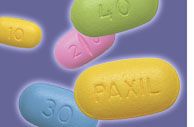
The "serotonin revolution" of the late 20th century refers to the explosion of mood and behavior altering drugs known as SSRIs (Selective Serotonin Reuptake Inhibitors). This new class of drugs includes Prozac, Paxil, Zoloft, often called the "big three" and others such as Luvox and Celexa. As their popularity has soared, SSRIs have attained celebrity-like status and have become the subject of much commentary and debate.
Popularity