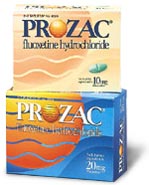
Prozac: everybody's little helper
|
Prozac has been called the "Valium of the Nineties." However, while Valium eased the "strains of motherhood," Prozac makes it easier to succeed in the workplace. Prozac, like its opiate and tranquilizer predecessors, promises the restoration of normalcy and equilibrium, the relief of depression and anxieties. As Peter Kramer claims, Prozac seems to give "social confidence to the habitually timid, to make the sensitive brash, to lend the introvert the social skills of a salesman." However, mood elevation can come at the expense of sensitivity [Breggin, 2001]. |
If the last wonder drugs, the "minor" tranquilizers which are now largely out of public favor, were seen as "mother's little helpers," then Prozac is everybody's little helper, prescribed for children and even for dogs.
Hailed as a cure-all and wonder drug, patients and physicians
are being sold on Prozac as an answer to any problem, with little caution in
administration, dosage, monitoring or observance of side effects or withdrawal
symptoms [Tracy, 1994]. The overwhelming popularity
of Prozac and other SSRIs is due, in part, to a societal desire for a "quick
fix" for depression and other conditions. This desire is satisfied by marketing
campaigns designed to make us believe that Prozac is the answer for "all
that ails us [Tracy, 1994]." The tendency
of both physicians and patients to overestimate the benefits of these drugs
while ignoring the considerable risks reflects the 10-20-30 pattern of mood
and behavior altering drugs of years past.
|
In 1956, Eli Lilly patented LSD; in 1987,
they gave the world Prozac.
Eli Lilly promoted LSD as a "wonder drug" in the 1950s and 60s, in much the same way they are marketing Prozac now. |