Why should we be concerned?
|
Prozac and other SSRIs have been widely praised as harmless "wonder drugs," yet throughout this site we demonstrate that this is not necessarily the case. The World Health Organization has warned that SSRIs often create more problems than the depression they are supposed to be treating. The 1998 book Prescription for Disaster by Thomas Moore, reveals that from 1987 to 1997 Prozac was "associated with more hospitalizations, deaths, or other serious adverse reactions reported to the FDA than any other drug [Moore, 1997]." Prozac and its peers are being overprescribed and overused for every vague disorder and affliction caused by the stress of daily life. Antidepressants are overrated by many consumers and doctors and overprescribed because of aggressive marketing that often hides the true nature of these drugs. Like opiates and "minor" tranquilizers of days past, the rise of SSRIs to icons of pop culture and the current reevaluation of the efficacy and safety of these drugs demonstrates the 10-20-30 cycle of "minimum of caution and maximum of expectation [Glenmullen, 2000]." As one critic notes, "a far too common occurence in psychiatry is the replacement of older drugs with newer ones that 'might' be safer and more effective but prove to be the opposite [Tracy, 1994]." |
|
What
is "Normal"?
|
|
As our concept of "normal behavior" gets more and more compressed, we move toward a society of conformity. Some critics have argued that the effect of Prozac and other SSRIs is less about much curing mental disorders and more about changing the patients sense of self. The notion of enhancement speaks to Peter Kramer's concept of cosmetic psychopharmacology, or alteration of the individual's personality. Antidepressants, especially Prozac, help to to make people less shy, less compulsive, more confident. Prozac and the SSRIs have increasingly been promoted as personality enhancers in many realms. A recent Newsweek article, for instance, was entitled how science will let you change your personality with a pill [Breggin, 1996]." |
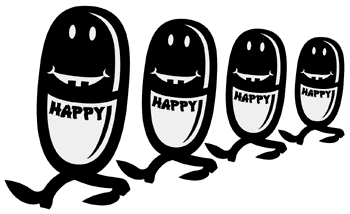
Happiness Pills or Medical Treatment?
|
|
Overmedication?
|
|
[Barnett-Connor, 1999]
|
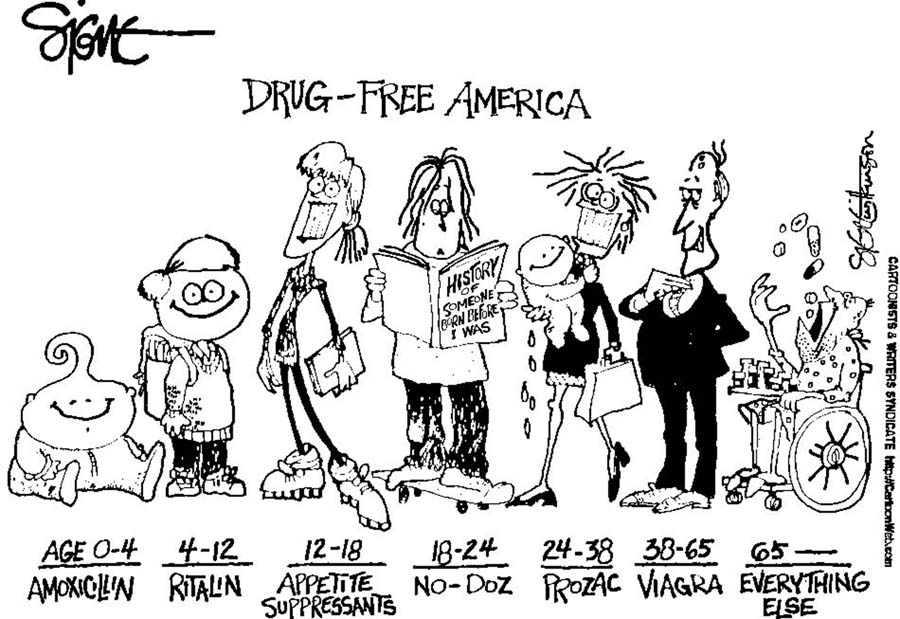
The desire for easy chemical fixes and miracle cures has led millions of Americans to seek pharmaceutical interventions to deal with the stress of daily living. Antidepressants are overrated by many consumers and physicians and are overprescribed largely because of aggressive marketing or the social desire for a instant solutions for our problems. Overuse has been further encouraged by the drug companies' influence on non-medical practitioners, such as psychologists and social workers, to recommend these drugs to their clients [Tracy, 1994]. Drug companies are taking symptoms of everyday life and turning them into diseases requiring medical treatment [Breggin, 1994]. |
|
The
New Drug Dealer?
|
|
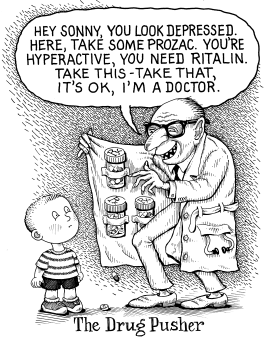
With permission from by John S. Pritchett
|
The most vulnerable victims of the "Age of Prozac" may be children. More and more physicians are prescribing psychiatric drugs to children, at even younger ages. For instance, in a study of Michigan children age three and under who were diagnosed with attention deficit hyperactivity disorder (ADHD), about a third of those treated were taking two or three psychiatric drugs [Snowbeck, 1998]. According to the pharmaceutical research firm IMS America, Prozac is prescribed 350,000 times each year to children under the age of 16 [Kennedy, 1999]. There is little research that shows whether Prozac and other drugs affecting serotonin levels in the brain are safe and effective in children. This represents a major shift in thinking, thirty years ago, for instance, doctors did not believe that children could get depressed. The popularity of Prozac, as well as the increased use of the stimulant Ritalin to control ADHD in children, has underscored America's growing use of drugs to control depression, emotional problems and other unwanted behaviors [Kennedy, 1999]. Dr. Peter Breggin refers to this phenomenon as "Pushing Drugs in America" in his chapter on "the long financial tentacles of Eli Lilly [Breggin, 1994]." |
|
What
about Mental Illness?
|
![]() |
According to the World Health Organization:
|
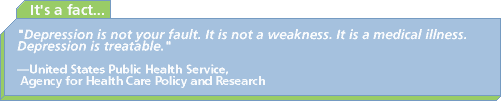
"Depression is a common mental disorder that presents with depressed mood, loss of interest or pleasure, feelings of guilt or low self-worth, disturbed sleep or appetite, low energy, and poor concentration. These problems can become chronic or recurrent and lead to substantial impairments in an individual's ability to take care of his or her everyday responsibilities. At its worst, depression can lead to suicide, a tragic fatality associated with the loss of 1 million lives per year."
|
According to a study in the Journal of the American Medical Association, since the introduction of SSRIs, antidepressant medications have become a mainstay in the treatment of depression while psychotherapy sessions have become much less common. The authors suggest that this reflects better access to mental health services and increased emphasis on pharmacological treatments. In addition, managed care companies (HMOs) have encouraged medication over psychotherapy, which is not reimbursed as generously.
While clinical depression is a serious and debilitating illness, pharmaceutical companies offer self tests for depression on the websites promoting their drugs. In addition, some sites also offer self tests for other mental conditions such as generalized anxiety disorder (GAD), social anxiety, post-traumatic stress disorder (PTSD), panic disorder and obsessive compulsive disorder (OCD). This is problematic as it demonstrates a clear conflict of interests between patients and the pharmaceutical industry.
Click here to take a depression self test from Forest Laboratories, the maker of Celexa.
Click here to take self tests for GAD, social anxiety, PTSD, panic disorder and OCD from GlaxoSmithKline, the makers of Paxil.