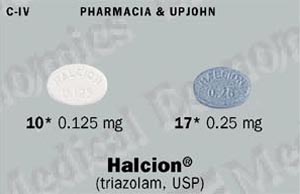
Halcion - one of the most widely used prescription
sleeping pills today
Advertisements for the "Minor" Tranquilizers
According to Dr. Peter Breggin, author of Talking Back to Prozac, "minor" tranquilizers have been termed as such to distinguish them from "major" tranquilizers. Currently, however, the "major" tranquilizers are called neuroleptics or antipsychotics. He says that "while the 'minor' tranquilizers might now simply be called tranquilizers, that term itself is somewhat misleading. Basically they are sedatives [Breggin, 1994]."
| This class of pharmaceuticals, formally known as benzodiazepines, includes the common brand name drugs Xanax, Halcion, Ativan, Librium and, of course, Valium. According to one critic, the extent of the use of these drugs was staggering, thanks in part to massive, sustained advertising campaigns [Tracy, 1994]. |
|
|
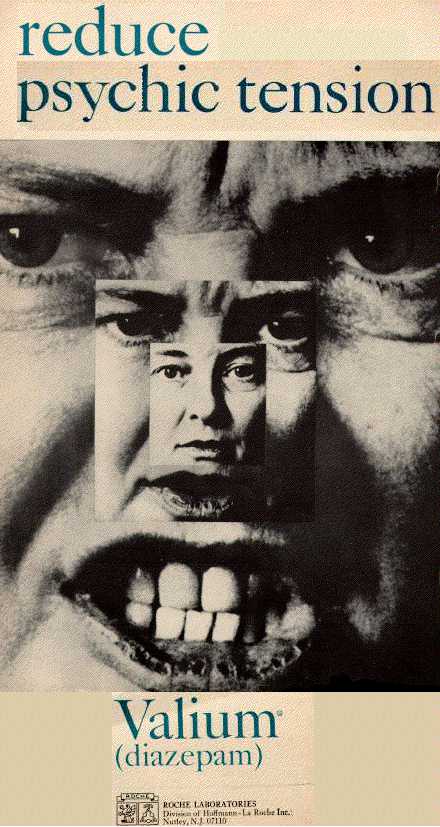
Valium Advertisement 1965 Introduced commercially in 1963, Valium was prescribed for agitation, anxiety and impulsiveness. At the time, the risk of becoming addicted to Valium and its peers was considered remote.
|
|
|
|
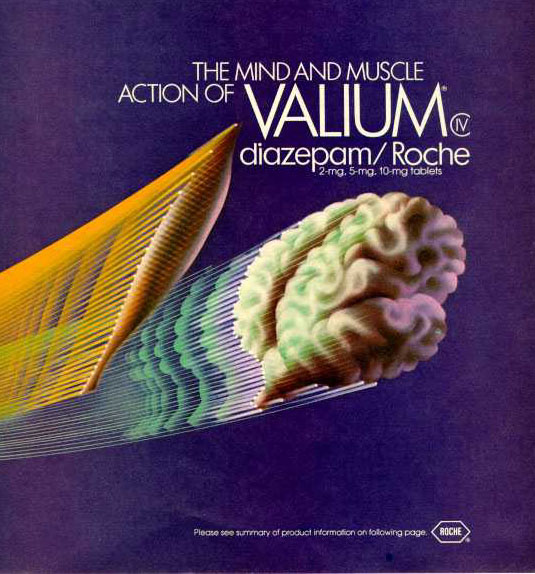
Valium Advertisement 1981 Extensively prescribed during the 1970s and early 80s, Valium was harshly criticized for turning hundreds of thousands of women into "robot-wives."
|
|
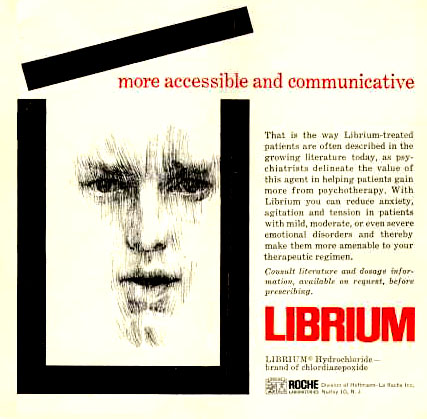
Introduced in 1957, Librium was the first of the "minor" tranquilizers. Like the other benzodiazepines, Librium (named for the word equilibrium) promised to restore balance and normalcy to the patient's life. |
 |
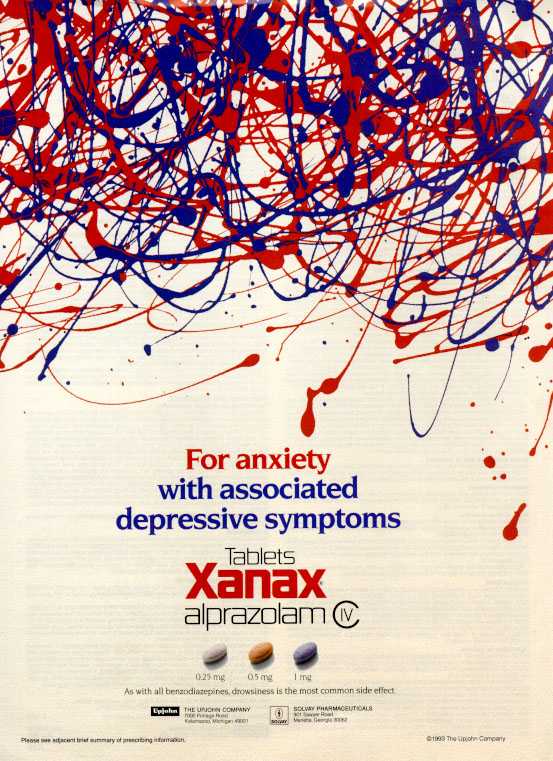 |
Advertisement for Xanax, the top-selling tranquilizer in the United States. Originally promoted as a "non-addictive" replacement to Valium, it is now known to have a high habit-forming potential. Even after relatively short-term usage, dependency is possible and withdrawal or "discontinuation symptoms" have been observed in many patients. |
|
1980s Advertisement for Ativan Ativan is the brand name for Lorazepam, an antianxiety
agent. A a benzodiazepine and mild tranquilizer, sedative, and central |
 |