The Interaction of Biology and Environment in BPD
In a study of patients with Borderline Personality Disorder, Herman et al. (1982) found that 11% were victims of physical abuse, 67% were victims of sexual abuse, and 62% were witnesses to domestic abuse. Even without pre-existing biological vulnerability, these types of environmental stressors are enough to precipitate BPD. Interaction between biological and environmental factors often results in the development of BPD.
The stress associated with abuse and/or neglect during childhood often results in the sensitization of the stress response, particularly the Hypothalamopituitary-Adrenal (HPA) axis. In response to stress, the hypothalamus releases CRH causing the pituitary to release ACTH causing the adrenal glands to release cortisol. Apparent in others having suffered Post Traumatic Stress, the HPA axis in BPD often reacts in a hyperactive manner in response to stress. Thus, everyday stresses that most consider minimal may feel far more stressful for patients with BPD.
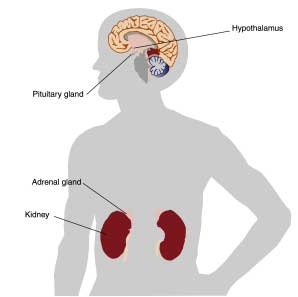
The hypothalamus, the pituitary gland, and the adrenal glands constitute the
HPA axis.
Research also suggests that incidents of physical, sexual,
and verbal abuse may cause the amygdala, the area of the limbic
system associated with fear and arousal, to become overly excited. Similarly,
abuse is also associated with decreased activity in areas of the prefrontal
cortex involved in the suppression of the negative emotions produced by the
amygdala. Thus, the combination of an overactive amygdala and an underactive
prefrontal cortex may result in the emotional instability, fear, and aggression
characteristic of BPD.

The amygdala lies within the limbic system.
Click here to view a clip of a dysfunctioning amygdala.

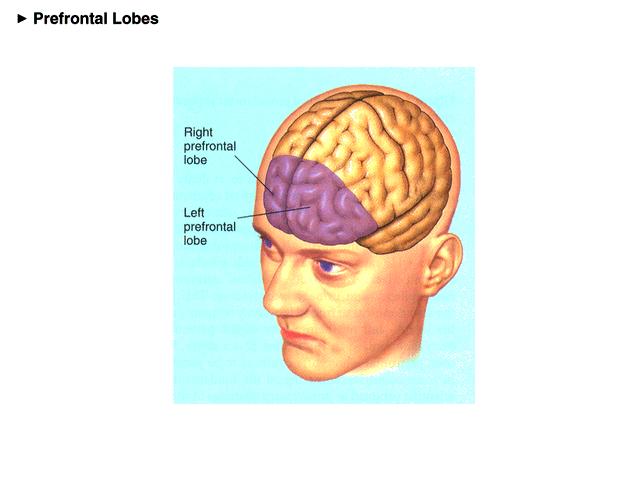
An image of the prefrontal cortex.