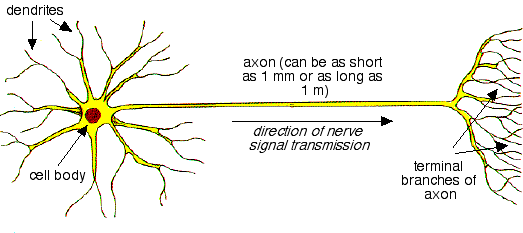
An image of a neuron
Neurotransmitters and BPD
An image of a neuron
Neurotransmitters are the means of cellular communication within the brain and allow for a diverse spectrum of functions from movement to mood. Neurons in the brain use neurotransmitters to communicate with one another. After being released the presynaptic terminal of the first neuron, neurotransmitters diffuse across the synaptic cleft and bind to a specific receptor on the postsynaptic dendrite of the second neuron. The ligand-receptor binding results in an influx of calcium ions causing the second neuron to produce an action potential. After being released by the receptor, the neurotransmitter is reabsorbed back into the neuron so as not to continue to stimulate more action potentials. As is the case with many other mental disorders, a great deal of attention has been paid to the role of neurotransmitters in Borderline Personality Disorder.
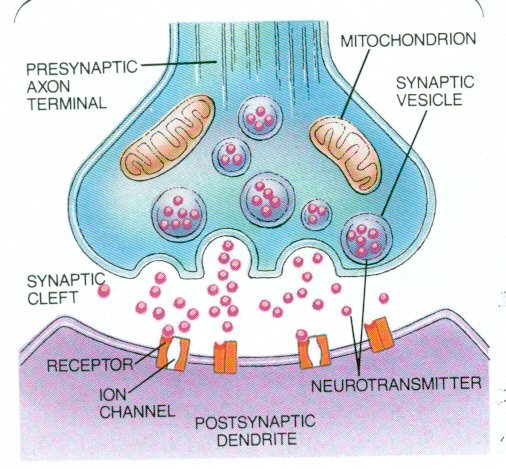
Neurotransmitters diffusing across the synaptic cleft
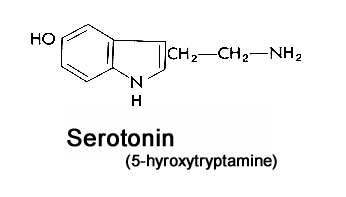
Of its many functions, serotonin is involved in the suppression of certain behaviors
and the maintenance of mood. Patients with BPD frequently show symptoms of impulsivity
that include but are not limited to self-mutilation, suicidal behavior, substance
abuse, Anorexia-Nervosa, Bulimia-Nervosa, and compulsive gambling. Like others
suffering from personality disorders, BPD patients frequently have reduced serotonergic
activity. Decreased serotonergic activity has been linked to impulsive behavior.
Among the long list of symptoms, patients with BPD often suffer from depression.
The decreased activity of serotonin has been identified as a cause of the lowered
mood associated with depression.
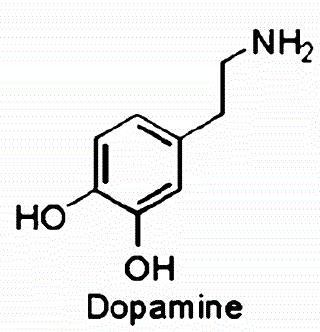
Essential to higher order processes, dopamine also plays a role in the BPD related stressed interpersonal relationships, social isolation, and temporary psychosis. Although research in this area is limited, an excess of dopamine in the limbic system is believed to give rise to these symptoms.
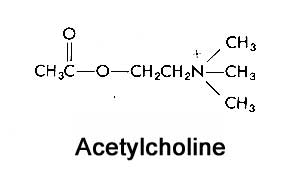
The neurotransmitter, acetylcholine, also has been associated with affective
instability, a symptom characteristic of BPD. Patients with BPD often possess
highly volatile internal states and changes in their environment often elicit
extreme fluctuations in their mood. Larry J. Siever, M.D., reported that BPD
patients responded to physotigimine, a drug that inhibits the breakdown of acetylcholine.
When the control group ingested physotigimine, no noticeable changes were observed.
Thus, abnormal acetylcholine activity seems to be linked to the affective instability
characteristic of BPD.