
VARIABLES THAT AFFECT COCAINE USE
Age: Those age 18-25 form the age group with the highest rate of cocaine use. In 1998, 2 % of the nation's population represented cocaine users age 18-25 years old.
Gender: In general, men have a higher rate of cocaine use than do women. In 1998, male cocaine users made up 1.1 % of the population, while female users accounted for .5 %.
Race/Ethnicity: African Americans and Hispanics have a higher rate of cocaine use than do Caucasians. In 1998, the rates of cocaine use were 1.3 percent for both African Americans and Hispanics, and .7 % for Caucasians.
Region/Urbanicity: The rate of cocaine use is .6 % in the Northeast and North Central regions, while the South and West regions have a rate of 1 %. In addition, metropolitan areas have a higher rate than do rural areas (1.7 % and .5 %, respectively, in 1998).
Education: The rate of cocaine use is negatively correlated to amount of education received. Among adults, those who have not completed high school have the highest rate, followed by those who graduated from high school, those with some college education. Cocaine use rate is the lowest among college graduates.
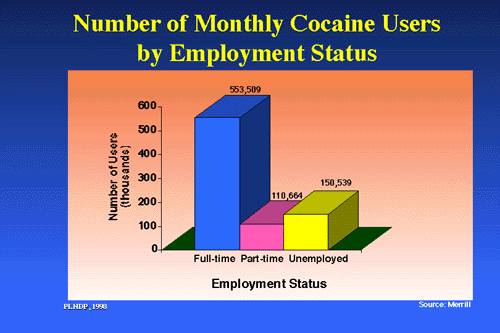
Employment: While most adult cocaine users are employed (70 %), the cocaine use rate is highest for the unemployed compared to those employed full-time and part-time. In 1998, 3.4 % of the unemployed adults were users as opposed to .9 % of full-time employed and .5 % of part-time employed adults.
ADDITIONAL INDIVIDUAL FACTORS THAT CONTRIBUTE TO COCAINE USE
back to demographics main page
