What is Meditation?
Meditation can be defined in multiple ways, in terms of both
its philosophical and operational aspects. In general, meditation is the regular
and systematic practice of focusing the mind on one thought, to the exclusion
of others (Stone, 1977). The practice of meditation can be divided into two
major classifications, namely transcendental meditation and mindfulness meditation.
 Transcendental
meditation, also referred to as shamantha or samadhi practice, is an exercise
primarily in concentration (Kabat-Zinn, 1993). The meditator focuses on a single
sensation, usually the passage of breath in and out through the nostrils, or
silently repeats a word or phrase called a mantra. As other thoughts pass through
the mind, the meditator learns to disregard them and return to the breath or
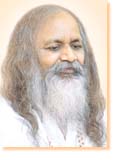
mantra. According Maharishi (1969) this process of concentration is considered
to be "one-pointed" because it involves "turning the attention inward towards
the subtler levels of thought until the mind transcends the experience of the
subtlest state of the thought and arrives at the source of thought." This transcendence
is what leads to the deep state of relaxation valued in meditation.
Transcendental
meditation, also referred to as shamantha or samadhi practice, is an exercise
primarily in concentration (Kabat-Zinn, 1993). The meditator focuses on a single
sensation, usually the passage of breath in and out through the nostrils, or
silently repeats a word or phrase called a mantra. As other thoughts pass through
the mind, the meditator learns to disregard them and return to the breath or
mantra. According Maharishi (1969) this process of concentration is considered
to be "one-pointed" because it involves "turning the attention inward towards
the subtler levels of thought until the mind transcends the experience of the
subtlest state of the thought and arrives at the source of thought." This transcendence
is what leads to the deep state of relaxation valued in meditation.
Mindfulness meditation can also be called insight meditation,
or vipassana (Kabat-Zinn, 1993). Similar to transcendental meditation, mindfulness
meditation involves using the one-pointed process to concentrate on a specific
thing. Once a state of calmness and stability is reached, however, the meditator
is encouraged to stop suppressing and start observing the thoughts and feelings
he or she may be experiencing. The meditator is to be aware of the sensations,
but not to make judgements about them. The purpose of mindfulness meditation
is for the meditator to be more in touch with his or her present state of mind
and body.
Meditation may resemble other self-regulation practices, such
as hypnotic trance, daydreaming, and cardiovascular and neurovascular feedback.
Meditation, however, is unique in comparison to these other techniques because
it involves being alert while the mind and body become integrated (Snaith, 1998).
Meditation's emphasis on alertness and its ability to calm the meditator are
what contribute to its health benefits.
Psychology of Meditation
Altenative Medicine
| Meditation | What
is Meditation? | Psychology of Meditation
Physiology
of Meditation | Conclusion | References